Islamic Etiquette: 10 Essential Manners Every Muslim Must Know
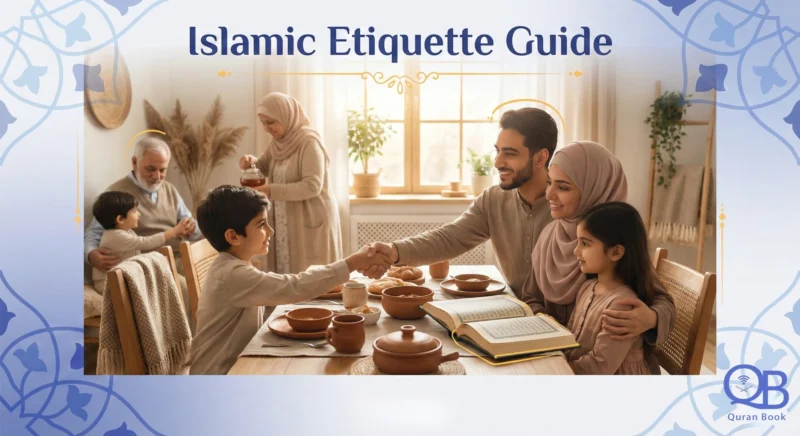
Why Islamic Etiquette Matters
Islamic etiquette (Adab) is the comprehensive code of conduct in Islam that governs how Muslims should behave in every aspect of life — from greeting others with “As-Salamu Alaykum” to eating with the right hand, respecting parents, and speaking with kindness. Rooted in the Quran and the Sunnah of Prophet Muhammad ﷺ, Islamic etiquette transforms everyday actions into acts of worship. These Islamic manners are not just social customs; they are a reflection of inner faith and devotion to Allah.
If you have ever felt unsure about the “right” way to greet someone, eat a meal, or enter a mosque as a Muslim, you are not alone — and this guide was created for you. Many non-Arabic-speaking Muslims feel overwhelmed by Arabic terminology, fear doing things incorrectly, or carry guilt about not knowing basic Islamic manners. These feelings are completely natural. The truth is, learning Islamic etiquette happens in manageable steps, and building confidence comes through consistent, gentle practice.
“And you are truly a man of outstanding character.” — Quran 68:4
This verse was revealed about Prophet Muhammad ﷺ, whose entire life was a living example of Islamic etiquette. In this guide, you will discover ten essential rules of Islamic etiquette drawn directly from the Quran and Sunnah — practical, easy-to-follow manners that will elevate your daily life and strengthen your connection with Allah.
What Is Islamic Etiquette (Adab)? — The Foundation of Good Character
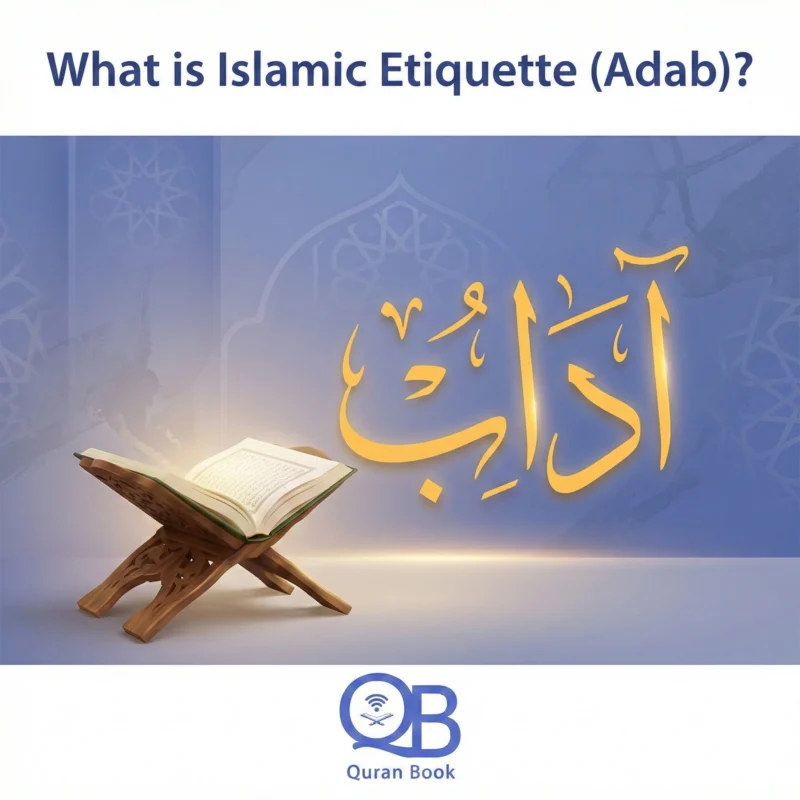
Islamic etiquette, known in Arabic as “Adab” (أدب), refers to the system of proper manners, moral conduct, and spiritual refinement that Islam teaches. The word Adab linguistically carries the meaning of discipline, courtesy, and culture — but in the Islamic context, it goes far beyond simple politeness.
While Western etiquette typically focuses on social rules and outward behavior, Islamic etiquette (Adab) combines social refinement with spiritual depth. Every act of courtesy in Islam is performed with the intention of pleasing Allah, making it both an outward practice and an inward act of worship.
Prophet Muhammad ﷺ embodied Islamic etiquette so completely that when Aisha (may Allah be pleased with her) was asked about his character, she answered simply that his character was the Quran — Sahih Muslim 746. His character was not separate from the revelation; it was the revelation in practice. He himself said: “I was sent to perfect noble character.” — Al-Adab Al-Mufrad 273
“Indeed, in the Messenger of Allah you have an excellent example for anyone who hopes in Allah and the Last Day and remembers Allah often.” — Quran 33:21
Understanding Islamic etiquette begins with understanding that the Prophet ﷺ is the standard. Every manner discussed in this guide traces back to his blessed example.
10 Key Rules of Islamic Etiquette from the Quran and Sunnah
The 10 key rules of Islamic etiquette include greeting with Salam, eating with the right hand, honoring parents, speaking truthfully, being kind to neighbors, controlling anger, practicing modesty, maintaining cleanliness, seeking knowledge with humility, and showing mercy to all creation. These rules are derived directly from the Quran and the Prophetic Sunnah, and they form the backbone of Islamic values that every Muslim should strive to live by.
The Islamic Greeting — Spreading Peace with Salam
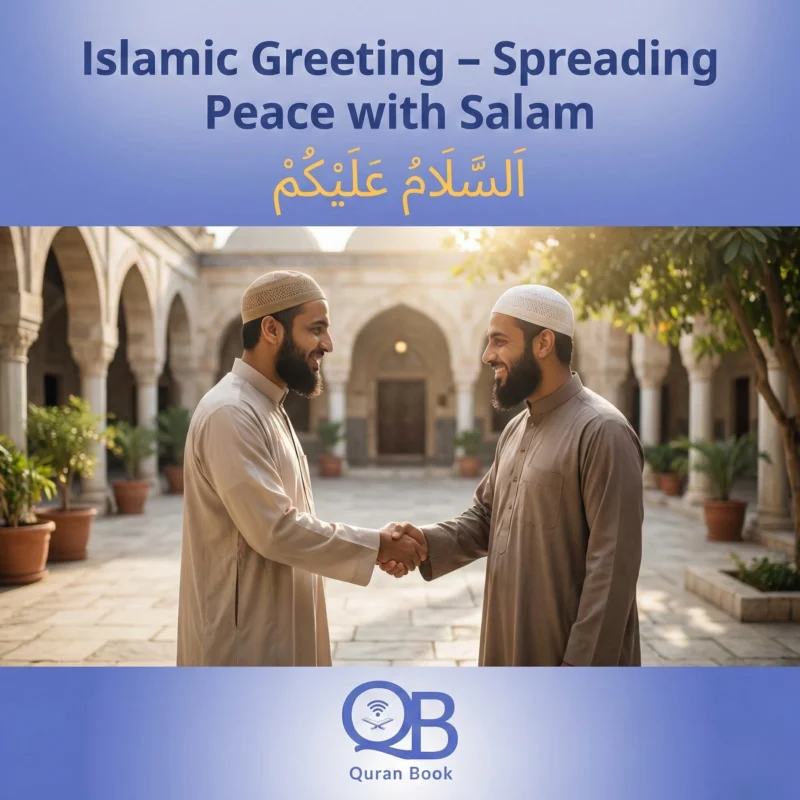
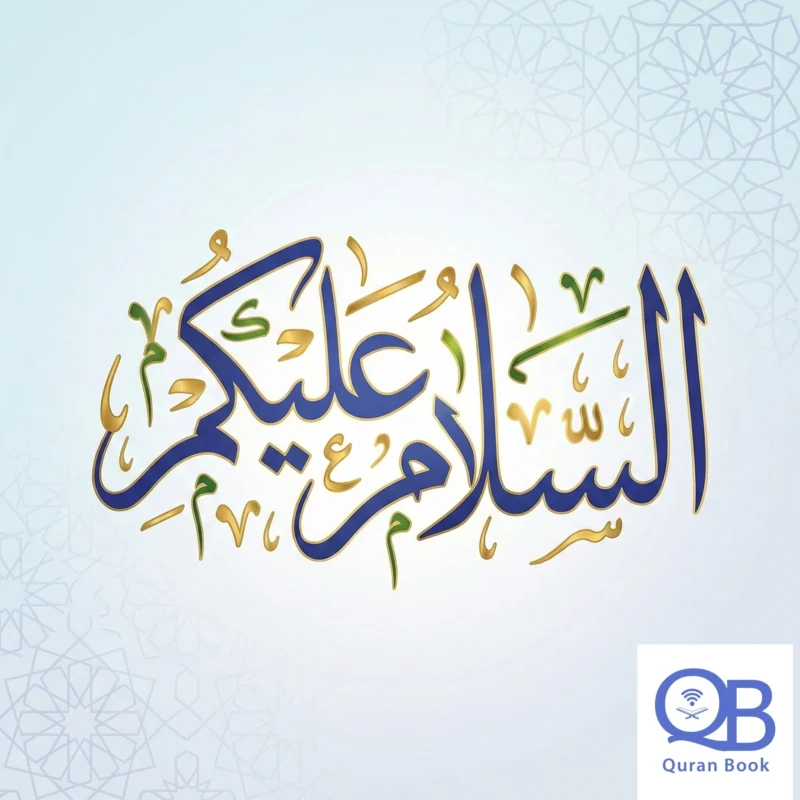
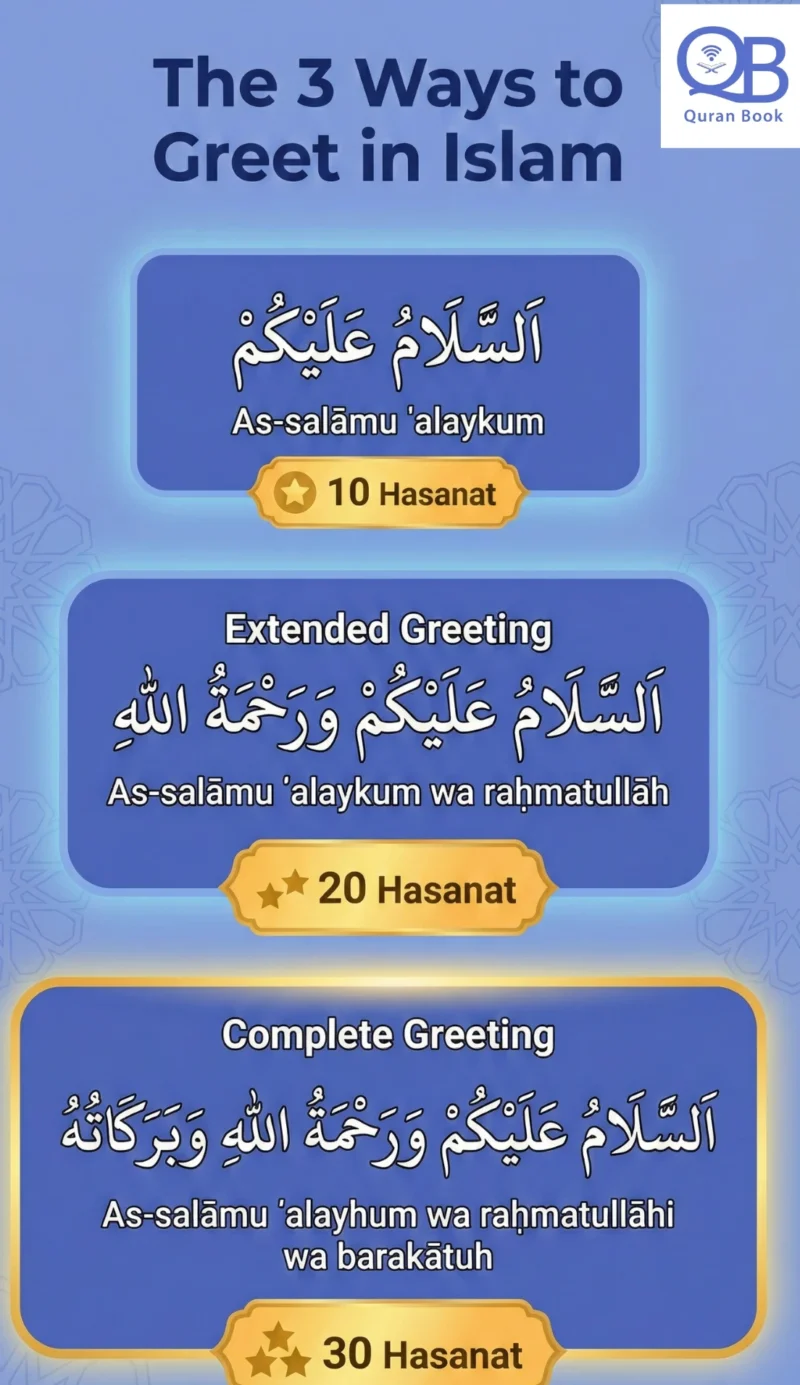
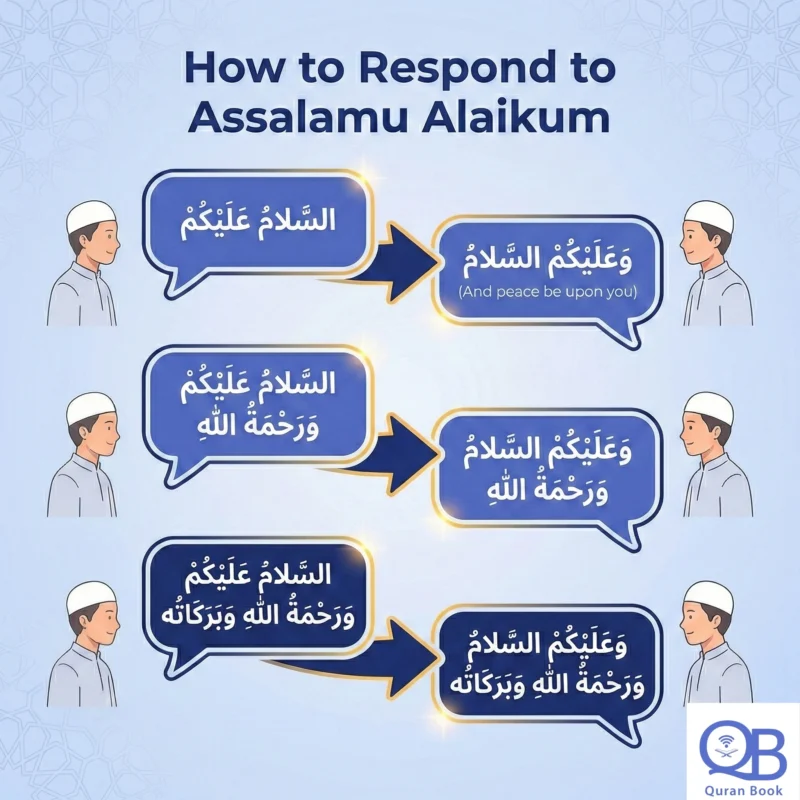
The Islamic greeting “As-Salamu Alaykum” (peace be upon you) is one of the most recognizable aspects of Islamic etiquette. It is not merely a hello — it is a prayer of peace shared among Muslims and one of the clearest ways to strengthen bonds within the Muslim community. The Muslim greeting carries spiritual weight and strengthens the bonds between believers.
“You will not enter Paradise until you believe, and you will not believe until you love one another. Shall I tell you of something that will make you love one another? Spread Salam amongst yourselves.” — Sahih Muslim 54
Allah also commands in the Quran: “When you are greeted with a greeting, greet with one better than it or return it.” — Quran 4:86
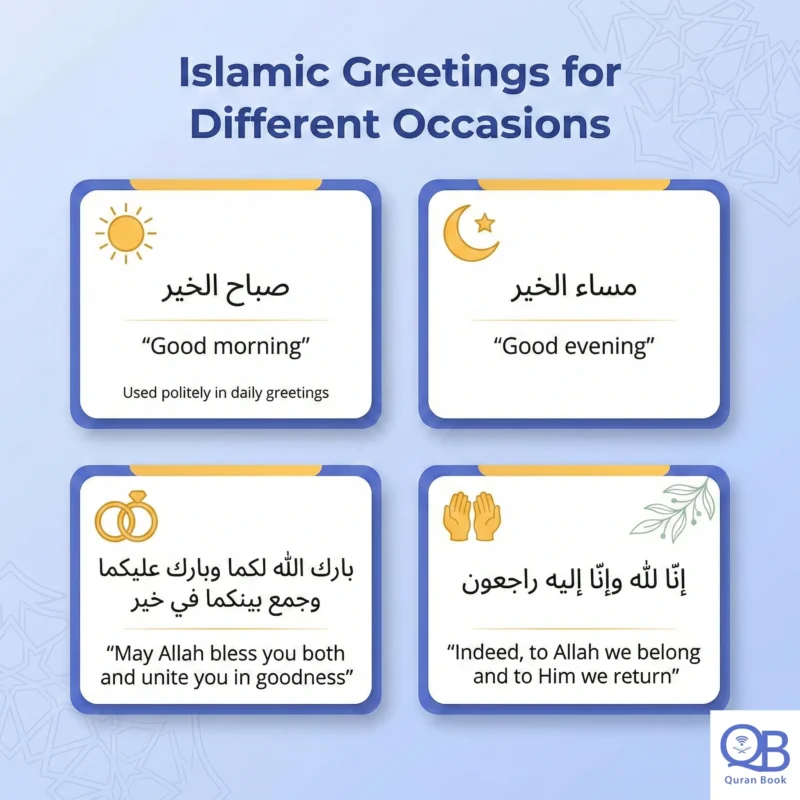
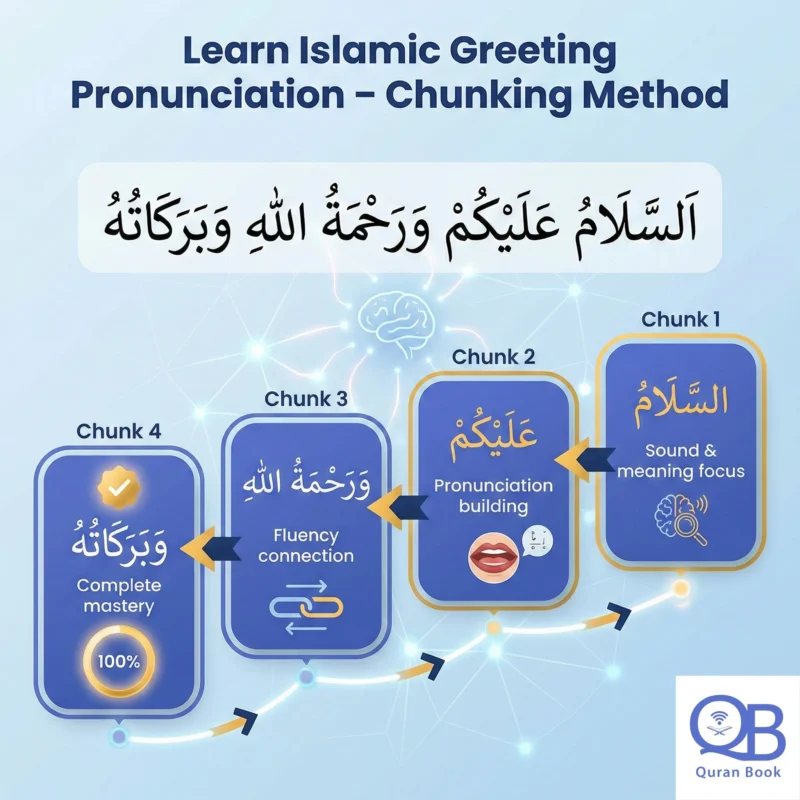
This means that when someone says “As-Salamu Alaykum,” you should return the greeting with an equal or better greeting. You may reply, “Wa Alaykum As-Salam,” or add, “Wa Rahmatullahi Wa Barakatuh,” to offer a fuller greeting. This simple exchange is one of the most powerful daily expressions of Islamic etiquette. Similarly, saying “Alhamdulillah” after sneezing and receiving the response “Yarhamuk Allah” is another beautiful part of everyday Islamic manners.
You can also learn more basic Arabic phrases every Muslim should know and when to use them in daily life.
For a fuller explanation of its meaning and correct responses, read our complete Islamic greeting guide.
Eating Manners in Islam — The Sunnah of Every Meal
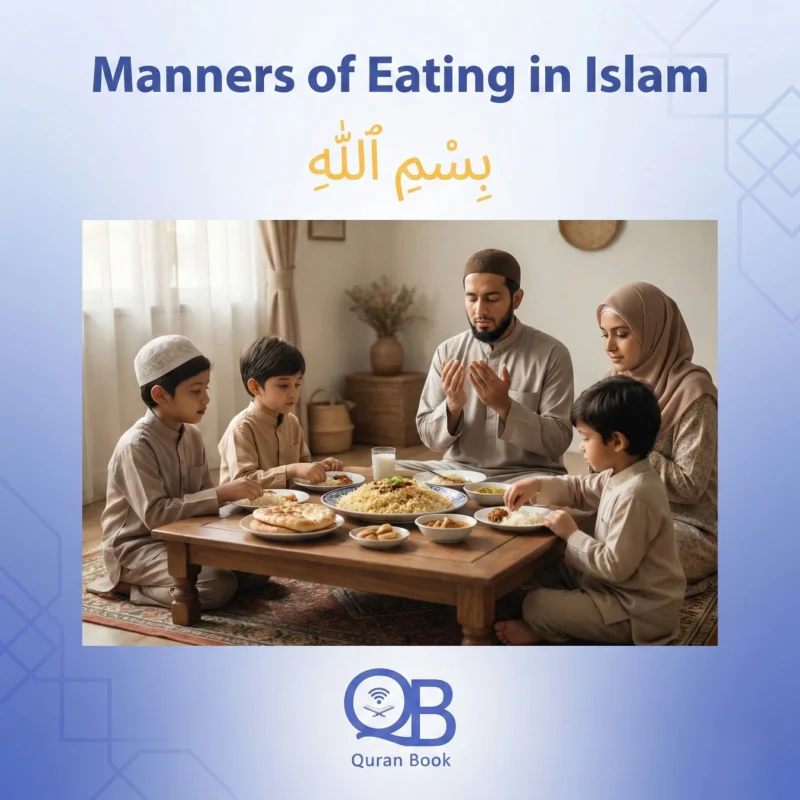
The manners of eating in Islam transform every meal into an act of worship. Islamic etiquette teaches that you should begin eating by saying “Bismillah” (In the name of Allah), eat with your right hand, and eat from what is nearest to you on the plate.
“Mention the name of Allah and eat with your right hand, and eat from what is nearest to you.” — Sahih al-Bukhari 5376
Islam also prohibits wastefulness in food and drink. Allah says in the Quran: “…and eat and drink, but be not excessive. Indeed, He does not like those who commit excess.” — Quran 7:31
These eating manners in Islam are easy to follow and serve as a constant reminder of gratitude to Allah for every provision. Teaching children these habits early is one of the simplest ways to introduce Islamic etiquette into family life.
Honoring and Respecting Parents
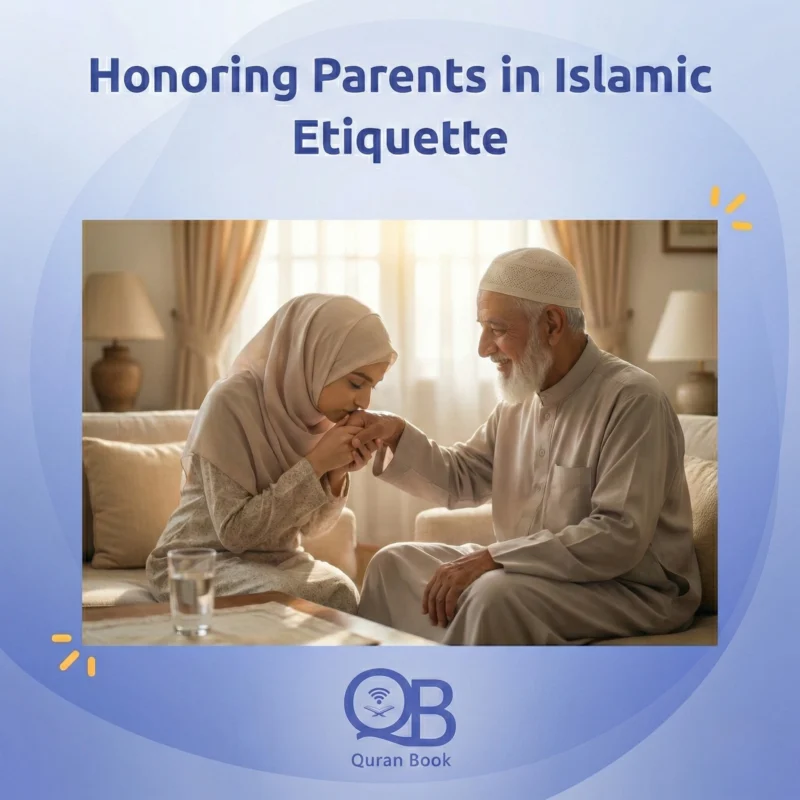
Respecting parents holds an extraordinarily high place in Islamic etiquette. Allah pairs kindness to parents directly with worship of Him alone, underscoring how seriously Islam treats this relationship.
“And your Lord has decreed that you worship none but Him, and that you be kind to parents. Whether one or both of them reach old age in your care, never say to them ‘uff’ and do not repel them, but speak to them a noble word.” — Quran 17:23
In daily practice, this means speaking to your parents gently, serving their needs willingly, making dua for them, and never raising your voice in frustration. Islamic manners require that even if you disagree with your parents, you do so with patience and respect. This is one of the most emphasized aspects of Islamic morality.
Speaking Truthfully and Kindly
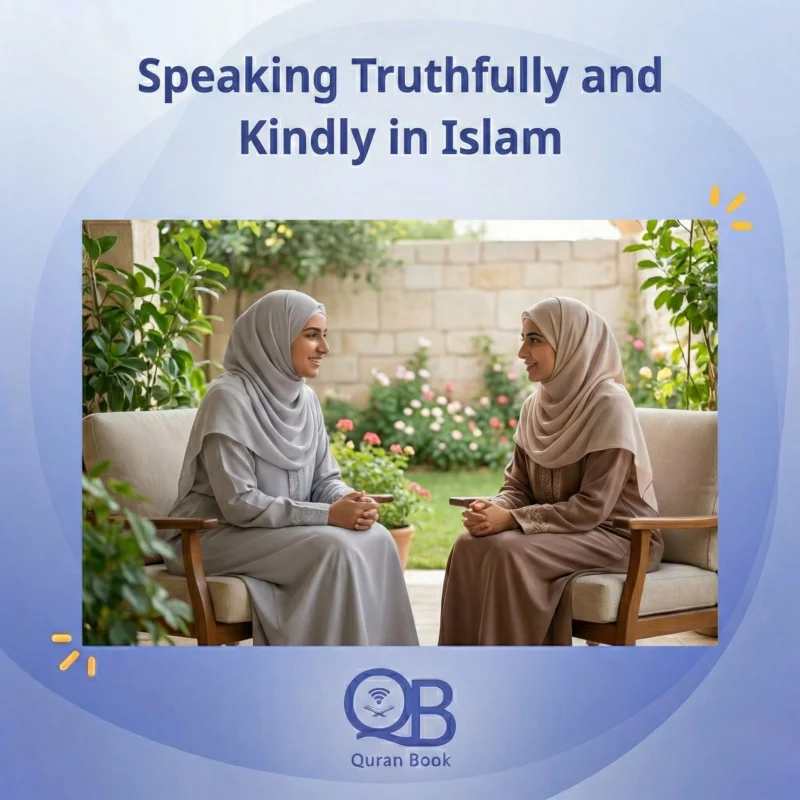
Islamic etiquette places enormous emphasis on the tongue. What you say — and how you say it — is a direct reflection of your faith. Allah commands in the Quran: “And speak to people good words.” — Quran 2:83
“Whoever believes in Allah and the Last Day, let him speak good or remain silent.” — Sahih al-Bukhari 6018
Islamic manners require Muslims to be truthful, to choose words that build rather than destroy, and to prefer silence over harmful speech. Gossip, backbiting, and lying are among the greatest violations of Islamic ethics — not just social mistakes, but sins that carry spiritual consequences.
Being Kind to Neighbors
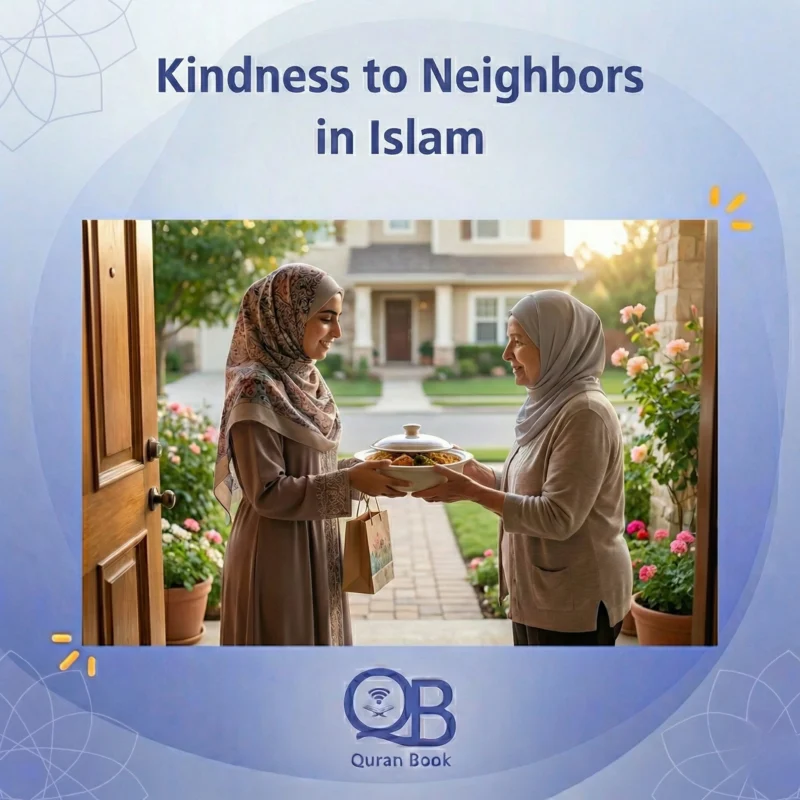
Kindness to neighbors is a fundamental aspect of Islamic etiquette that many people overlook. The Prophet ﷺ emphasized the rights of neighbors so greatly that he said Jibril continued advising him about the neighbor until he thought the neighbor would be made an heir.
“Jibril kept advising me to be kind to my neighbor until I thought he would inherit from me.” — Sahih al-Bukhari 6014
In Islam, your neighbor has such a strong right over you that it almost resembles family rights. Islamic values teach Muslims to check on their neighbors, share meals with them, avoid causing them any harm, and treat them with generosity regardless of their religion or background. This aspect of Islamic etiquette builds strong, compassionate communities.
Controlling Anger — A Sign of True Strength
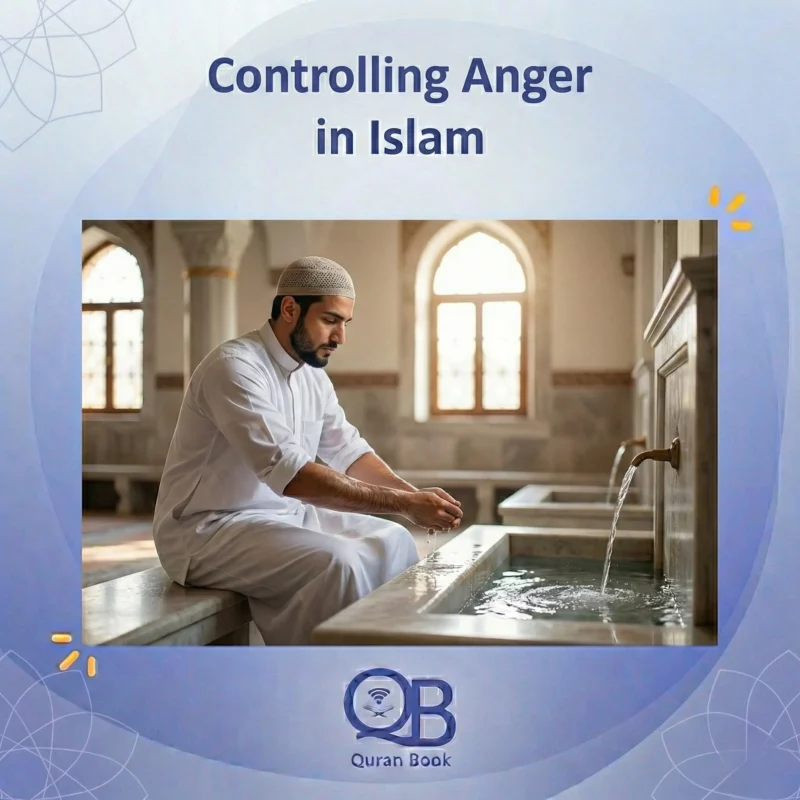
Learning to control anger in Islam is considered one of the highest achievements of Islamic etiquette. Society often equates strength with aggression, but the Prophet ﷺ redefined true power.
“The strong man is not the one who can overpower others. Rather, the strong man is the one who controls himself when he is angry.” — Sahih al-Bukhari 6114
Allah praises those who practice this restraint: “Those who restrain their anger and pardon people — and Allah loves the doers of good.” — Quran 3:134
The Sunnah offers practical guidance for dealing with anger. A person may seek refuge in Allah from Shaytan, as the Prophet ﷺ instructed in Sahih al-Bukhari 6115. He also taught that a person who becomes angry while standing should sit down, and if the anger remains, should lie down — Sunan Abi Dawud 4782. A commonly mentioned narration also recommends performing wudu when angry, but that particular narration is graded weak by some hadith scholars, so it should not be presented with the same level of certainty.
Practicing Modesty in Dress and Behavior
Modesty (Haya’) in Islamic etiquette is not limited to clothing — it encompasses behavior, speech, gaze, and inner attitude. However, modest dress in Islam is one of its most visible expressions.
“Haya’ (modesty) is a branch of faith.” — Sahih Muslim 35
Islamic etiquette teaches that modesty protects the individual and the community. It cultivates dignity, self-respect, and focus on character over appearance. For both men and women, practicing modesty is an act of obedience to Allah and a reflection of strong Islamic values. It is not about restriction — it is about being valued for who you are rather than how you look.
Cleanliness — Half of Faith
Purification holds a unique status in Islam. The Prophet ﷺ described purification as half of faith (Sahih Muslim 223).
“Purification is half of faith.” — Sahih Muslim 223
This includes ritual purification such as wudu. Islam also encourages personal hygiene, clean clothing, and maintaining clean surroundings. Islamic teachings give personal hygiene, cleanliness of clothing and surroundings, oral care, bathing, and purification an important place in daily worship and practice. Maintaining cleanliness is one of the most practical and daily expressions of Islamic etiquette that every Muslim — adult or child — can implement immediately.
If you are still learning purification, follow our beginner-friendly guide on how to make wudu step by step.
Seeking Knowledge with Humility
The etiquette of learning in Islam deserves special attention. Seeking the knowledge a Muslim needs to worship Allah correctly is not merely encouraged — the scholars regard it as an obligation.
“Seeking knowledge is an obligation upon every Muslim.” — Sunan Ibn Majah 224
But Islamic etiquette does not stop at the act of learning itself. It extends to how you learn: with humility before your teacher, patience with the process, consistency in practice, and sincerity in intention. The best students in Islam are not those who memorize the most, but those who apply what they learn with the best character. This is the essence of Islamic ethics applied to education.
Showing Mercy and Compassion to All Creation
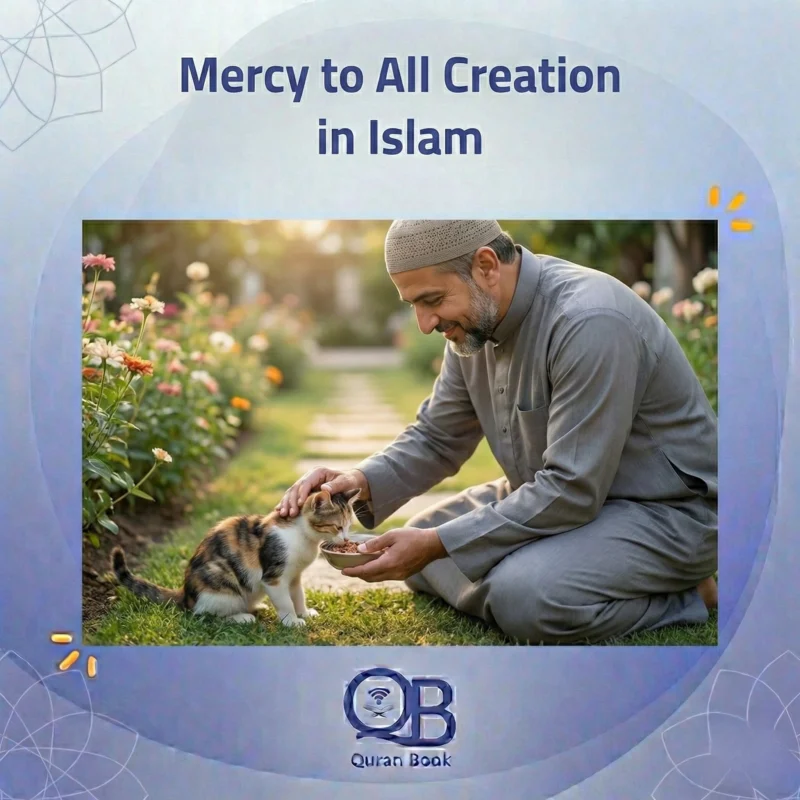
The crown of Islamic etiquette is mercy. It is the quality that defines the entire message of Islam and the mission of Prophet Muhammad ﷺ.
“Show mercy to those on earth, and the One above the heavens will show mercy to you.” — Sunan Abu Dawud 4941
And Allah declares: “And We have not sent you, [O Muhammad], except as a mercy to the worlds.” — Quran 21:107
Islamic manners require Muslims to show compassion to all of creation — humans, animals, and even the environment. This is not optional kindness; it is a fundamental principle of Islamic morality. When you practice mercy in your daily interactions, you are embodying the highest form of Islamic etiquette and walking in the footsteps of the Prophet ﷺ.
Quick Check: Test Your Islamic Etiquette Knowledge
Answer these five questions to check what you have learned. Your score appears instantly.
Islamic Etiquette for Children — Building Character from a Young Age
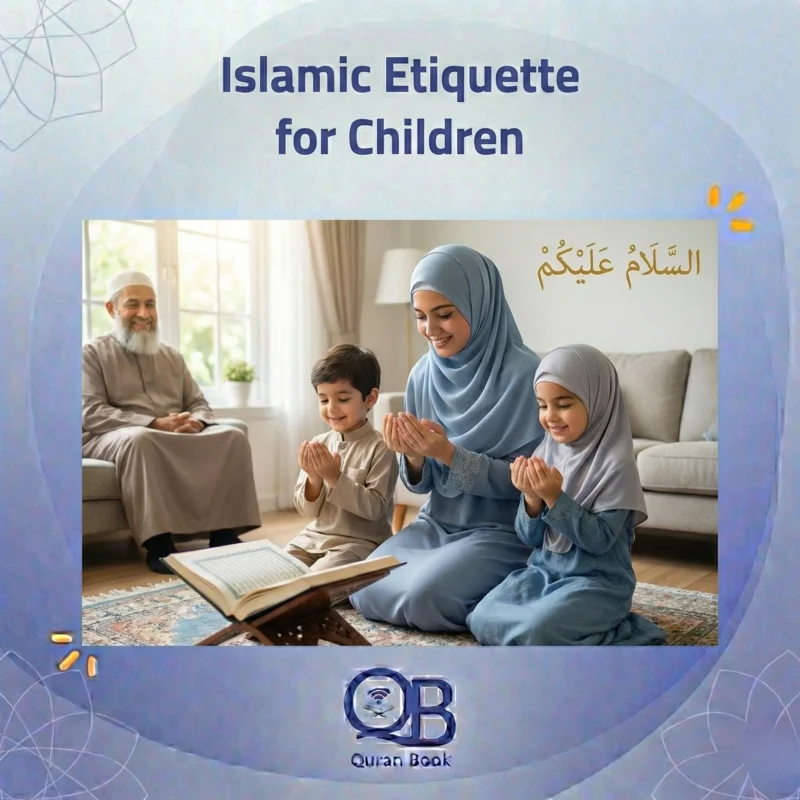
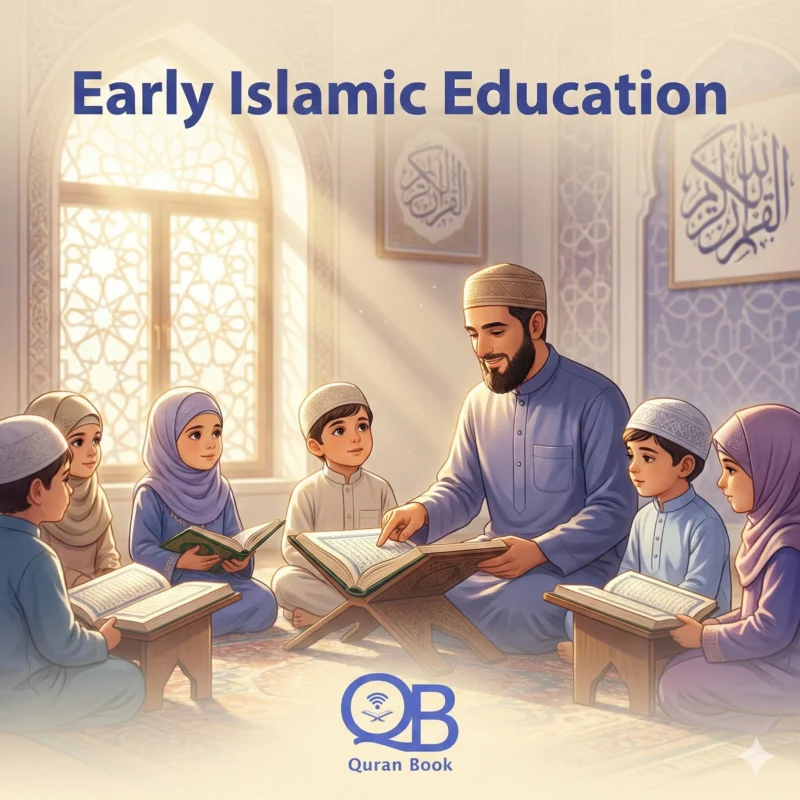
Islamic etiquette for children starts with teaching them the basics: saying “Bismillah” before eating, greeting others with Salam, respecting elders, sharing with friends and siblings, and speaking kindly. The Prophet Muhammad ﷺ was remarkably gentle with children, and Islam encourages parents to teach Islamic manners for kids through love, patience, and consistent modeling — never through harshness or fear.
Age-appropriate Islamic manners can be introduced naturally. Toddlers can learn to say “Bismillah” before meals. School-aged children can practice the Islamic greeting with family members every morning. Older children can be taught mosque etiquette, the importance of honesty, and the value of helping others. Children learn best through storytelling, positive reinforcement, and watching their parents practice what they teach.
On one occasion, the Prophet ﷺ lengthened his prostration because Hasan or Husayn had climbed onto his back, and he did not want to disturb the child until the child had finished — Sunan an-Nasa’i 1141.
The Prophet ﷺ also kissed Al-Hasan openly. When Al-Aqra’ ibn Habis said that he had ten children but had never kissed any of them, the Prophet ﷺ taught that whoever does not show mercy will not be shown mercy — Sahih al-Bukhari 5997.
As parents, you are your child’s first and most important teacher of Islamic etiquette. The habits you build in them today become the character they carry for life.
Parents can also use this Islamic Studies curriculum for kids to introduce Akhlaq, Adab, duas, and worship in an age-appropriate order.
➡️ Enroll your child in our Islamic Studies for Kids program →
How to Practice Islamic Etiquette in a Mosque
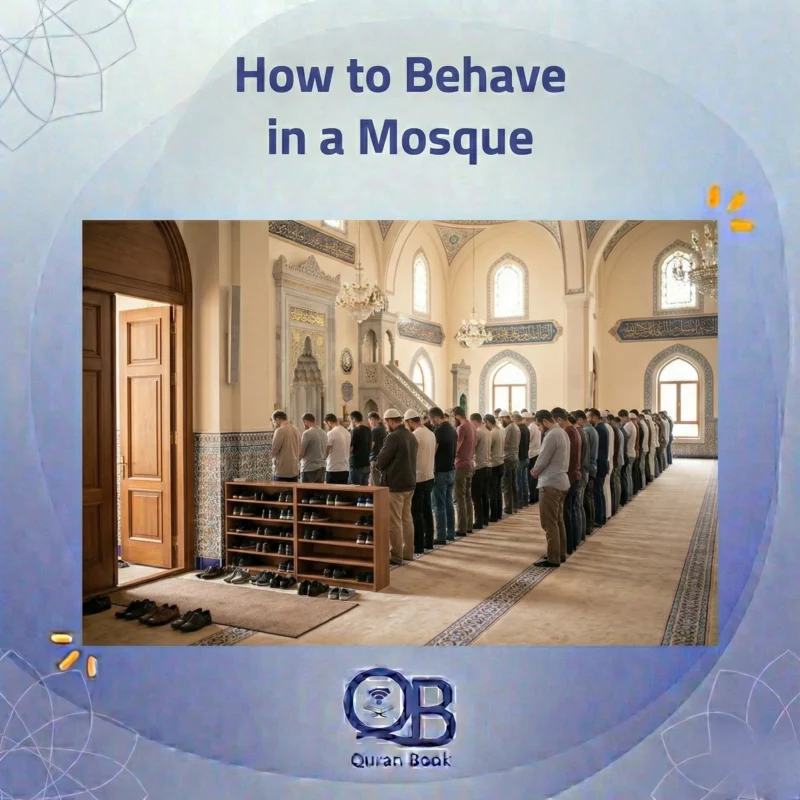
Islamic etiquette in a mosque includes entering with the right foot while saying a dua, praying two rak’ahs of Tahiyyat al-Masjid (greeting the mosque), keeping your voice low, maintaining cleanliness, and avoiding walking in front of someone praying. The mosque is a sacred space, and observing proper manners reflects your reverence for Allah. Here is how to behave in a mosque according to the Sunnah:
Enter with your right foot and say: “Allahumma iftah li abwaba rahmatik” (O Allah, open for me the doors of Your mercy).
Pray two rak’ahs of Tahiyyat al-Masjid before sitting down, as the Prophet ﷺ instructed.
Keep your voice low and avoid disturbing worshippers. Permissible conversation is allowed in the mosque, provided it does not distract those praying or remembering Allah.
Maintain cleanliness — ensure your body, clothes, and breath are clean before entering.
Do not walk in front of someone praying — this is a specific prohibition in Islamic etiquette.
Leave with your left foot and say: “Allahumma inni as’aluka min fadlik” (O Allah, I ask You of Your bounty).
These mosque manners are simple to learn and deeply rewarding to practice. They reflect the depth of Islamic etiquette in sacred spaces.
Islamic Etiquette in Daily Life Situations
| Situation | Islamic Etiquette (Sunnah Way) | Common Mistake |
|---|---|---|
| Before eating | Say “Bismillah,” eat with right hand | Forgetting to mention Allah’s name |
| Meeting someone | Greet with “As-Salamu Alaykum” | Skipping the greeting or mumbling |
| Entering a mosque | Enter with right foot, pray Tahiyyat al-Masjid | Walking in without greeting the mosque |
| Speaking to parents | Use gentle, respectful tone | Raising your voice or being dismissive |
| When angry | Stay silent, seek refuge in Allah, sit or lie down | Reacting impulsively or shouting |
| Getting dressed | Practice modesty, begin with the right side | Ignoring the Sunnah of dressing |
| Before sleeping | Recite Ayat al-Kursi, sleep on right side | Sleeping without remembrance of Allah |
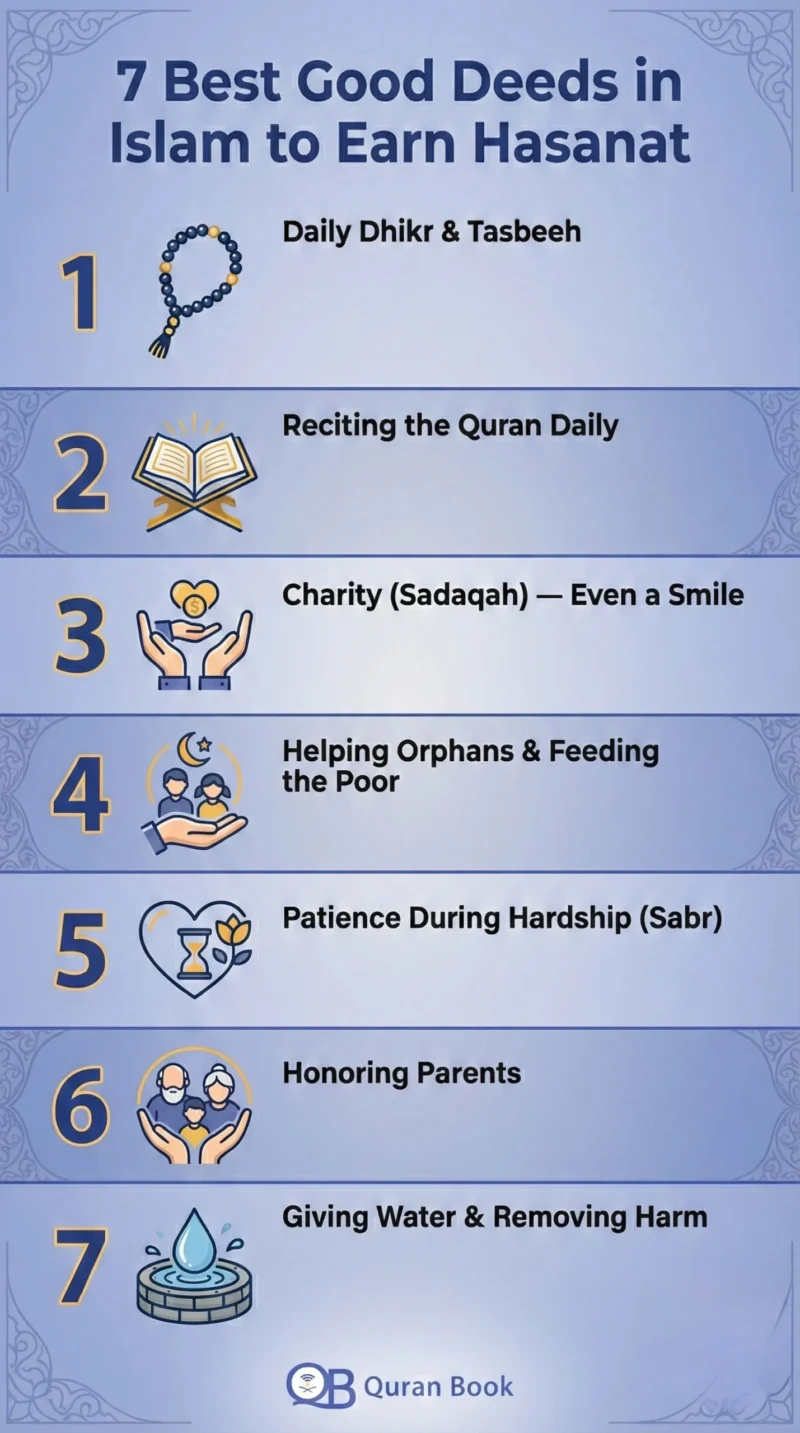
Many of these manners are also everyday acts of worship. Discover more good deeds that earn Hasanat in Islam.
How Quran Book Academy Teaches Islamic Etiquette
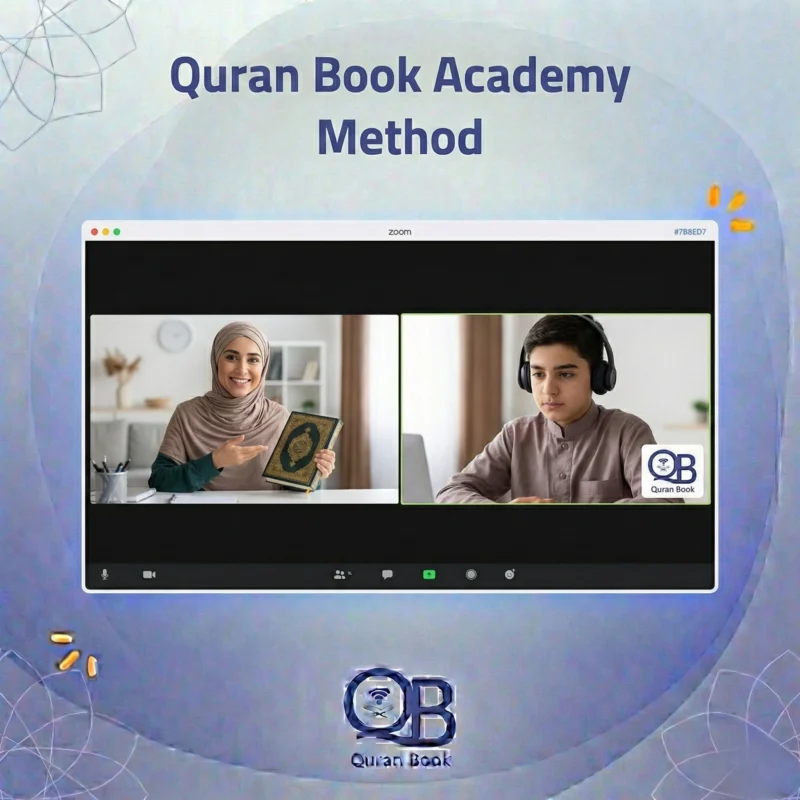
At Quran Book Academy, we treat Islamic etiquette and Quran study as one subject rather than two. A student who understands why the Prophet ﷺ recited the way he did tends to recite with more care — and a student who reads the Quran daily absorbs its manners almost without noticing.
Lessons are live, one-to-one, and pitched at the student’s actual level — whether that is a complete beginner with no Arabic background or an intermediate learner refining their recitation. Progress is broken into small steps so that confidence is built rather than assumed.
Our courses are designed specifically for non-Arabic speakers, so no prior knowledge is needed to begin. Progress is tracked and shared with parents and adult learners, so you always know exactly what to work on next.
Frequently Asked Questions About Islamic Etiquette
What is Islamic etiquette?
Islamic etiquette, known as Adab in Arabic, is the complete code of manners and moral conduct taught by the Quran and the Prophet Muhammad ﷺ. It covers how Muslims should eat, greet, speak, dress, interact with family and strangers, and worship — transforming everyday actions into acts of worship.
What are the 10 rules in Islam?
The 10 foundational rules of Islamic etiquette include spreading Salam, eating with the right hand, honoring parents, speaking truthfully, being kind to neighbors, controlling anger, practicing modesty, maintaining cleanliness, seeking knowledge humbly, and showing mercy to all creation.
What are Islamic manners?
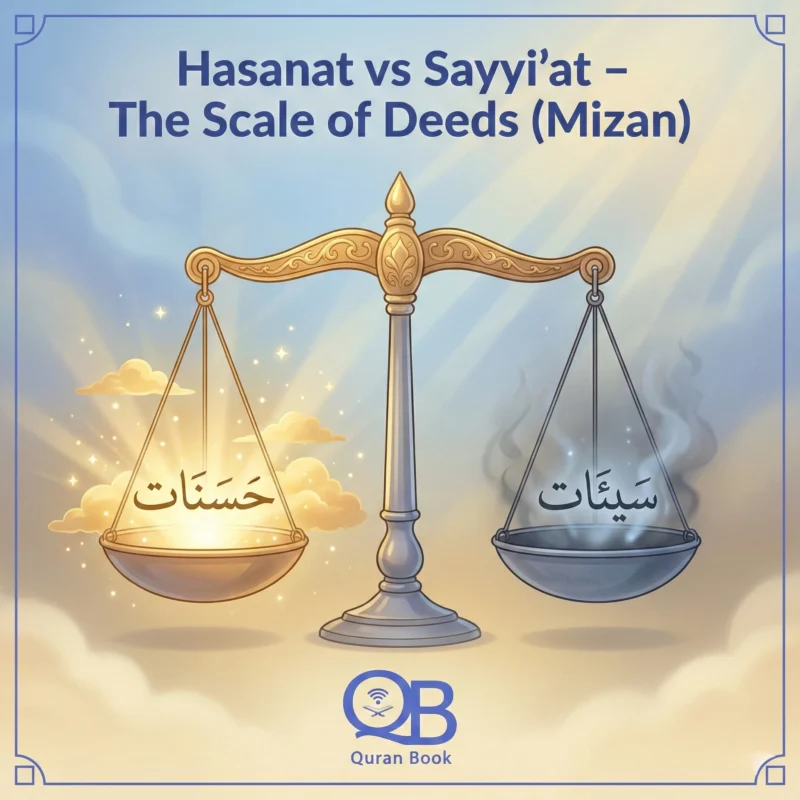
Islamic manners (Akhlaq) refer to the moral character traits that Islam encourages, such as honesty, patience, generosity, humility, and kindness. The Prophet ﷺ taught that nothing will weigh heavier on the Scale on the Day of Judgment than good character. — Sunan Abu Dawud 4799
What is Islamic etiquette for children?
Islamic etiquette for children includes teaching them to say Bismillah before eating, greeting elders with Salam, being kind to siblings and friends, telling the truth, and learning to share. The Prophet ﷺ taught children gently and with love, making him the ultimate example of nurturing Islamic manners in young hearts.
What is the etiquette of learning in Islam?
The etiquette of learning in Islam includes approaching knowledge with sincerity, respecting the teacher, being patient and consistent, asking questions politely, and applying what you learn. The scholars hold that seeking the knowledge a Muslim needs to worship correctly is an obligation.
What is the proper response to “Alhamdulillah”?
When someone says “Alhamdulillah” after sneezing, the correct response is “Yarhamuk Allah” (May Allah have mercy on you). The one who sneezed should then reply, “Yahdikum Allah wa yuslihu balakum” (May Allah guide you and set your affairs right). — Sahih al-Bukhari 6224
Start Your Journey — Free Trial Lesson
Learning Islamic etiquette and Quran is a journey, not a destination. You do not need to be perfect. You just need to begin.
👉 Book Your FREE Trial LessonWritten By
Jehad Mahmoud
Hafidha of the Quran · Arabic Language Graduate · Writer on Islamic Sciences
Jehad Mahmoud is a graduate of the Department of Arabic Language and a hafidha who has memorised the entire Holy Quran. She writes the Islamic content at Quran Book Academy, with a particular focus on adab and akhlaq — the manners and character that the Quran and Sunnah call Muslims to.
Her approach to writing about Islamic manners is source-first: every practice described here is traced back to a specific verse or an authenticated hadith, cited so the reader can check it. Where a narration is weak or a ruling is disputed among the scholars, she says so rather than quietly rounding it off.
Her articles are educational, not fatwa. For a ruling on a specific personal situation, readers are advised to consult a qualified scholar or mufti.
References
Every verse and hadith cited in this article links to its original source. Click any reference to verify it.
Quran
Hadith
- Sahih Muslim 746 — His Character Was the Quran
- Al-Adab Al-Mufrad 273 — Perfecting Character
- Sahih Muslim 54 — Spreading Salam
- Sahih al-Bukhari 5376 — Eating Manners
- Sahih al-Bukhari 6018 — Speak Good or Stay Silent
- Sahih al-Bukhari 6014 — Rights of the Neighbor
- Sahih al-Bukhari 6114 — Controlling Anger
- Sahih al-Bukhari 6115 — Seeking Refuge in Allah When Angry
- Sunan Abi Dawud 4782 — Sitting or Lying Down When Angry
- Sunan an-Nasa’i 1141 — The Prophet’s Mercy During Prostration
- Sahih al-Bukhari 5997 — Mercy to Children
- Sahih Muslim 35 — Modesty (Haya’)
- Sahih Muslim 223 — Purification
- Sunan Ibn Majah 224 — Seeking Knowledge
- Sunan Abu Dawud 4941 — Showing Mercy
- Sunan Abu Dawud 4799 — Weight of Good Character
- Sahih al-Bukhari 6224 — Sneezing Etiquette