Islamic Studies Curriculum for Kids: 7 Proven Steps to Raise Confident Muslims
By Quran Book Academy | Expert Islamic Education for Western Families
Introduction
An Islamic studies curriculum for kids is a structured program that teaches children the foundations of Islam—including Quran, fiqh (Islamic jurisprudence), salah, wudu, and Islamic manners—in age-appropriate, engaging ways.
You want your children to grow up as practicing Muslims, but finding the right curriculum feels overwhelming. Between school, activities, and screen time, you worry Islamic education is slipping through the cracks. Many parents in the USA, UK, Canada, and Australia struggle to find qualified teachers who understand Western-raised children.
The good news? A proven 7-step Islamic curriculum for children exists that addresses these exact concerns. At Quran Book Academy, we help families establish strong Islamic foundations for their kids through our Quran Classes for Kids.
📖“O you who believe, protect yourselves and your families from a Fire…”
— Surah At-Tahrim 66:6
What Should an Islamic Studies Curriculum for Kids Include?
A complete Islamic studies curriculum for kids should include five core areas:
Quran with Tajweed
Fiqh (Worship)
Aqeedah (Beliefs)
Seerah (Biography)
Akhlaq (Character)
The difference between random lessons and a structured curriculum is profound. Random YouTube videos or occasional weekend classes create knowledge gaps that leave children confused about their faith. A proper Islamic curriculum for children builds progressively, ensuring each concept reinforces the previous one while preparing for what comes next.
Parents looking for a practical starting point can also explore our free age-by-age Islamic Studies curriculum for kids.
Why Your Child Needs a Structured Islamic Curriculum for Children
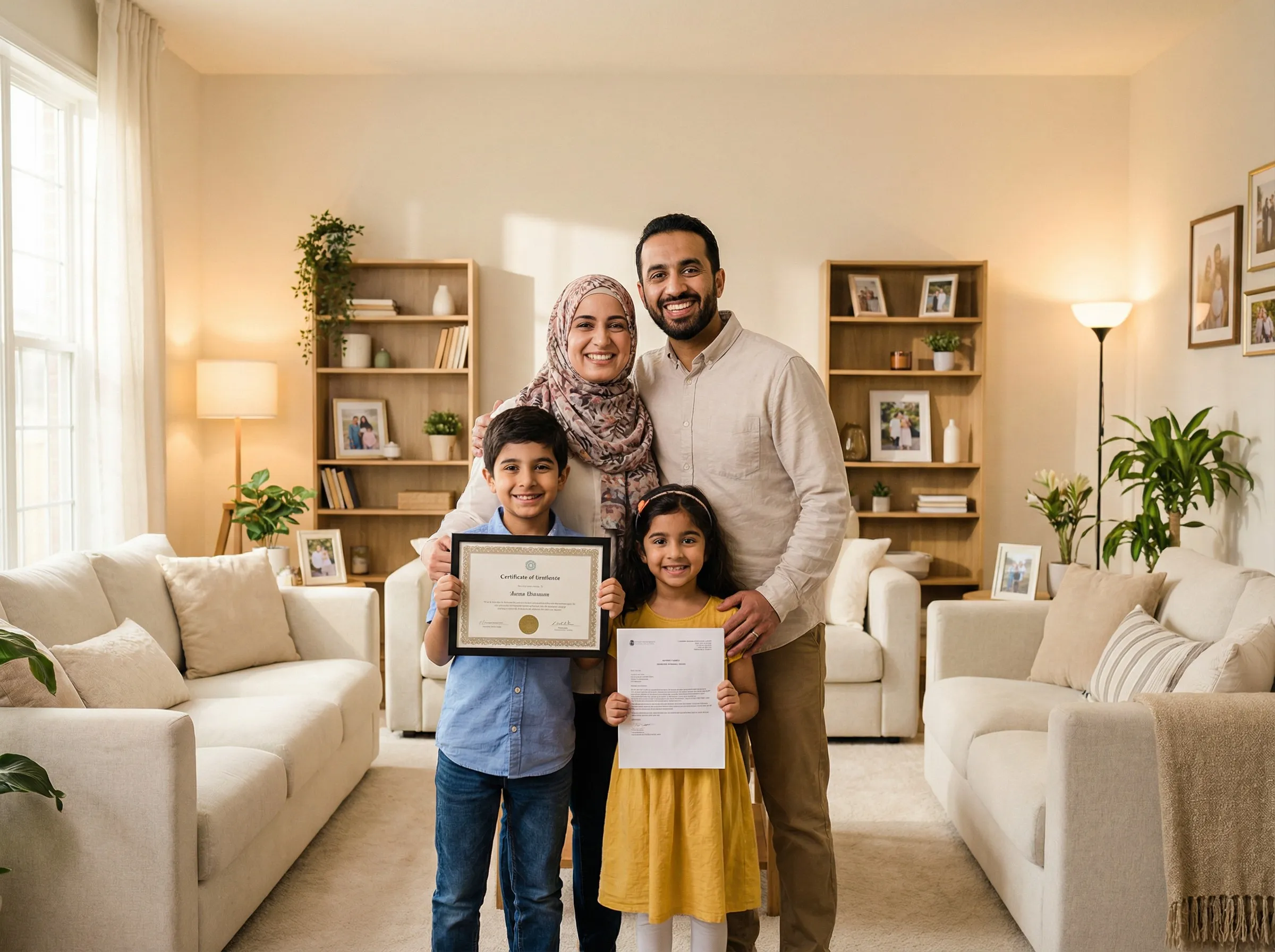
A structured Islamic curriculum for children ensures consistent learning, prevents gaps in knowledge, and builds confidence through measurable progress—unlike scattered weekend classes or YouTube videos alone.
☪️“Teach your children to pray when they are seven years old, and discipline them for it when they are ten.”
— The Prophet Muhammad ﷺ, Sunan Abu Dawud 495
This hadith emphasizes timing and structure in Islamic education. Consistency builds habits that last a lifetime. When children learn fiqh questions for kids in a systematic way, the knowledge becomes second nature.
Benefits of Structured Learning:
- ✓ Professional teachers correct pronunciation and practice mistakes early
- ✓ Structured progress keeps children motivated through visible achievements
- ✓ Parents receive clear updates on their child’s development
The 7 Core Pillars of Our Islamic Studies Curriculum for Kids
Our Islamic studies curriculum for kids is built on seven essential pillars that create well-rounded, confident young Muslims:
Quran Recitation & Tajweed
Proper pronunciation from day one ensures children develop beautiful recitation skills that stay with them forever. Explore our Tajweed Course for Kids.
Fiqh Foundations
This includes wudu for kids, salah steps for kids, and understanding halal and haram for kids in practical, relatable terms. Learn more about How to Teach Salah to Children.
Aqeedah (Beliefs)
Children learn who Allah is, the role of Angels, stories of the Prophets, and awareness of the Day of Judgment in age-appropriate language.
Seerah
Stories of Prophet Muhammad ﷺ inspire character development and provide role models children can relate to.
Akhlaq & Adab
Islamic manners including honesty, kindness, respect for elders, and caring for others become daily practice.
Dua & Adhkar
Daily supplications children can memorize empower them to connect with Allah independently.
Seasonal Learning
Special modules cover Ramadan fiqh for kids, Hajj awareness, and Eid traditions, making Islamic celebrations meaningful learning opportunities.
How We Teach Fiqh, Salah & Wudu for Kids
We teach fiqh for kids using visual demonstrations, step-by-step practice, and gentle repetition. Children learn salah steps through live demonstration, and wudu through interactive video guides—making worship feel natural, not overwhelming.
Salah Steps for Kids
- Stand facing Qibla with intention (Niyyah)
- Raise hands and say “Allahu Akbar” (Takbir)
- Recite Al-Fatiha and a short Surah
- Bow (Ruku) with back straight
- Stand and say “Sami Allahu liman hamidah”
- Prostrate (Sujood) with 7 body parts touching ground
- Sit, then prostrate again
- Complete with Tashahhud and Salam
“Pray as you have seen me praying.”
— The Prophet ﷺ, Sahih al-Bukhari 6008
This hands-on approach to teaching wudu for kids and salah steps for kids transforms what could feel like a chore into a beloved daily routine.
The Academy Method: How Quran Book Academy Delivers Results
At Quran Book Academy, our Islamic studies curriculum for kids is built on educational psychology and traditional Islamic scholarship working hand-in-hand.
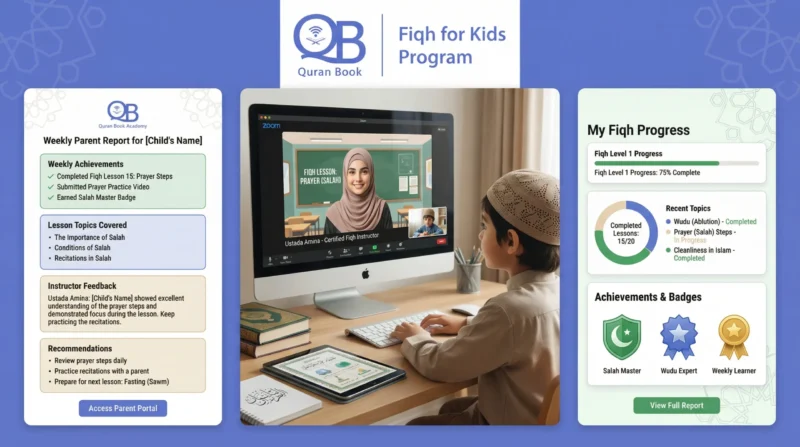
Live Zoom Sessions
Real-time interactive learning with certified Quran and Islamic Studies teachers—not pre-recorded videos
Progress Tracking LMS
Weekly automated reports keep parents informed of their child’s development
25-30 Min Sessions
Designed to match children’s attention spans
Global Accessibility
Serving families in USA, Canada, UK, and Australia with flexible scheduling
Whether your child is learning halal and haram for kids, mastering wudu steps, or memorizing salah positions, our curriculum grows with them. This isn’t just Islamic education; it’s a complete Islamic curriculum for children that builds confident, practicing Muslims who love their Deen. We also offer Islamic Courses for Adults so the whole family can learn together. Join our Telegram Community for daily Islamic reminders!
Age-Appropriate Islamic Studies Curriculum Breakdown
This progressive approach ensures children master fundamentals before advancing, building genuine confidence in their Islamic practice.
Free Islamic Studies Curriculum for Kids
Want a more practical plan? Explore our free age-by-age Islamic Studies curriculum with suggested learning goals for Aqeedah, Fiqh, Seerah, Akhlaq, Dua, and Quran.
- ✓ Ages 4–6, 7–9, 10–12 & Teens
- ✓ Six Islamic Studies learning areas
- ✓ Printable curriculum summary
- ✓ Sample weekly schedule
- ✓ 5-question level quiz
- ✓ No registration required
Which Islamic Studies Level Fits Your Child?
The resource includes a simple 5-question starting-level quiz, plus a recommended learning path based on the result.
Sample Weekly Islamic Studies Schedule
See suggested activities, age-based learning goals, and the printable version in the free curriculum resource.
Practice Islamic Studies Through Interactive Games
Children can also review Islamic Studies concepts through interactive practice. Use our Islamic Studies games as a supplementary activity for revision, discussion, and family learning.
Interactive practice gives children another way to review Islamic Studies concepts outside the main lesson.
If the game area does not load on your device, open the Islamic Studies Games page directly.
FAQ: Common Questions About Islamic Studies Curriculum for Kids
Q1: What age should children start Islamic studies? +
Children can begin basic Islamic learning at age 4-5 with simple duas and Allah’s names. Formal curriculum with fiqh and Quran should start by age 7.
Q2: How long does it take to complete an Islamic curriculum? +
The length depends on the child’s age, starting level, lesson frequency, previous Islamic learning, and curriculum goals. A structured program can be organized across progressive levels so children build foundations before moving to more detailed topics. Our program can be structured across progressive levels based on the child’s current ability and learning goals.
Q3: What are the 5 pillars taught in fiqh for kids? +
Children learn Taharah (purification), Salah (prayer), Sawm (fasting), Zakat (charity concept), and Hajj (basic awareness).
Q4: Can non-Arabic speaking kids learn effectively? +
Absolutely. Our curriculum is designed specifically for English-speaking Muslim children in the USA, UK, Canada, and Australia, with Arabic taught progressively alongside understanding.
Hafidha of the Quran · Arabic Language Graduate · Writer on Islamic Sciences
Jehad Mahmoud is a graduate of the Arabic Language department and a Hafidha of the Quran who writes the Islamic educational content at Quran Book Academy.
She specialises in Quranic Arabic, Tajweed and the Sharia sciences, making Islamic learning and complex concepts accessible to English-speaking Muslim families.
She also holds credentials in Tajweed and the Quranic sciences — experience that supports her educational writing on Quran, Islamic Studies and Muslim learning.
Her articles are educational, not fatwa. For a ruling on a specific personal situation, readers are advised to consult a qualified scholar or mufti.
References
- Quran, Surah At-Tahrim 66:6 – Command to protect families from the Fire through Islamic education.
- Sunan Abu Dawud 495 – Hadith on teaching children prayer at age seven.
- Sahih al-Bukhari 6008 – Hadith: “Pray as you have seen me praying.”
- Quran, Surah Ta-Ha 20:114 – Dua for increase in knowledge.
- Quran Book Academy Curriculum Documentation – Proprietary 7-pillar Islamic education framework.
Leave a Reply