Adult Islamic Studies · Live one-to-one lessons in English
Online Islamic Studies Programs for Adults: Explore 6 Essential Subjects
Our online Islamic studies programs for adults cover six core subjects (Aqeedah, Fiqh, Hadith, Seerah, Tafseer, and Akhlaq) through live one-to-one lessons with a teacher, taught in English.
If what you know so far has come in scattered pieces, if some questions never got a clear answer, or if work and family leave little room for study, a structured course with a teacher can help you learn steadily, one topic at a time.
- Live one-to-one on Zoom
- Taught in English
- Beginners welcome
- Female teachers available
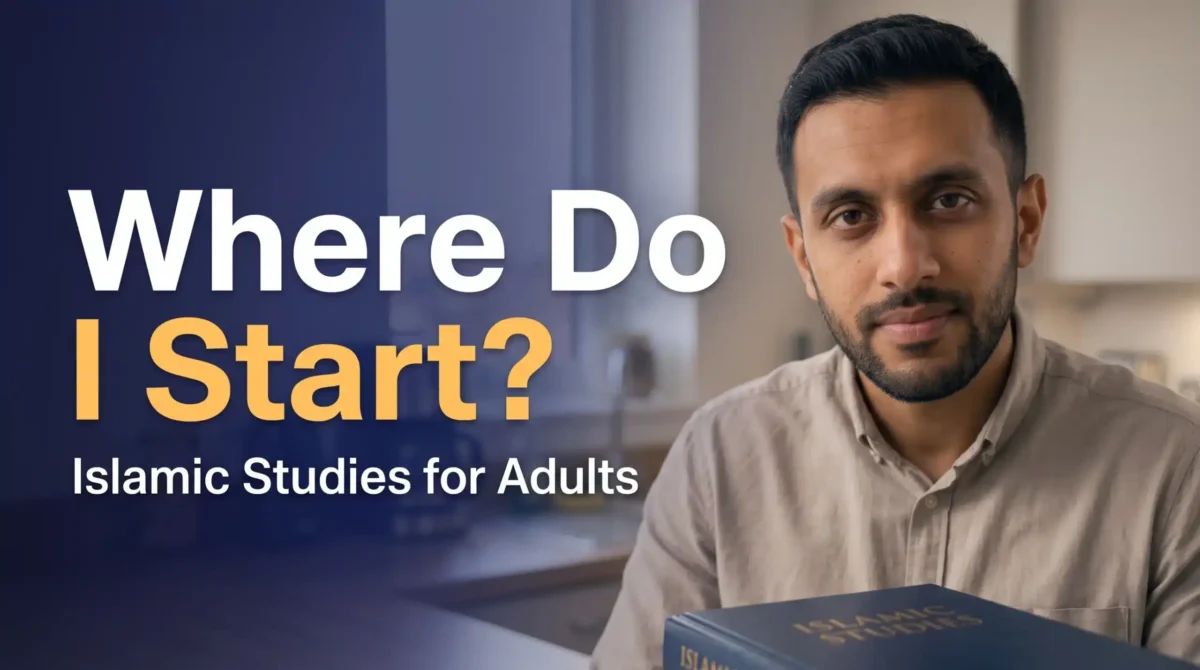
Islamic Studies for Adults, Wherever You’re Starting From
Adult Islamic learning looks different for everyone. Some learners are starting fresh, others want to fill in what they missed, and many are fitting study around jobs and families. Here is how the course responds to the most common starting points.
You’re not sure where to start
The course is organized around six defined subjects, so you have a clear map instead of a scattered list of topics. You can use your free trial to talk through where to begin.
You’re a beginner or new to Islam
No prior study is needed. In one-to-one lessons, your teacher can start from your current level and explain core terms and ideas step by step.
You want to fill gaps in what you know
Because lessons are one-to-one, you can focus on the subjects and questions that matter to you and revisit topics you only partly learned before.
You learn best in English
Lessons are taught in English. Arabic terms are introduced and explained as they come up, so you don’t need to speak Arabic to take part.
You’re balancing work and family
Lesson times are arranged individually, with flexible options across US time zones. Share your availability and time zone when you book so times can be confirmed.
You’re a parent who wants to learn first
Strengthen your own understanding of belief, worship, and character so you feel better prepared for the questions your children ask.
Explore Islamic Learning
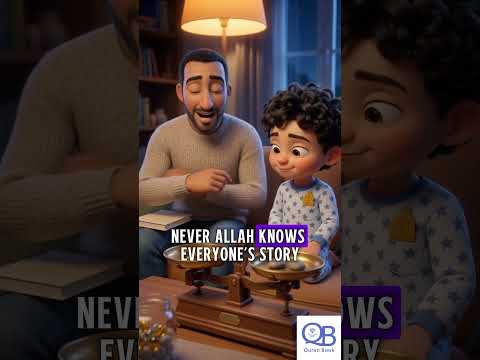
Short videos from our YouTube channel. Some are made with families and younger viewers in mind, so they also work well for watching together.

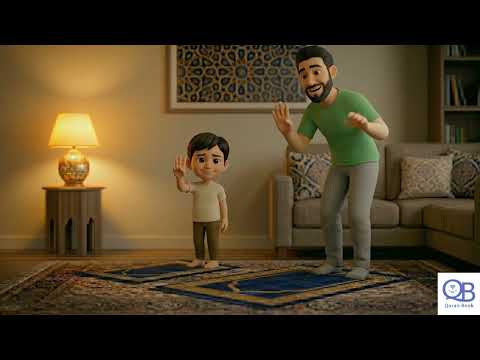


More videos are on the Quran Book Online YouTube channel.
The 6 Subjects in Our Online Islamic Studies Programs for Adults
These are the six subjects covered in this course. They are not a list of every Islamic science, but together they give adult learners a well-rounded foundation: what Muslims believe, how worship is practiced, the Prophet’s ﷺ words and life, the meanings of the Quran, and good character.
You can study the subjects in sequence or focus on the areas that matter most to you right now. See the full adult programs page for more course information.

AqeedahIslamic creed and belief
Aqeedah covers the core beliefs of Islam: belief in Allah, His names and attributes, the unseen, and the Hereafter. The other subjects build on it.
Key topics
- The six pillars of faith (Iman)
- Tawheed: the Oneness of Allah
- Qadr: divine decree and human choice
More about Aqeedah
- The six pillars of faith (Iman)
- Tawheed: Allah’s Oneness in lordship, worship, and names and attributes
- Belief in the angels and their roles
- The revealed books and the Quran’s place among them
- The Day of Judgment: death, resurrection, and accountability
- Qadr (divine decree): understanding predestination and free will

FiqhIslamic jurisprudence
Fiqh deals with the practical rulings of worship and daily life: how to purify yourself, pray, fast, and give zakah, among other areas. It connects belief with action.
Key topics
- Taharah: wudu, ghusl, and tayammum
- Salah: performing the daily prayers
- The basics of fasting and zakah
More about Fiqh
- Taharah (purification): wudu, ghusl, tayammum, and rules of cleanliness
- Salah: the five daily prayers and Sunnah prayers
- Zakah: who pays, how much, when, and to whom
- Sawm: the rules of Ramadan and voluntary fasts
- Halal and haram: dietary rules and everyday boundaries
- An introduction to family matters: marriage, divorce, inheritance, and parenting
Fiqh is taught at an introductory level. For a ruling on your own specific situation, consult a qualified scholar.

HadithProphetic traditions
Hadith are reports of the sayings, actions, and approvals attributed to the Prophet Muhammad ﷺ. Scholars grade each report: some are authentic, others are weak. Learning how reports are evaluated is part of the subject.
Key topics
- How hadith are authenticated and classified
- Selected hadith from Sahih al-Bukhari and Sahih Muslim
- Prophetic guidance on worship, character, and daily life
More about Hadith
- An introduction to the hadith sciences: authentication and classification
- Readings from authentic collections such as Sahih al-Bukhari and Sahih Muslim (you can browse both on Sunnah.com)
- Prophetic guidance on faith, worship, and character
- Hadith on daily life: eating, sleeping, speaking, and social conduct
- Understanding the difference between authentic and weak hadith
- Reflecting on how Prophetic guidance applies to modern life

SeerahThe Prophet’s ﷺ biography
Seerah follows the life of the Prophet Muhammad ﷺ, from his early years in Makkah to the community he built in Madinah, and the lessons each stage offers for everyday life.
Key topics
- Life in Makkah and the first revelation
- The Hijrah and the community in Madinah
- Lessons in patience, mercy, and forgiveness
More about Seerah
- Early life in Makkah: birth, childhood, and character before prophethood
- The first revelation and the early years of Islam
- Persecution in Makkah: lessons in patience and perseverance
- The Hijrah to Madinah and building the first Muslim community
- Major battles and the lessons drawn from them
- The conquest of Makkah: mercy and forgiveness

TafseerExplanation of the Quran
Tafseer explains the meanings of the Quran: what verses say, the context in which they were revealed, and how scholars have understood them, so recitation can be joined with understanding.
Key topics
- Principles of Quranic interpretation
- Selected surahs explained
- Asbab al-Nuzul: reasons for revelation
More about Tafseer
- An introduction to Tafseer and its principles
- Study of selected surahs with explanation
- Asbab al-Nuzul (reasons for revelation)
- Quranic stories: lessons from the prophets and earlier nations
- How to reflect on Quranic teachings
- Common misunderstandings clarified
أَفَلَا يَتَدَبَّرُونَ الْقُرْآنَ أَمْ عَلَىٰ قُلُوبٍ أَقْفَالُهَا
“Do they not reflect upon the Quran, or are there locks upon their hearts?”
Surah Muhammad (47:24)AkhlaqManners, ethics, and character
Akhlaq is about character: how a Muslim speaks, treats family and others, works with integrity, and looks after the heart.
Key topics
- Truthfulness, honesty, and generosity
- Guarding the tongue from harmful speech
- The rights of parents, spouses, children, and relatives
More about Akhlaq
- Character traits praised in Islam: truthfulness, honesty, and generosity
- Managing anger, jealousy, and other difficult emotions
- Good speech: avoiding backbiting, lying, and harmful talk
- The rights of parents, spouses, children, and relatives
- Ethics at work: integrity in employment and business
- Purifying the heart
“The most complete of the believers in faith is the one with the best character among them.”
Jami’ at-Tirmidhi 1162
What to expect from the depth of study. Each subject is taught at an introductory-to-foundational level for personal learning. The course is not scholarly or professional training, and it does not qualify learners to issue religious rulings.
What Happens in a Live Lesson
Lessons are live and one-to-one with your teacher on Zoom, taught in English. Each lesson follows a simple rhythm, so you always know where you are and what comes next.
Review
Recap what you covered last time and check what is already clear.
Explore
Your teacher introduces the next topic with explanation and examples.
Discuss
Ask your questions, work through examples, and connect the topic to everyday life.
Summarize
Close with the key points and note what to review before the next lesson.
“Make things easy and do not make them difficult. Give glad tidings and do not drive people away.”
Sahih al-Bukhari 6125
Questions are welcome at every stage, whatever your starting point. Read more about our teaching approach or meet our teachers.
See If This Course Fits You
Book a free trial to meet a teacher, talk about what you’d like to learn, and see how one-to-one lessons work before you decide.
Islamic Learning for Kids
The course on this page is for adults. If you have children at home, these optional resources are something you can explore together: four short videos and a quick game about kindness.


Choose the Kind Action
Read each situation together and pick the kind choice. There are five questions.
This game needs JavaScript. Please enable JavaScript in your browser to play.
Question 1 of 5
Score: 0
You scored 0 out of 5
Frequently Asked Questions
What subjects does the course cover?
Six subjects: Aqeedah (creed), Fiqh (jurisprudence), Hadith (Prophetic traditions), Seerah (the Prophet’s ﷺ biography), Tafseer (explanation of the Quran), and Akhlaq (character and manners). See the curriculum section for the topics in each.
Is the course suitable for beginners and new Muslims?
Yes. No prior Islamic study is required. Because lessons are one-to-one, your teacher can start from your current level and explain terms and ideas as you go.
Are lessons taught in English?
Yes. Lessons are taught in English, and Arabic terms are explained when they come up. You don’t need to speak Arabic to join.
How do the live lessons work?
Lessons are live, one-to-one video sessions with your teacher on Zoom. A typical lesson moves through four steps: reviewing what you learned before, exploring a new topic, discussing your questions and examples, and summarizing what to review next.
How are lesson times scheduled?
Times are arranged individually based on teacher availability, with flexible options for US time zones. When you book, include your time zone and the days and times that suit you, and available slots will be confirmed with you.
How does the free trial work?
Book through the free trial page. The trial is a chance to meet a teacher, talk about your learning goals, and see how lessons work before deciding whether to continue. Any questions about the details can be asked when you book.
How long does it take to complete the six subjects?
There is no fixed timeline. Your pace depends on your starting level, which subjects and topics you choose to focus on, and how often you take lessons. Your teacher can help you set a realistic plan.
Can I request a female teacher?
Yes, female teachers are available. Mention your preference when you book your free trial.
Do I receive a certificate?
This course is designed for personal learning. If a certificate or other completion record matters to you, please ask before you enroll what documentation is available and what it does and does not represent.
Ready to Start Learning?
Book a free trial, meet a teacher, and take the first step toward studying your faith with structure and support.
Book Your Free Trialوَقُل رَّبِّ زِدْنِي عِلْمًا
“And say: My Lord, increase me in knowledge.”
Surah Ta-Ha (20:114)