
📖 Ramadan Quran Guide
How to Complete the Quran in Ramadan: 7-Step Reading Plan
(Even with a Busy Schedule)
✦ By Quran Book Academy | ✦ Reading Time: 15 min | ✦ Published: January 20, 2026 · Updated: September 1, 2026

Every Ramadan, millions of Muslims set out to complete the Quran—and many fall short, not due to lack of faith, but because life gets overwhelming. If you’ve ever felt the guilt of an unfinished Quran or wondered how to complete Quran in Ramadan while juggling work, family, and daily prayers, you’re not alone.
The beautiful truth? Khatam Quran isn’t reserved for scholars or the retired—it’s achievable for anyone with the right system. Whether you’re a busy professional in New York, a parent managing a household in London, or a student balancing studies in Sydney, this guide will show you exactly how to finish your Ramadan Quran reading with confidence and barakah.
This comprehensive guide breaks down the exact steps, realistic timelines, and practical strategies students use at Quran Book Academy to work through their Ramadan recitation. By the end, you’ll have a clear Ramadan Quran reading schedule tailored to your lifestyle.
Why Completing the Quran in Ramadan Holds Special Significance
Completing the Quran during Ramadan carries immense spiritual reward because this blessed month is when the Quran was first revealed. The Prophet Muhammad ﷺ reviewed the entire Quran with Jibreel every Ramadan, and twice in his final year. This practice, known as Khatam Quran, multiplies blessings during the month when good deeds are magnified.
“The month of Ramadan [is that] in which the Quran was revealed, a guidance for the people and clear proofs of guidance and criterion.”
— Surah Al-Baqarah 2:185
The connection between Ramadan and Quran runs deep in Islamic tradition. This is the month when the heavens opened, and divine guidance descended to humanity. Reading Quran during Ramadan isn’t just a tradition—it’s a way of connecting with the very essence of what makes this month sacred.
“Jibreel used to meet the Prophet ﷺ every night during Ramadan and review the Quran with him.”
— Sahih Al-Bukhari, 6
During Laylatul Qadr (the Night of Power), the rewards multiply exponentially—worship on this single night is better than a thousand months. Many Muslims increase their Quran recitation significantly during the last ten nights of Ramadan, seeking the blessings of this magnificent night while striving to complete their Khatam Quran.
How Long Does It Take to Complete the Quran?
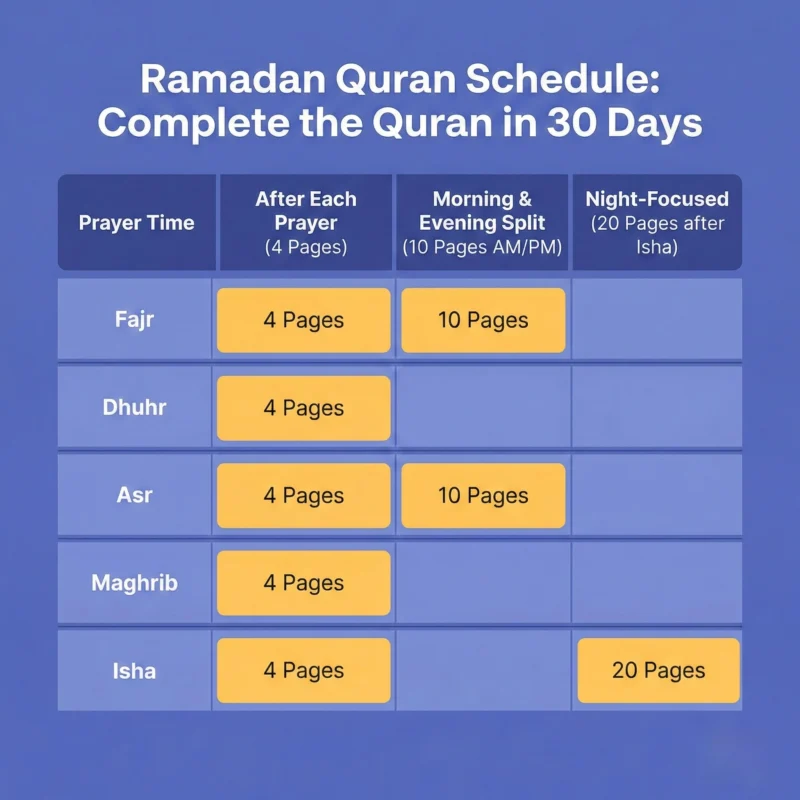
Understanding the time commitment is crucial for creating a realistic Quran reading plan. The Quran is divided into 30 Juz (parts). In the commonly used 604-page Madinah Mushaf, completing one full reading means averaging about 20 pages per day over 30 days; page counts differ from one Mushaf edition to another. Here’s what this means in practical terms:
- 1 Reading 1 Juz takes 30–45 minutes for most readers
- 2 Completing the full Quran takes 15–23 hours total
- 3 Across a Ramadan of 29–30 days, that’s just 30–45 minutes daily
- 4 Beginners may need 60–90 minutes per Juz initially
Understanding How Long One Juz Takes
How long is one Juz? Each Juz contains approximately 20 pages of the Quran. Your reading time depends on your fluency level and whether you’re focusing on Tajweed (proper pronunciation rules):
- ✦ Fluent Arabic readers: 20–30 minutes per Juz
- ✦ Non-Arabic speakers reading transliteration: 45–60 minutes
- ✦ New learners with Tajweed focus: 60–90 minutes
The Math Behind Your Ramadan Quran Reading Schedule
Let’s break down exactly what you need based on your reading speed. This table helps you understand how long it takes to complete the Quran and plan accordingly:
New to Quran reading? Our Online Quran Reading Course can help you build the foundation you need.
“Whoever reads a letter from the Book of Allah will receive a hasanah (good deed) from it, and the hasanah is multiplied by ten.”
— Jami’ at-Tirmidhi, 2910
7 Practical Steps to Complete the Quran in Ramadan
Now let’s dive into the practical methodology. These seven steps give you a simple structure to follow for your Ramadan Quran reading:
- 1 Set your intention (Niyyah) before Ramadan begins
- 2 Create a personalized Ramadan Quran reading schedule
- 3 Anchor reading to your 5 daily prayers
- 4 Use the “chunking” method for psychological ease
- 5 Leverage technology and accountability tools
- 6 Join a community or study circle
- 7 Build flexibility for difficult days
1 Set Your Intention (Niyyah) Before Ramadan Begins
Before Ramadan arrives, take time to set a sincere intention for completing your Quran reading. The power of Niyyah in Islam cannot be overstated—it transforms routine actions into acts of worship. Write down your goal, make dua (supplication) for success, and mentally commit to this blessed journey.
Deciding in advance also makes follow-through easier in practice. When you set your intention before Ramadan begins, you’re not just hoping to finish the Quran—you’re making a deliberate commitment to your Quran reading goal.
“Actions are judged by intentions, and every person will be rewarded according to their intention.”
— Sahih Al-Bukhari, 1
2 Create Your Personalized Ramadan Quran Reading Schedule
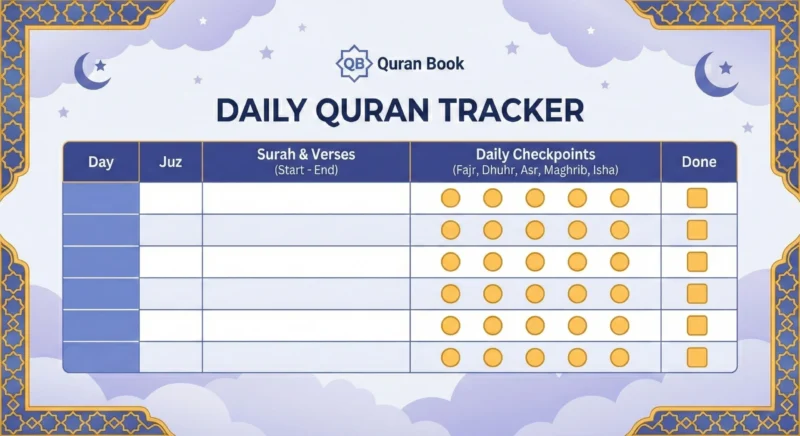
A Ramadan Quran reading schedule isn’t one-size-fits-all. Your optimal plan depends on your daily routine, energy levels, and personal preferences. The key formula is simple: about 1 Juz per day across the month equals Khatam Quran (Ramadan may be 29 or 30 days). Here are four practical schedule types:
29-Day vs 30-Day Ramadan Quran Plan
| Ramadan Length | Suggested Daily Target |
|---|---|
| 30 days | About 20–21 pages per day |
| 29 days | About 21 pages per day |
Page counts are based on the commonly used 604-page Madinah Mushaf and may vary by edition. This is an organisational plan only, not a religious obligation.
The After Fajr Plan works exceptionally well because your mind is fresh, the house is quiet, and you start your day with barakah. However, if you’re not a morning person, don’t force it—the best Quran reading plan is the one you’ll actually follow consistently.
📥 Download your free schedule: Get our Free Ramadan Quran Schedule PDF to track your daily progress!
3 Anchor Your Reading to the 5 Daily Prayers
One of the most effective strategies for reading Quran during Ramadan is anchoring your recitation to your five daily prayers. A practical habit-building approach is to connect Quran reading with an existing daily routine—linking Quran reading to something you already do every day can make the habit easier to remember and maintain.
Here’s how it works: read 4–6 pages after each Salah. Since you’re already in a state of wudu and spiritual focus, transitioning to Quran recitation feels natural. The Adhan serves as a built-in reminder five times daily, and since prayers are non-negotiable for practicing Muslims, you’ll never completely miss a reading session.
This method distributes your reading throughout the day, preventing fatigue and making the goal of one Juz feel more manageable. Over time, reading can stop feeling like a separate task and become a natural part of your daily rhythm.
4 Use the “Chunking” Method for Psychological Ease
For many readers, the biggest barrier to completing the Quran isn’t time—it’s psychological overwhelm. Looking at a full Mushaf can feel insurmountable, but the “Chunking Method” turns this mountain into manageable hills. Here’s how it works:
Instead of thinking “I need to read the entire Quran,” focus only on the current page—then the next. This approach reduces mental fatigue and helps you stay engaged. During our live Zoom sessions, our teachers guide students through Tajweed-focused reading in digestible 25-minute blocks, followed by 5-minute breaks.
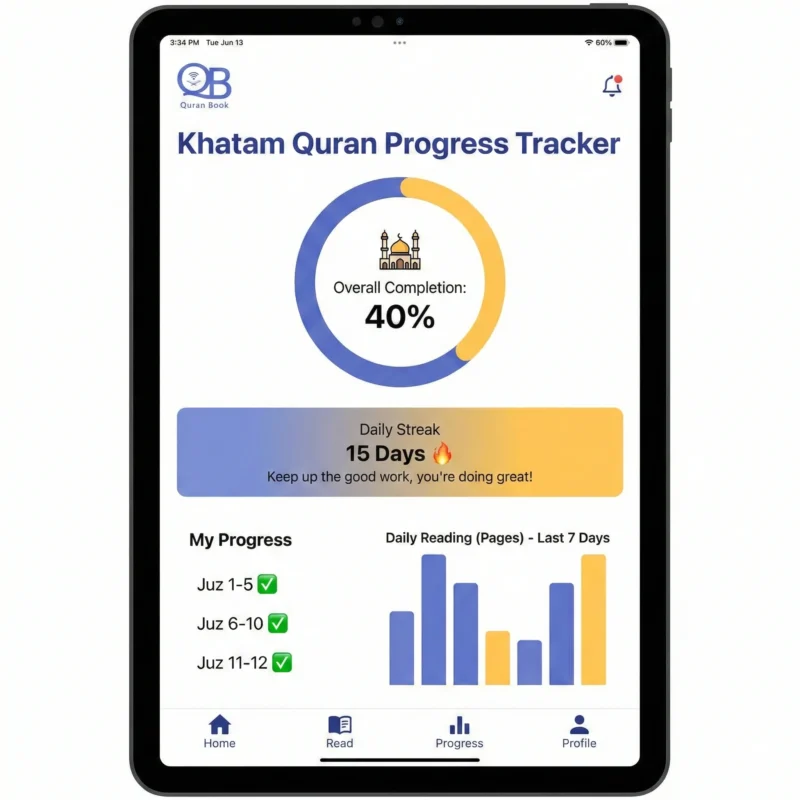
Our custom Learning Management System (LMS) tracks your daily progress and can send email progress reports that show how many pages you’ve completed and your consistency over time.
The idea is simple: small wins create momentum. When you complete one Juz and see the progress bar move on your student dashboard, visible progress can make a long-term goal feel more manageable and motivating.
5 Leverage Technology and Accountability Tools
Modern technology offers incredible resources to support your Quran for Ramadan journey. Here are some of the most effective tools:
- 📱 Quran apps with bookmarking (Quran.com, Tarteel AI) – Track your position and resume instantly
- ⏰ Daily reminder alarms – Set for your chosen reading times
- 📊 Progress tracking spreadsheets – Visual representation of your journey
- 👥 Accountability partner check-ins – Share daily progress with a friend or family member
6 Join a Community or Study Circle
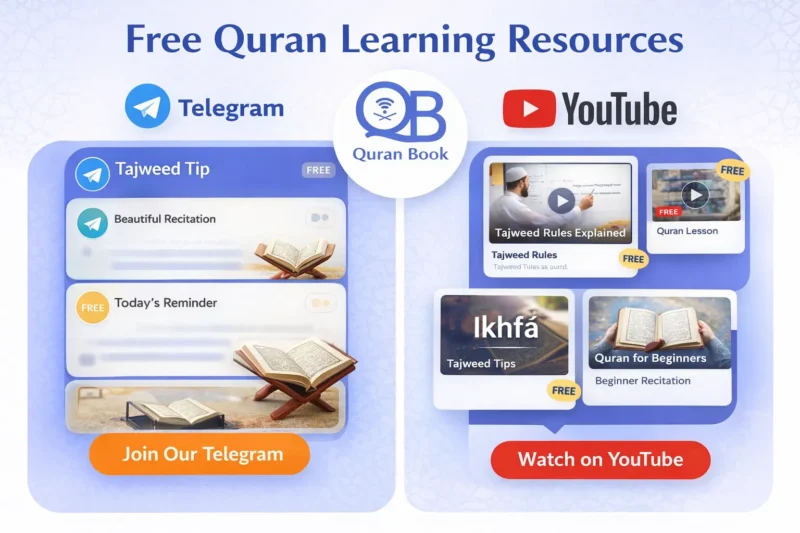
There’s profound wisdom in learning together. Virtual halaqas (study circles) make group learning accessible regardless of your location. At Quran Book Academy, our live classes create a supportive environment where students encourage each other through the Ramadan journey.
“No people gather in a house of Allah, reciting the Book of Allah and studying it together, except that tranquility descends upon them, mercy covers them, angels surround them, and Allah mentions them to those near Him.”
— Sahih Muslim, 2699
The Prophetic tradition emphasizes learning together. Having an accountability partner or study group can also make it easier to stay consistent. Whether you join an online community, a local mosque program, or simply partner with a friend, don’t underestimate the power of collective motivation.
Connect with our community: YouTube Channel | Telegram Channel
7 Build Flexibility for Difficult Days
Life happens. Work emergencies, family obligations, health issues, or simple exhaustion may disrupt even the best-laid plans. Instead of letting one missed day derail your entire Quran Khatam goal, build flexibility into your system from the start.
- ✦ Plan for catch-up days: Designate Fridays or weekends as buffer days
- ✦ Permission to adjust: Reading half a Juz on hard days is better than nothing
- ✦ “2 Juz days” strategy: Make up missed readings on days with more energy
- ✦ Grace over perfection: Progress matters more than perfect adherence
💡 Remember: Even if you don’t complete the full Quran, every single ayah you read is rewarded. Allah sees your effort, not just your finish line.
Common Mistakes That Derail Your Ramadan Quran Goals
Awareness of common pitfalls helps you avoid them. Here are five frequent mistakes people make when trying to complete their Quran reading during Ramadan:
-
1Starting too fast, burning out by week 2 — Enthusiasm in the first days leads to unsustainable pace
-
2No fixed reading time — Relying on “whenever I have time” rarely works
-
3Perfectionism paralysis — Stopping completely because of mispronunciation fears
-
4Isolation — Trying to do it completely alone without support
-
5Neglecting Tajweed — Prioritizing speed over quality of recitation
This is exactly why structured learning with qualified teachers makes the difference. Our Tajweed-focused approach ensures you’re reading correctly while maintaining pace. You don’t have to choose between speed and accuracy—proper technique actually makes reading faster over time.
What If You Can’t Complete the Entire Quran?
Let’s address this important question with honesty and compassion. Not everyone can realistically finish the entire Quran in a single Ramadan, and that’s perfectly okay. What matters is sincere effort and consistent worship.
“The most beloved deeds to Allah are those done consistently, even if they are small.”
— Sahih Al-Bukhari, 6464
Consider these alternative goals based on your circumstances:
🎁 Free Juz Amma Memorization Resource
Prefer a focused Ramadan goal? You can use our free Quran memorization resource to work through Juz Amma at your own pace. Alongside memorization, take time to read and understand the tafsir of the surahs you are learning so your Ramadan Quran journey includes both memorization and reflection.
Start Memorizing Juz Amma FreeA half-Quran goal (15 Juz) is still immensely blessed. Some students choose to read fewer pages but with deeper reflection and understanding. Others focus on memorizing Juz Amma with proper Tajweed. Quality and consistency often matter more than quantity.
Frequently Asked Questions
How many pages of Quran should I read daily in Ramadan?
To complete the Quran in Ramadan, read approximately 20 pages (1 Juz) per day. This equals about 4 pages after each of the 5 daily prayers, taking 30–45 minutes total depending on your reading speed. Beginners should allow more time and may consider starting with 10 pages daily.
Can beginners complete Quran in Ramadan?
Yes, beginners can complete the Quran in Ramadan with proper planning. Beginners should allow 60–90 minutes daily and may benefit from following along with audio recitation. Starting with a qualified teacher before Ramadan helps build confidence and proper pronunciation. Our Academy offers pre-Ramadan preparation courses specifically designed for this purpose.
What is the best time to read Quran during Ramadan?
The best time to read Quran during Ramadan is after Fajr prayer, when the mind is fresh and distractions are minimal. Other effective times include after each of the five daily prayers, during the last third of the night, and after Taraweeh prayers. Choose the time that aligns best with your natural energy patterns.
How can I read Quran faster without losing quality?
To read Quran faster while maintaining quality, practice regular daily recitation to build fluency, follow the lines carefully as you read, work on correct pronunciation, and learn proper Tajweed rules to avoid hesitation. Listening to a reliable recitation can also help establish a natural reading rhythm. Speed comes gradually with practice—do not sacrifice correct recitation for speed.
Can I Read an English Translation of the Quran During Ramadan?
Yes. Reading a reliable English translation is beneficial for understanding the Quran. However, an English translation is a translation of the Quran’s meanings and is not the Arabic Quran itself. Muslims who are able to do so can combine Arabic recitation with reading a reliable translation to benefit from both recitation and understanding.
What is Khatam Quran and why is it important?

Khatam Quran means completing a full reading of the entire Quran from Al-Fatiha to An-Nas. It’s particularly significant during Ramadan because the Prophet ﷺ completed the Quran with Jibreel every Ramadan, and twice in his final year. This practice connects Muslims worldwide in a blessed tradition that has continued for over 1,400 years.
Start Your Ramadan Quran Journey with Expert Guidance
Completing the Quran in Ramadan doesn’t have to be a solo struggle. At Quran Book Academy, students can receive structured Quran reading guidance, and our teachers can help learners build a Quran reading plan based on their current level.
What You Get with Our Free Trial:
- ✓ One-on-one live session with a certified Quran teacher via Zoom
- ✓ Personalized assessment of your current reading level
- ✓ Custom Ramadan reading plan tailored to your schedule
- ✓ Introduction to our LMS tracking system
- ✓ No commitment, no pressure—just pure learning
🎯 This Ramadan, don’t just hope to complete the Quran—prepare to succeed.
Book Your Free Trial Lesson NowAlso explore: Tajweed Course for Beginners
Learn More
Continue your Quran learning journey with these helpful resources:
Benefits of Learning Quran Online
Discover the advantages of online Quran education and how it can transform your learning experience.
Read More →Laylatul Qadr
Learn about the Night of Power and how to maximize your worship during this blessed night.
Read More →Common Quran Reading Mistakes
Avoid these common errors and improve your Quran recitation with expert guidance.
Read More →Hafidha of the Quran · Arabic Language Graduate · Writer on Islamic Sciences
Jehad Mahmoud is a graduate of the Arabic Language department and a Hafidha of the Quran who writes Islamic educational content at Quran Book Academy.
She specialises in Quranic Arabic, Tajweed and Islamic sciences, helping English-speaking Muslim learners understand Quran recitation and Islamic topics in a clear and accessible way.
Her articles are educational and are not personal fatwas. For rulings related to a specific personal situation, readers should consult a qualified scholar or mufti.
References
Quran References
- Quran 2:185 — Surah Al-Baqarah, the revelation of the Quran in Ramadan
- Quran 97:3 — Surah Al-Qadr, the Night of Power being better than a thousand months
Hadith References
- Sahih al-Bukhari 1 — Actions are judged by intentions
- Sahih al-Bukhari 6 — Jibreel reviewing the Quran with the Prophet ﷺ in Ramadan
- Sahih al-Bukhari 4998 — The Quran being reviewed twice with Jibreel in the Prophet’s final year
- Sahih al-Bukhari 6464 — The most beloved deeds are those done consistently
- Sahih Muslim 2699 — Gathering to recite and study the Book of Allah
- Jami’ at-Tirmidhi 2910 — Reward for reading each letter of the Quran
- Sunnah.com — Hadith collections including Sahih al-Bukhari, Sahih Muslim, and Jami’ at-Tirmidhi
Quran Resources
- Quran.com — Digital Quran with translations and audio recitations
- Tarteel AI — AI-powered Quran recitation assistant
Community Resources
- Quran Book Academy YouTube — Video tutorials and Tajweed lessons
- Quran Book Academy Telegram — Community practice and daily Tajweed tips
Leave a Reply