7 Beautiful Stories of the Prophets for Kids That Build Faith & Character

Introduction
Stories of the prophets for kids are powerful Islamic narratives that teach children about faith, patience, and good character through the lives of Allah’s chosen messengers. These engaging tales make learning Islam memorable and meaningful for young minds eager to understand their heritage.
We understand how challenging it can be to teach your child about Islam, especially in non-Arabic speaking environments. Many parents worry whether their children will connect with their faith or find religious lessons boring. At Quran Book Academy, we work with families in the USA, Canada, UK, and Australia on these exact challenges through interactive and joyful Islamic education.
This comprehensive guide shares seven essential Islamic prophet stories for kids, explains why they matter for spiritual development, and shows how careful teaching methods can make Islamic education enjoyable. Whether you are looking for a short story of Prophet Muhammad for kids or exploring stories of the prophets in Islam for kids, this resource will guide your family’s learning journey.
Why Are Stories of the Prophets Important for Kids?
Stories of the prophets in Islam for kids build spiritual foundations by teaching moral lessons through relatable narratives. Children can learn empathy, patience, trust in Allah, and resilience — qualities that help shape their character and strengthen their Muslim identity from an early age.
“There was certainly in their stories a lesson for those of understanding.
✦ Four Key Benefits of Prophet Stories for Children:
- 1. Can build love for Allah and His messengers through personal connection
- 2. Can teach problem-solving through prophetic examples and wisdom
- 3. Can help children explore emotions such as patience, fear, hope, and forgiveness through meaningful stories
- 4. Can create meaningful Islamic learning memories that help children connect with their faith
Who Are the Five Messengers of Firm Resolve (Ulul ‘Azm)?
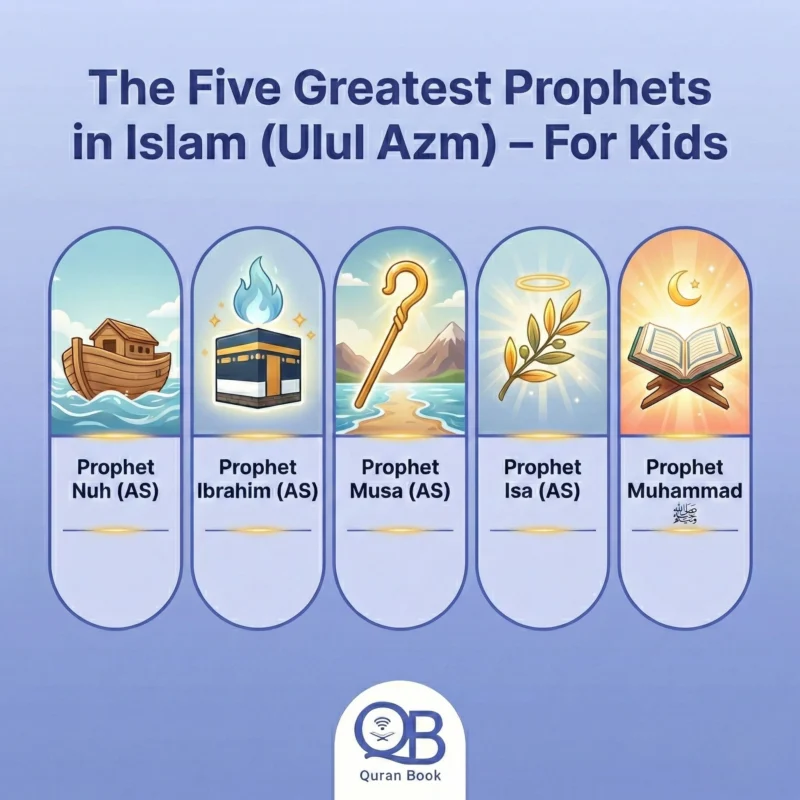
The term Ulul ‘Azm refers to messengers described in the Quran as people of firm resolve, who showed outstanding patience in conveying Allah’s message. Allah says: “So be patient, as were those of determination among the messengers” (Surah Al-Ahqaf 46:35). Many scholars of tafsir identify them as the five messengers mentioned together in Surah Al-Ahzab 33:7. This is not a ranking of who matters most — every prophet of Allah is honoured and loved by Muslims.
The Prophet Muhammad ﷺ said: “The prophets are paternal brothers… their religion is one.”
Understanding these five messengers provides children with a strong foundation in Islamic prophet stories for kids, helping them recognize the unified message of Islam throughout history. Explore our Islamic Courses for Kids to learn more.
How to Explain What a Prophet Is to Kids (Simple Guide)
Explaining prophets to children requires simple, age-appropriate language. Here is a simple four-step approach:
Use relatable terms:
“A prophet is a human being chosen by Allah to receive His guidance and teach people how to worship Allah and live according to His commands.”
Connect to their world:
“Just like your teacher helps you learn at school, prophets helped all people learn about Allah.”
Emphasize the core message:
“Every prophet taught the same thing: There is only one God, Allah, and we should worship Him alone.”
Make it visual:
Use picture books, storytelling, and interactive discussions to bring concepts alive.
These techniques make prophet stories for children accessible and engaging, transforming abstract concepts into memorable lessons. Our expert teachers specialize in these methods.
7 Essential Islamic Prophet Stories for Kids
📖 Prophet Muhammad ﷺ — The Trustworthy
The story of Prophet Muhammad for kids begins in the city of Makkah, where a young orphan grew up with excellent character. He was so well known among his people for honesty and trustworthiness that they called him “Al-Amin” (The Trustworthy). Even the leaders of Quraish who opposed his message could not accuse him of lying, as Abu Sufyan admitted before Heraclius (Sahih al-Bukhari 7). The Quran itself describes him: “And indeed, you are of a great moral character” (Surah Al-Qalam 68:4). This short story of Prophet Muhammad for kids teaches children that honesty and kindness matter most, regardless of circumstances.
✦ Prophet Yusuf — Patience Through Hardship
Thrown into a well by his brothers and later imprisoned though innocent, he never lost faith in Allah and was eventually given authority in the land of Egypt (Surah Yusuf 12:15, 12:56). His story teaches patience, trust in Allah, and remaining righteous during hardship.
✦ Prophet Musa — Courage & Leadership
Allah commanded him: “Go to Pharaoh. Indeed, he has transgressed” (Surah Taha 20:24). He stood before the powerful Pharaoh to deliver Allah’s message, teaching children to stand for truth despite opposition.
✦ Prophet Yunus — Turning Back to Allah
Prophet Yunus عليه السلام left his people before receiving permission to do so, an action scholars have discussed as a case of leaving what was better (tark al-awla). In the darkness, he turned to Allah with the famous supplication, “There is no deity except You; exalted are You. Indeed, I have been of the wrongdoers” — and Allah answered him and rescued him from distress (Surah Al-Anbiya 21:87–88). His story teaches children to turn back to Allah, acknowledge mistakes, make sincere dua, and trust in Allah during hardship.
✦ Prophet Ibrahim — Complete Trust (Tawakkul)
His willingness to obey Allah’s command regarding his beloved son, and his son’s willing acceptance, demonstrate complete trust in Allah’s wisdom (Surah As-Saffat 37:102–107). His story forms the foundation of Eid al-Adha celebrations worldwide.
✦ Prophet Nuh — Persistence & Conviction
He continued obeying Allah while his people mocked him as he built the Ark (Surah Hud 11:38). He had called his people to Allah night and day over a very long period (Surah Nuh 71:5), teaching children persistence and steady conviction in their beliefs.
✦ Prophet Isa — Allah’s Limitless Power
His story shows children that Allah’s power has no limits, through the signs he was given by Allah’s permission (Surah Al-Imran 3:49).
“We relate to you the best of stories.”
Each narrative in these stories of the prophets for kids plants seeds of iman, helping children understand their heritage and love prophetic character. Enroll in our Online Quran Classes for Children to begin.
Quick Quiz: How Well Do You Remember the Prophet Stories?
Five short questions based on the stories above. Choose an answer to see whether it is correct.
1. Which prophet was thrown into a well by his brothers?
2. Which prophet was sent to Pharaoh?
3. Which prophet built the Ark while his people mocked him?
4. Which prophet made dua in the darkness inside the great fish?
5. Who is the final Prophet and Messenger?
The Academy Method — How We Teach Prophet Stories Online
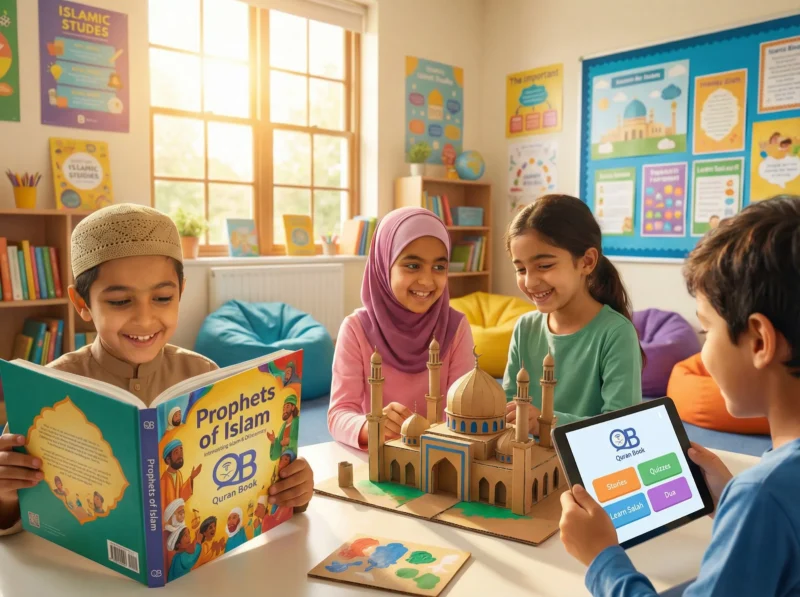
At Quran Book Academy, we design learning experiences that bring stories of the prophets in Islam for kids to life.
🖥️ Our Technology Stack:
- Live Zoom Sessions: Face-to-face interaction with our certified teachers
- Custom LMS: Track your child's progress with detailed reports
- Age-Appropriate Lesson Segments: Short, age-appropriate lesson segments designed to help young learners stay engaged
📚 Our Teaching Approach:
- Native Arabic-speaking teachers experienced in teaching children
- Interactive storytelling with questions and hands-on activities
- Progress updates for parents
- Flexible scheduling for families across USA, Canada, UK, and Australia
FAQ — Stories of the Prophets for Kids
Q1: How do I introduce Prophet Muhammad to kids? +
Start with simple stories about his kindness toward children (Sahih al-Bukhari 5997), his teaching of mercy toward animals (Sahih al-Bukhari 2466), and his truthfulness (Sahih al-Bukhari 7). Use picture books and interactive discussions to make learning engaging.
Q2: What are stories of the prophets called in Islam? +
They are called “Qasas al-Anbiya” (قصص الأنبياء), meaning “Stories of the Prophets.” These narratives appear throughout the Quran.
Q3: Which prophet is called Jesus in Islam? +
Prophet Isa (عيسى) is Jesus. Muslims believe he was a mighty messenger of Allah, born miraculously to Maryam (Mary), and will return before the Day of Judgment.
Q4: What is the main purpose of prophets in Islam? +
Prophets guide humanity to worship Allah alone, teach moral conduct, and deliver divine revelation. They serve as role models for righteous living.
Q5: What is the role of prophets in Islam? +
Prophets called people to worship Allah alone, conveyed His revelation, taught and guided their communities, and served as examples of obedience to Allah.
Start Your Child's Journey with Prophet Stories Today
Your child deserves to fall in love with Islam through beautiful, engaging stories that shaped history.
Hafidha of the Quran · Arabic Language Graduate · Writer on Islamic Sciences
Jehad Mahmoud is a graduate of the Arabic Language department and a Hafidha of the Quran who writes Islamic educational content at Quran Book Academy.
She specialises in Quranic Arabic, Tajweed, and Islamic sciences, with a focus on making Quranic teachings and Islamic concepts accessible to English-speaking Muslim families.
Her articles are educational, not fatwa. For rulings concerning specific personal situations, readers are advised to consult a qualified scholar or mufti.
References & Resources
📖 Quranic References
- Surah Yusuf 12:111 — “There was certainly in their stories a lesson for those of understanding.”
- Surah Yusuf 12:3 — “We relate to you the best of stories.”
- Surah Yusuf 12:15 and 12:56 — Prophet Yusuf placed in the well, and later given authority in the land.
- Surah Taha 20:24 and Surah An-Nazi'at 79:17 — Prophet Musa sent to Pharaoh.
- Surah Al-Anbiya 21:87–88 — Prophet Yunus, his supplication in the darkness, and Allah's response.
- Surah As-Saffat 37:102–107 — Prophet Ibrahim and the command regarding his son.
- Surah Hud 11:38 — Prophet Nuh mocked by his people while building the Ark.
- Surah Nuh 71:5 — Prophet Nuh's long call to his people.
- Surah Al-Imran 3:49 and Surah Maryam 19:30 — Prophet Isa's prophethood and the signs given by Allah's permission.
- Surah Al-Qalam 68:4 and Surah Al-Ahzab 33:40 — the character of Prophet Muhammad ﷺ and his being the Seal of the Prophets.
- Surah Al-Ahqaf 46:35 and Surah Al-Ahzab 33:7 — the Messengers of Firm Resolve (Ulul ‘Azm).
📜 Hadith References
- Sahih al-Bukhari 3443 — “The prophets are paternal brothers... their religion is one.”
- Sahih al-Bukhari 7 — Abu Sufyan before Heraclius confirms that the Prophet ﷺ was never known to lie.
- Sahih al-Bukhari 5997 — the Prophet ﷺ kissing his grandson, and his words on mercy.
- Sahih al-Bukhari 2466 — reward for showing mercy to animals.
📚 Tafsir References
- Tafsir Ibn Kathir (IslamWeb) — commentary on Prophet Yunus عليه السلام, explaining the matter as leaving what was better (tark al-awla): “فيما خالف فيه من ترك مداومة قومه والصبر عليهم”, and also “في الخروج من غير أن يؤذن له”.