99 Names of Allah for Kids: Fun Ways & Beautiful Guide for Young Muslims
Introduction
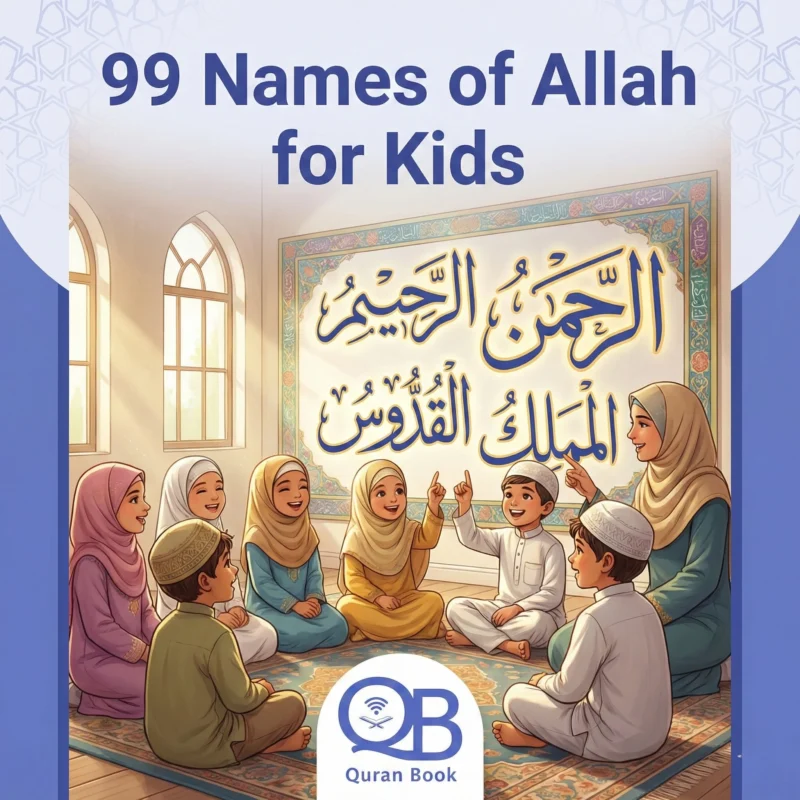
The 99 names of Allah for kids, known as Asma ul Husna, are the beautiful names by which Allah has described Himself in the Quran and the Sunnah. Teaching them to children is one of the clearest ways to help them understand who Allah is — not as an abstract idea, but through His own words.
Many parents want to start but are not sure where. The list feels long, the Arabic feels difficult, and it is hard to know how much a young child can take in at once. This guide is built to solve exactly that: the complete list with Arabic, transliteration, meaning and evidence, plus practical ways to teach it at home.
The Prophet ﷺ said:
“Allah has ninety-nine names, and whoever preserves them will enter Paradise.”
— Sahih al-Bukhari 2736
Below you will find the full list, a short set of easy names to begin with, teaching ideas by age, and a quick quiz your child can try at the end. For structured lessons alongside this guide, see our Islamic Studies for Kids program.
Who Is Allah? Explaining Allah to Young Children
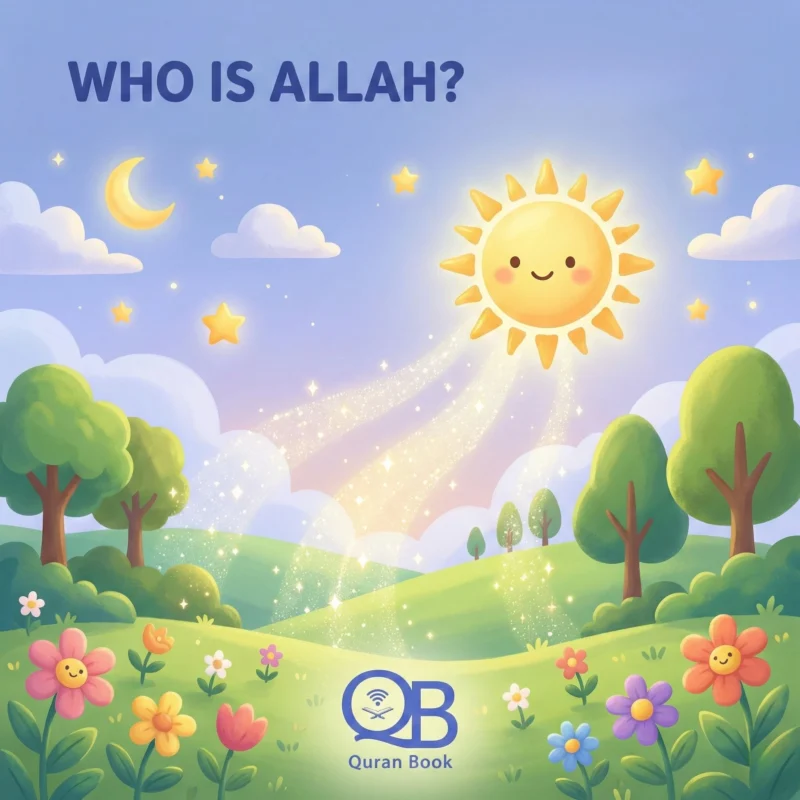
Allah is the One Creator who made us and everything around us — the sun, the moon, the stars, the animals, and you. He is perfect, merciful and powerful, and He is unlike anything in His creation.
That last part matters, and it is worth saying to children plainly. We do not describe Allah by comparing Him to people or to things we know. Allah tells us in the Quran:
“There is nothing like unto Him.”
— Surah Ash-Shura 42:11
So when a child asks what Allah is like, the honest and simple answer is: Allah is not like anything. We know Him through what He has told us about Himself — and that is exactly what His beautiful names are for.
“He is Allah, the One.”
— Surah Al-Ikhlas 112:1
This short verse gives a young child the foundation: Allah is One, He has no partner, and He alone is worthy of worship. Children who are just starting to read Quran can build on this in our Quran for Beginners course.
What Are the Names of Allah? (Asma ul Husna)
Asma ul Husna means “The Most Beautiful Names.” These are the names Allah has used for Himself in the Quran and in the authentic Sunnah — names such as Ar-Rahman (The Most Merciful), Al-Khaliq (The Creator) and Al-Wadud (The Most Loving). Each one teaches the child something true about Allah.
Allah tells us that these names are the way we should call upon Him:
“To Allah belong the Most Beautiful Names, so call upon Him by them.”
— Surah Al-A’raf 7:180
That is the goal of learning them. Not a list to be recited and forgotten, but names a child actually uses — asking Al-Ghafur for forgiveness, asking Ar-Razzaq for provision, relying on Al-Wakil when something is hard.
Allah’s Names Are Not Limited to 99
This point is often misunderstood, and it is worth getting right before teaching the list.
The Prophet ﷺ taught that Allah has ninety-nine names whose ihsa’ is connected with the reward of entering Paradise (Sahih al-Bukhari 2736). Muslim scholars have explained that this does not mean Allah’s names are limited to only ninety-nine. The hadith ties a specific reward to a specific number; it does not close the list.
In fact, it is established in the Prophet’s ﷺ supplication that he asked Allah by every name He has named Himself with, or taught to anyone of His creation, or revealed in His Book, or kept with Himself in the knowledge of the unseen (reported by Ahmad). That last part — names Allah has kept with Himself — tells us the total is known to Allah alone.
Scholars have also differed over the exact enumeration of the ninety-nine, because the authentic hadith mentioning the virtue does not itself provide one universally agreed numbered list. Scholars traced the names through the Quran and the Sunnah, agreed on many, and differed on others depending on the criteria they used.
So when teaching children, it is accurate to say: Allah has ninety-nine names with a special virtue attached to them, and Allah has other names as well. It is not accurate to say Allah has only ninety-nine names.
What does ihsa’ mean?
The word carries more than counting. Learning the names, memorising them, understanding what they mean, and calling upon Allah by them are all part of caring for them properly. A child who memorises Ar-Razzaq but has never been told what it means has only done part of the work — and the part that shapes the heart is the part that gets missed.
10 Easy Names of Allah for Young Kids
If your child is starting from zero, these ten are a good first set. They are short, the meanings are concrete, and each one connects to something a child already experiences. The number in the first column is the name’s position in the full list further down.
| # | Arabic | Transliteration | Simple Meaning | For Kids |
|---|---|---|---|---|
| 1 | اللّٰه | Allah | Allah | The One true God, the Creator, and the only One we worship. |
| 2 | الأَحَد | Al-Ahad | The One | Allah is One. He has no partner and no equal. |
| 33 | الرَّحْمٰن | Ar-Rahman | The Most Merciful | Allah’s mercy has no equal, and it reaches all of His creation. |
| 34 | الرَّحِيم | Ar-Rahim | The Especially Merciful | Allah has a special mercy for the believers, in this life and the next. |
| 25 | الخَالِق | Al-Khaliq | The Creator | Allah measured everything and brought it into being. |
| 39 | السَّمِيع | As-Sami’ | The All-Hearing | Allah hears every sound, loud or quiet, and He hears your dua. |
| 11 | البَصِير | Al-Basir | The All-Seeing | Allah sees everything. Nothing is hidden from Him. |
| 67 | الكَرِيم | Al-Karim | The Most Generous | Allah gives His servants so much good, and pardons their mistakes. |
| 96 | الوَدُود | Al-Wadud | The Most Loving | Allah loves His messengers and the believers, and they love Him. |
| 99 | الوَهَّاب | Al-Wahhab | The Bestower | Allah gives great gifts freely and generously. |
The 99 Names of Allah for Kids: Arabic, Meaning & Simple Explanation
A note on this list. Scholars have differed in enumerating the exact ninety-nine names. The list below follows a scholarly compilation of names established in the Quran and the authentic Sunnah, arranged in Arabic alphabetical order, with the name Allah placed first. It should not be presented as an exclusive list of all of Allah’s names.
Tip: on a phone, scroll each table sideways to see the meaning and evidence columns.
Names 1–25
| # | Arabic | Transliteration | Simple Meaning | For Kids | Evidence |
|---|---|---|---|---|---|
| 1 | اللّٰه | Allah | Allah | The greatest of the names. It is the name of Allah Himself, the One true God we worship, and every other name belongs to Him. | Quran 1:1 |
| 2 | الأَحَد | Al-Ahad | The One | Allah is One and alone. Nothing resembles Him in who He is, in His attributes, or in what He does. | Quran 112:1 |
| 3 | الآخِر | Al-Akhir | The Last | Allah has no end. He remains forever. | Quran 57:3; Muslim |
| 4 | الأَعْلَى | Al-A’la | The Most High | Allah is above everything. However high we imagine, Allah is higher. | Muslim |
| 5 | الأَكْرَم | Al-Akram | The Most Generous | No generosity can ever match Allah’s generosity. | Quran 96:3 |
| 6 | الأَوَّل | Al-Awwal | The First | Allah has no beginning. Everything else came after He willed it. | Quran 57:3; Muslim |
| 7 | البَارِئ | Al-Bari’ | The Maker | Allah brings His creation into existence exactly as He wills. | Quran 59:24 |
| 8 | البَاسِط | Al-Basit | The Extender of Provision | Allah widens provision for whomever He wills. | Tirmidhi; cf. Quran 2:245 |
| 9 | البَاطِن | Al-Batin | The Hidden | We do not see Allah in this world, but we know He exists through the signs in everything He made. | Quran 57:3; Muslim |
| 10 | البَدِيع | Al-Badi’ | The Originator | Allah created everything without any example existing before it. | Quran 2:117 |
| 11 | البَصِير | Al-Basir | The All-Seeing | Allah sees everything. Nothing on earth or in the sky is hidden from Him. | Quran 42:11 |
| 12 | البَرّ | Al-Barr | The Source of Goodness | Allah’s goodness and kindness reach all of His creation. | Quran 52:28 |
| 13 | التَّوَّاب | At-Tawwab | The Acceptor of Repentance | Every time we turn back to Allah and are sorry, He accepts — again and again. | Quran 2:37 |
| 14 | الجَبَّار | Al-Jabbar | The Compeller | Allah’s command is carried out. No one steps outside His will. | Quran 59:23 |
| 15 | الجَلِيل | Al-Jalil | The Majestic | Allah’s majesty is greater than anything we could imagine. | Quran 55:27 |
| 16 | الحَسِيب | Al-Hasib | The Reckoner | Allah knows the measure of everything, and He is enough for His servants. | Quran 4:6 |
| 17 | الحَافِظ | Al-Hafiz | The Guardian | Allah guards His servants from the things that would harm their faith and their lives. | Quran 12:64 |
| 18 | الحَفِيظ | Al-Hafeez | The Preserver | Allah holds the sky and the earth in place, and He preserves every deed we do. | Quran 11:57 |
| 19 | الحَقّ | Al-Haqq | The Truth | Allah is real and true, and the proofs of His existence are everywhere. | Quran 24:25 |
| 20 | الحَكَم | Al-Hakam | The Judge | Allah judges between people with perfect fairness. | Quran 7:87; Abu Dawud |
| 21 | الحَكِيم | Al-Hakim | The All-Wise | Allah puts everything in exactly the right place. He never does anything without wisdom. | Quran 2:32 |
| 22 | الحَلِيم | Al-Halim | The Forbearing | Allah does not rush to punish. He keeps giving so that people have time to turn back to Him. | Quran 2:225 |
| 23 | الحَمِيد | Al-Hamid | The Praiseworthy | Allah deserves praise in easy times and in hard times. | Quran 22:64 |
| 24 | الحَيّ | Al-Hayy | The Ever-Living | Allah’s life is perfect and complete, with no beginning and no end. | Quran 2:255 |
| 25 | الخَالِق | Al-Khaliq | The Creator | Allah measured everything before it existed, and then brought it into being. | Quran 59:24 |
Names 26–50
| # | Arabic | Transliteration | Simple Meaning | For Kids | Evidence |
|---|---|---|---|---|---|
| 26 | الخَبِير | Al-Khabir | The All-Aware | Allah knows what is inside and hidden, not only what can be seen. | Quran 6:18 |
| 27 | الخَلَّاق | Al-Khallaq | The Supreme Creator | Allah creates again and again, without limit. | Quran 15:86 |
| 28 | الدَّيَّان | Ad-Dayyan | The Recompenser | Allah will bring every person to account and reward them. No good deed is ever lost. | Ahmad |
| 29 | ذُو الجَلَالِ وَالإِكْرَام | Dhul-Jalali wal-Ikram | The Lord of Majesty and Honour | Allah has perfect greatness, and He gives generously. | Quran 55:78; Ahmad |
| 30 | الرَّؤُوف | Ar-Ra’uf | The Most Compassionate | Allah wants ease for His servants. | Quran 2:143 |
| 31 | الرَّازِق | Ar-Raziq | The Provider | Allah gives His creation everything they need to live. | Quran 22:58 |
| 32 | الرَّبّ | Ar-Rabb | The Lord | Allah created us, brought us up, and made a way for our food and our life. | Quran 1:2 |
| 33 | الرَّحْمٰن | Ar-Rahman | The Most Merciful | Allah’s mercy has no equal, and it reaches every part of His creation. | Quran 1:3; 2:163 |
| 34 | الرَّحِيم | Ar-Rahim | The Especially Merciful | Allah has a special mercy for the believers — He guided them in this life and honours them in the next. | Quran 1:3; 33:43 |
| 35 | الرَّزَّاق | Ar-Razzaq | The Ever-Providing | Allah keeps providing, over and over, and never stops. | Quran 51:58 |
| 36 | الرَّقِيب | Ar-Raqib | The Watchful | Allah knows and watches over His creation, and nothing is hidden from Him. | Quran 5:117 |
| 37 | السُّبُّوح | As-Subbuh | The Perfectly Pure | Allah is far above every fault and every weakness. | Muslim |
| 38 | السَّلَام | As-Salam | The Flawless Source of Peace | Allah is free from every fault, and His servants are safe from any injustice from Him. | Quran 59:23; Tirmidhi |
| 39 | السَّمِيع | As-Sami’ | The All-Hearing | Allah hears every sound, whether it is loud or quiet, and He hears your dua. | Quran 40:20 |
| 40 | الشَّافِي | Ash-Shafi | The Healer | Allah is the true Healer. Medicine and treatment are means we use, while the healing itself comes from Allah. | Bukhari & Muslim; Quran 26:80 |
| 41 | الشَّاكِر | Ash-Shakir | The Appreciative | Allah praises those who obey Him and rewards them with more than they did. | Quran 4:147 |
| 42 | الشَّكُور | Ash-Shakur | The Most Appreciative | Allah rewards even a small act of obedience many times over. | Quran 35:30 |
| 43 | الشَّهِيد | Ash-Shahid | The Witness | Allah is aware of what no one else could ever witness. | Quran 4:79 |
| 44 | الصَّمَد | As-Samad | The Eternal Refuge | Allah is perfect in honour, and all creation turns to Him for their needs. | Quran 112:2 |
| 45 | الظَّاهِر | Az-Zahir | The Manifest | Allah is above His creation. There is nothing above Him. | Quran 57:3; Muslim |
| 46 | العَزِيز | Al-‘Aziz | The Almighty | Allah can never be defeated or overcome by anyone. | Quran 14:4 |
| 47 | العَظِيم | Al-‘Azim | The Magnificent | Allah’s greatness is higher than every greatness we know. | Quran 42:4 |
| 48 | العَفُوّ | Al-‘Afuww | The Pardoner | Allah wipes away sins and pardons those who ask Him. | Quran 4:43; Ahmad |
| 49 | العَلِيّ | Al-‘Ali | The Most High | There is no one above Allah in any way at all. | Quran 42:4 |
| 50 | العَلِيم | Al-‘Alim | The All-Knowing | Allah knows everything — even a single leaf that falls. | Quran 2:32 |
Names 51–75
| # | Arabic | Transliteration | Simple Meaning | For Kids | Evidence |
|---|---|---|---|---|---|
| 51 | الغَفَّار | Al-Ghaffar | The Repeatedly Forgiving | Allah covers our mistakes and forgives us over and over. | Quran 38:66 |
| 52 | الغَفُور | Al-Ghafur | The Most Forgiving | Allah hides the sins of His creation and does not punish them for what He has forgiven. | Quran 15:49 |
| 53 | الغَنِيّ | Al-Ghani | The Self-Sufficient | Allah needs nothing from anyone, while everything needs Him. | Quran 31:26; Abu Dawud |
| 54 | الفَاطِر | Al-Fatir | The Originator | Allah started creation from nothing, with no pattern to copy. | Quran 6:14 |
| 55 | الفَتَّاح | Al-Fattah | The Opener | Allah opens the doors of His mercy, and He settles what people disagree about. | Quran 34:26 |
| 56 | القَابِض | Al-Qabid | The Withholder | Allah narrows provision for whomever He wills, by His wisdom. | Tirmidhi; cf. Quran 2:245 |
| 57 | القَادِر | Al-Qadir | The Capable | Nothing at all is beyond Allah’s power. | Quran 6:65 |
| 58 | القَاهِر | Al-Qahir | The Subduer | Everything happens under Allah’s control. No one can undo what He has decreed. | Quran 6:18 |
| 59 | القُدُّوس | Al-Quddus | The Most Pure | Allah is completely perfect and free from every imperfection that does not befit Him. | Quran 59:23; 62:1; Nasa’i |
| 60 | القَدِير | Al-Qadeer | The All-Powerful | Allah’s power is complete and never weakens in any way. | Quran 30:54 |
| 61 | القَرِيب | Al-Qarib | The Near | Allah is near to His servants by His knowledge and His power, and He answers those who call Him. | Quran 11:61; Muslim |
| 62 | القَهَّار | Al-Qahhar | The Ever-Dominant | Nothing can overcome Allah’s power or escape His decree. | Quran 13:16 |
| 63 | القَوِيّ | Al-Qawiyy | The Most Strong | Allah’s strength is complete, and it never weakens in any situation. | Quran 11:66 |
| 64 | القَيُّوم | Al-Qayyum | The Sustainer | Allah keeps everything going — protecting it, caring for it and arranging it. | Quran 2:255 |
| 65 | الكَافِي | Al-Kafi | The Sufficient | Allah alone is enough for His servants in every matter. | Quran 39:36 |
| 66 | الكَبِير | Al-Kabir | The Most Great | Allah is greater than everything, and everything is small beside Him. | Quran 13:9 |
| 67 | الكَرِيم | Al-Karim | The Most Generous | Allah gives His servants great good, and He pardons those who make mistakes. | Quran 82:6 |
| 68 | اللَّطِيف | Al-Latif | The Subtle and Kind | Allah makes ways of good and ease for His servants, often in ways they did not expect. | Quran 6:103 |
| 69 | المُبْدِئ | Al-Mubdi’ | The Originator | Allah brought creation into being when there was nothing at all. | Quran 85:13 |
| 70 | المُعِيد | Al-Mu’id | The Restorer | Allah will bring creation back to life again after death. | Quran 85:13 |
| 71 | المُقَدِّم | Al-Muqaddim | The Expediter | Allah puts forward whatever and whomever He wills. | Bukhari & Muslim |
| 72 | المُؤَخِّر | Al-Mu’akhkhir | The Delayer | Allah delays whatever He wills. No one can put forward what He has delayed. | Bukhari & Muslim |
| 73 | المُؤْمِن | Al-Mu’min | The Giver of Security | Allah is true to His promise to the believers and gives them safety from His punishment. | Quran 59:23 |
| 74 | المُبِين | Al-Mubin | The Clear One | The signs of Allah are clear, and He makes the right path clear for us. | Quran 24:25 |
| 75 | المُتَعَالِي | Al-Muta’ali | The Supremely Exalted | Allah is far above anything false that people claim about Him. | Quran 13:9 |
Names 76–99
| # | Arabic | Transliteration | Simple Meaning | For Kids | Evidence |
|---|---|---|---|---|---|
| 76 | المُتَكَبِّر | Al-Mutakabbir | The Supreme in Greatness | Greatness belongs to Allah alone. This is His majesty, not the blameworthy pride we are told to avoid. | Quran 59:23 |
| 77 | المَتِين | Al-Matin | The Firm | Allah’s strength is firm and can never be shaken. | Quran 51:58 |
| 78 | المُجِيب | Al-Mujib | The Responsive | Allah answers those who call upon Him and ask Him. | Quran 11:61 |
| 79 | المَجِيد | Al-Majid | The Most Glorious | Allah is glorious, and His generosity is wide and endless. | Quran 85:15 |
| 80 | المُحْصِي | Al-Muhsi | The All-Enumerating | Allah knows the count of everything, including what people could never count. | Quran 72:28 |
| 81 | المُحِيط | Al-Muhit | The All-Encompassing | Allah’s knowledge and power surround all of His creation. | Quran 3:120 |
| 82 | المُصَوِّر | Al-Musawwir | The Fashioner | Allah shaped His creation in many different forms, so we can tell them apart. | Quran 59:24 |
| 83 | المُعْطِي | Al-Mu’ti | The Giver | Allah gives every creature what it needs and takes care of its provision. | Bukhari |
| 84 | المُقْتَدِر | Al-Muqtadir | The Omnipotent | Allah’s power is complete. Nothing can hold Him back. | Quran 54:42 |
| 85 | المُقِيت | Al-Muqit | The Nourisher | Allah arranges the food of every living creature, by His wisdom. | Quran 4:85 |
| 86 | المَلِك | Al-Malik | The King | Allah owns His creation and His command is carried out. His kingdom never ends and never needs help. | Quran 20:114; 1:4 |
| 87 | المَلِيك | Al-Maleek | The Sovereign | Allah’s kingship is complete: He rules His creation and He owns it. | Quran 54:55 |
| 88 | المَنَّان | Al-Mannan | The Bestower of Favours | Allah gives gifts to His servants out of His own generosity. | Abu Dawud |
| 89 | المُهَيْمِن | Al-Muhaymin | The Guardian | Everything is under Allah’s control. What He wills happens, and what He does not will never happens. | Quran 59:23 |
| 90 | المَوْلَى | Al-Mawla | The Protecting Master | Believers depend on Allah in ease and in hardship, and He helps and supports them. | Quran 22:78 |
| 91 | النَّصِير | An-Naseer | The Helper | Allah helps His messengers and the believers. | Quran 22:78 |
| 92 | الهَادِي | Al-Hadi | The Guide | Allah makes the path of safety clear, warns us of what harms us, and guides whomever He wills. | Quran 22:54; Muslim |
| 93 | الوَاحِد | Al-Wahid | The One | Allah is one and alone. There is no second, no partner and no equal. | Quran 4:171 |
| 94 | الوَارِث | Al-Warith | The Inheritor | Allah remains after all of creation has passed away. | Quran 28:58 |
| 95 | الوَاسِع | Al-Wasi’ | The All-Encompassing | Allah’s richness covers the need of every one of His creation. | Quran 2:247 |
| 96 | الوَدُود | Al-Wadud | The Most Loving | Allah loves His messengers and the believers, and they love Him. | Quran 85:14 |
| 97 | الوَكِيل | Al-Wakil | The Trustee | Allah is the One we rely upon and entrust our affairs to. He takes care of His creation and their provision. | Quran 3:173 |
| 98 | الوَلِيّ | Al-Waliyy | The Protector | Allah looks after all of His creation, and He has a special care for the believers. | Quran 42:28 |
| 99 | الوَهَّاب | Al-Wahhab | The Bestower | Allah gives great gifts freely and generously to His creation. | Quran 38:9 |
A Closer Look at Three Names
Some names are worth slowing down on, because children ask about them and because they are easy to explain badly. Here are three.
What Does Al-Quddus Mean for Kids?
Al-Quddus (القُدُّوس) means that Allah is completely perfect and free from every imperfection that does not befit Him. The name is connected in Arabic to the idea of purity: it affirms every perfect quality for Allah and denies every fault (Quran 59:23; also Quran 62:1).
With a young child, you can start with the word itself. Talk about what “clean” and “pure” mean in everyday language — clean water, a clear sky. Then be explicit that this is only to explain the word, and that Allah’s perfection is not like the qualities of created things. Allah is unlike anything He created.
Connect it to something the child already says: when we say Subhan Allah, we are declaring that Allah is far above every fault. The phrase becomes far more meaningful once the child knows the name behind it.
What Does Al-Wakil Mean for Kids?
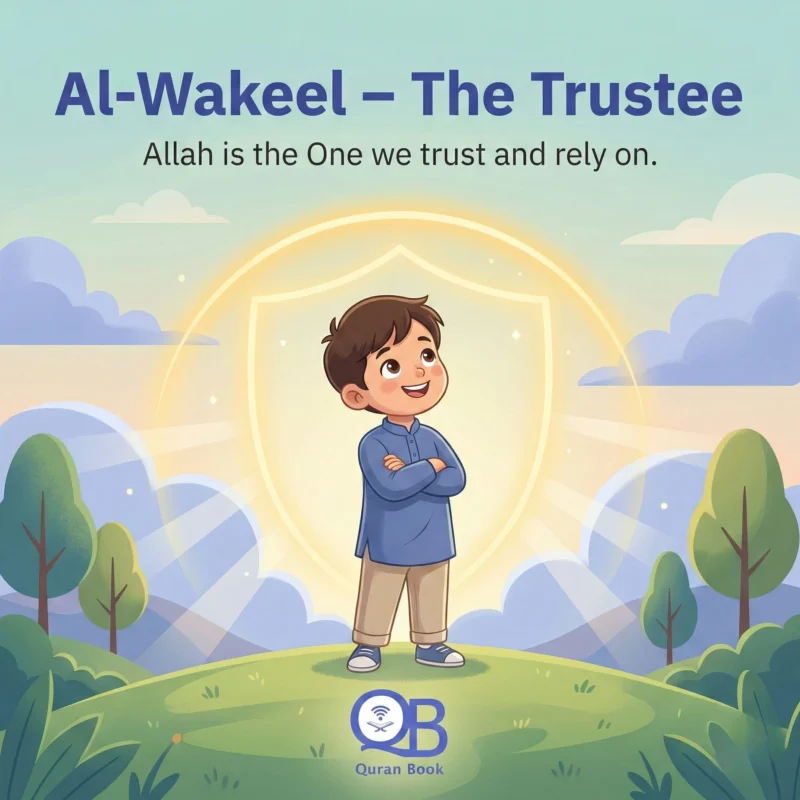
Al-Wakil (الوَكِيل) means the One who has taken charge of the affairs of creation: He protects them, guarantees their provision, and manages their matters. For a child, the simplest way to put it is: Al-Wakil teaches us that Allah is the One we rely upon and entrust our affairs to.
You can teach this through the story of Prophet Ibrahim (peace be upon him), who relied on Allah completely at the hardest moment of his life. The words Hasbunallahu wa ni’mal wakeel — “Allah is sufficient for us, and He is the best Disposer of affairs” — appear in the Quran (Quran 3:173), and it is reported in Sahih al-Bukhari 4563 that Ibrahim (peace be upon him) said them when he was thrown into the fire.
Teaching this name helps children learn the meaning of tawakkul and relying upon Allah — asking Him, doing what they can, and leaving the outcome to Him. You can pair it with vocabulary work in our Arabic for Kids program.
What Does Al-Qahhar Mean for Kids?
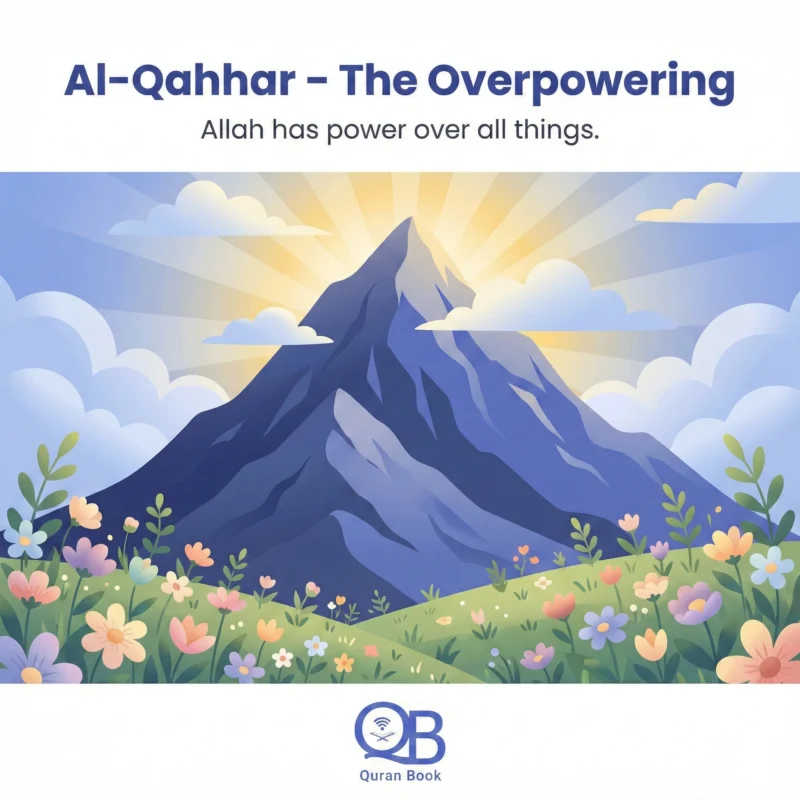
Al-Qahhar (القَهَّار) means that Allah has complete power and mastery over His creation, and nothing can overcome Him. The name carries the meaning of full dominance: Allah subdues the tyrants among His creation, and He subdues all of creation with death.
“He is the One, the Overpowering.”
— Surah Ar-Ra’d 13:16
Learning this name can remind children that Allah is never weak and never unable. It sits naturally beside Al-Wakil: the One we rely on is also the One nothing can overcome. Children learning to recite these verses properly can join our Tajweed for Kids course.
How Many Names Should a Child Learn at a Time?
There is no religious rule about this. The ages below are a teaching suggestion only — use your own child’s readiness as the real guide, and move faster or slower as needed.
Ages 4–6
Start small: one or two names at a time, chosen for short sounds and concrete meanings — Allah, Al-Khaliq, As-Sami’, Ar-Rahman. Keep the meaning to a single short sentence and repeat it often during the day rather than in a lesson.
Ages 7–9
Link each name to its meaning plus one verse or one everyday example. At this age children can handle a name a week, revisited daily. Ask them to use the name in their own dua — that is where the meaning sticks.
Ages 10–12
Add the evidence from the Quran or Sunnah, and start distinguishing names that sound similar: Ar-Raziq and Ar-Razzaq, Al-Ghaffar and Al-Ghafur, Al-Hafiz and Al-Hafeez. This is also the age to explain that Allah’s names are not limited to ninety-nine.
5 Fun Ways to Teach the Names of Allah to Kids
1Rhythm and repetition
Rhythmic repetition, vocals-only nasheeds, and regular review can help children remember the names in an engaging way. Short daily review beats one long session a week.
2A name-of-the-week board
Put one name somewhere visible for the whole week — the fridge, the wall by the door. Say it, explain it in one sentence, and come back to it whenever the day gives you a reason.
3Arts and crafts
Colouring pages, hand-made flashcards and simple posters give younger children something to do with their hands while the meaning goes in.
4Stories of the prophets
Connect names to Quranic stories: Al-Wakil with Ibrahim (peace be upon him), Ash-Shafi with Ayyub (peace be upon him). Children remember a name attached to a story far longer than a name on a list.
5Use the names in dua
When your child asks Allah for something, name the attribute they are appealing to. This is the point of the whole exercise, and it is covered in the next section.
Use Allah’s Names in Personal Dua
Allah has told us directly what to do with these names:
“To Allah belong the Most Beautiful Names, so call upon Him by them.”
— Surah Al-A’raf 7:180
This is about personal dua, in your own words, at any time. A few examples of how to teach it:
- A child asking Allah for forgiveness can learn why the name Al-Ghafur is meaningful.
- When asking Allah for help with something difficult, parents can explain the meaning of Al-Wakil.
- A child who is unwell can be taught that Ash-Shafi is the true Healer, while medicine is a means we take.
- A child worried about being unheard can be reminded that Allah is As-Sami’, who hears every sound.
Note that this is different from the fixed morning and evening adhkar, which have their own established wordings. Personal dua is where a child can freely use the names they are learning.
Related Dhikr Kids Can Learn
Three short phrases pair naturally with learning Allah’s names:
The Prophet ﷺ taught Ali and Fatimah (may Allah be pleased with them) a dhikr containing these phrases to say before going to sleep (Sahih al-Bukhari 6318).
If your child is building their Arabic vocabulary alongside this, our guide to basic Islamic Arabic phrases for kids covers these and others in more detail.
How Quran Book Academy Teaches Kids

Learning the names of Allah takes more than repetition — it takes understanding. Our certified Quran teachers use a chunking approach, introducing concepts in small, manageable steps that fit a child’s attention span.
Every session is live on Zoom and one-to-one, so the pace follows the student rather than a class. Lessons and progress are organised through our online learning system.
Whether your child is 5 or 15, our Islamic Studies for Kids program covers Asma ul Husna alongside Quran and Arabic. We also run Islamic Studies for Adults for parents who want to learn alongside their children.
Quick Quiz: How Well Do You Know Allah’s Beautiful Names?
Five questions, all answered somewhere in this guide. Pick an answer for each, then check your score.
Frequently Asked Questions
What are the 99 Names of Allah for kids?
They are the beautiful names Allah has used for Himself in the Quran and the authentic Sunnah — Asma ul Husna — such as Ar-Rahman (The Most Merciful), Al-Khaliq (The Creator) and Al-Wadud (The Most Loving). Each name teaches a child something true about Allah, and the full list with meanings is in this guide.
Does Allah have only 99 names?
No. The authentic hadith mentions a special virtue connected with ninety-nine names, but it does not state that Allah’s names are limited to only ninety-nine. It is also established in the Prophet’s ﷺ supplication that Allah has names He has kept with Himself in the knowledge of the unseen. Scholars have additionally differed over the exact enumeration of the ninety-nine, since the hadith mentioning the virtue does not itself give one agreed numbered list.
At what age can children start learning the Names of Allah?
There is no fixed religious rule. As a teaching suggestion, many children can start with one or two simple names around ages 4–6, connect names to meanings and verses around 7–9, and handle the evidence and finer distinctions from about 10–12. Follow your own child’s readiness rather than the age.
What is the easiest way to teach Asma ul Husna to kids?
Start with a small set of names with concrete meanings, keep each explanation to one short sentence, and review daily rather than in long sessions. Attach names to moments in the day — thanking Allah, asking for something, seeing something in creation — so the meaning is used and not just stored.
Should children memorise the names without learning their meanings?
Memorisation is genuinely valuable, and a child who has memorised the names has gained something real. But ihsa’ is understood by scholars to include understanding the meanings and calling upon Allah by them, so meaning should be taught alongside the words rather than left for later. In practice, children also remember a name far better once they know what it means.
What does Al-Wakil mean for kids?
Al-Wakil means the One who has taken charge of the affairs of His creation — protecting them and guaranteeing their provision. For children: Allah is the One we rely upon and entrust our affairs to. It is the name behind Hasbunallahu wa ni’mal wakeel.
Start Your Child’s Journey — Free Trial Lesson

Help your child learn the Names of Allah with clear, age-appropriate guidance. Book a free trial lesson and see how a one-to-one session works.
Hafidha of the Quran · Arabic Language Graduate · Writer on Islamic Sciences
Jehad Mahmoud is a graduate of the Arabic Language department and a Hafidha of the Quran who writes Islamic educational content at Quran Book Academy.
She specialises in Quranic Arabic, Tajweed and Islamic sciences, helping English-speaking Muslim families understand Quranic and Islamic concepts in clear, accessible language.
Her background in Quranic and Arabic studies informs this educational guide to the Names of Allah and their meanings.
Her articles are educational and are not a substitute for a personal fatwa. For questions involving a specific religious ruling, readers should consult a qualified scholar or mufti.