
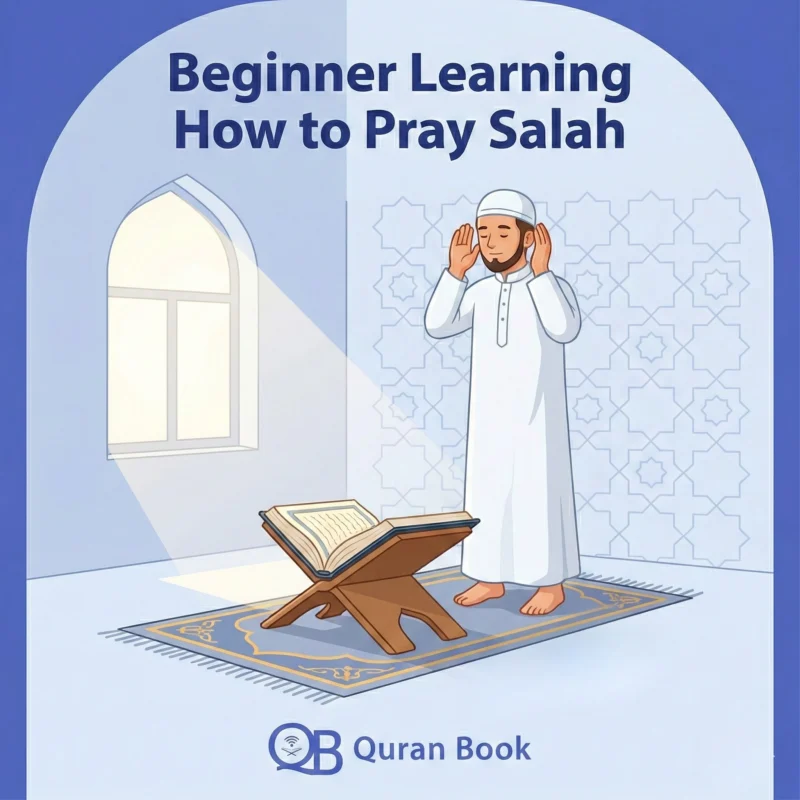

Quick Summary
To pray salah as a beginner, start by learning wudu (ablution), face the qibla, make your intention, say “Allahu Akbar,” then follow the step-by-step positions: standing (qiyam), bowing (ruku), prostrating (sujud), and sitting (tashahhud). Each prayer has a set number of cycles called rakats.
Why Learning How to Pray Salah Feels Overwhelming (And Why That’s Normal)
Learning how to pray salah can feel overwhelming when you’re a beginner — and that is completely normal. Whether you are a new Muslim or someone returning to the faith after years away, the idea of praying five times a day in Arabic can seem like climbing a mountain. Three common fears hold people back: the fear of mispronouncing Arabic words, the feeling of being “too late” to start, and anxiety about fitting five prayers into a busy daily schedule.
Here is the truth — salah is a journey. Even the Companions of the Prophet Muhammad ﷺ learned their prayers step by step. The Prophet ﷺ himself said: “Pray as you have seen me praying.” (Sahih al-Bukhari 631). Your prayer journey begins with a sincere heart and a willingness to learn: start where you are, be patient with yourself, learn a little more each week, and keep correcting what you have learned with the help of a trusted teacher.
If you are just beginning your Islamic journey, starting with foundational knowledge in Quran reading for beginners can make learning salah feel far more natural and achievable.
What Is Salah and Why Is It the Most Important Pillar After Shahada?
Salah is the second pillar of Islam and the most important act of worship after the declaration of faith (Shahada). It is a direct act of worship and a personal communion with Allah — no intermediary, no priest, no confession booth. Just you and your Creator, five times a day, whether you pray alone or together with others in congregation.
The significance of salah cannot be overstated. It will be the very first thing a Muslim is questioned about on the Day of Judgment. The Prophet ﷺ said: “The first matter that the slave will be brought to account for on the Day of Judgment is the prayer.” (Sunan an-Nasa’i 465). Allah also says in the Quran: “Indeed, prayer has been decreed upon the believers at specified times.” (Quran 4:103). For a deeper scholarly exploration, see IslamQA’s scholarly tafsir source.
Four Categories of Prayer in Islam:
Fard — the five obligatory daily prayers.
Sunnah — additional prayers the Prophet ﷺ regularly performed.
Wajib — prayers considered necessary by some scholars, such as Witr.
Nafl — voluntary acts of devotion that bring you closer to Allah.
When you learn how to pray salah, you are not just learning a ritual — you are establishing the strongest connection a human being can have with Allah.
What You Need Before You Pray: Wudu and Preparation Checklist

Before you learn how to pray salah, complete these 7 essential preparation steps:
- 1 Perform Wudu (ablution) — Wash your hands three times, rinse your mouth, clean your nose, wash your face, wash both arms up to the elbows, wipe your head, and wash both feet up to the ankles.
- 2 Wear clean, modest clothing — For men, the minimum area commonly stated to be covered in prayer is from the navel to the knees. Separately from that, the Prophet ﷺ instructed that a man should place part of his garment over his shoulder or shoulders when he is able to do so. For women, the face is generally left uncovered in prayer when no non-mahram men are present, while scholars differ regarding the hands and the feet; for a beginner, covering the feet is the safer approach and avoids the recognised disagreement.
- 3 Find a clean prayer space — This could be at home, in a mosque, at the office, or even outdoors.
- 4 Face the Qibla — This is the direction of the Ka’bah in Makkah. Use a Qibla compass app on your phone to find the correct direction from your location.
- 5 Confirm the prayer time has entered — Use a reliable prayer time app or website to ensure you are praying within the valid window.
- 6 Use a prayer mat — This is recommended for cleanliness but not a strict requirement.
- 7 Set your intention (niyyah) — Make your intention silently in your heart for the specific prayer you are about to perform. The niyyah is not spoken aloud.
The Prophet ﷺ said: “The entire earth has been made a place of worship, except for graveyards and bathrooms.” (Sunan Abi Dawud 492). This means you have the flexibility to pray salah almost anywhere — your home, your office, a park — as long as the space is clean.
Need help with Arabic pronunciation for wudu supplications? An Arabic course for beginners can make this much easier.
How to Pray Salah Step by Step for Beginners (Complete Guide)
Here is the complete step-by-step Muslim prayer guide on how to pray salah properly. Book a free trial lesson for personal guidance with a live teacher.
Watch: Salah for Kids — How to Pray Step by Step
Prefer to watch instead of read? This short video from Quran Book Academy walks through the same positions in a simple, visual way — ideal for kids, new Muslims, and anyone who learns better by seeing each position performed.
After watching, follow the written steps below to practise each position slowly — and book a free trial lesson to have a teacher correct your prayer live.
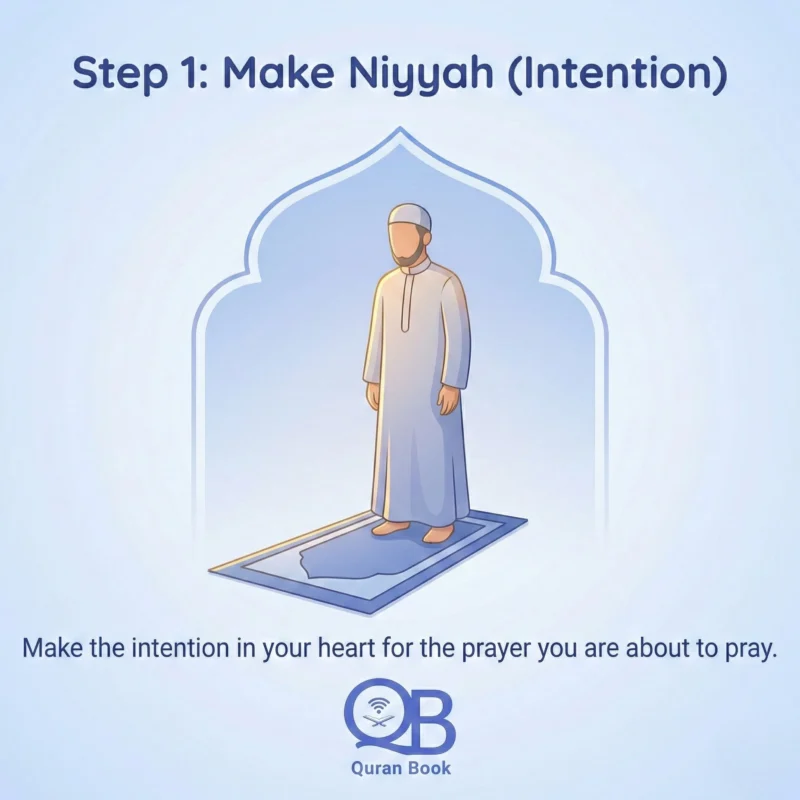
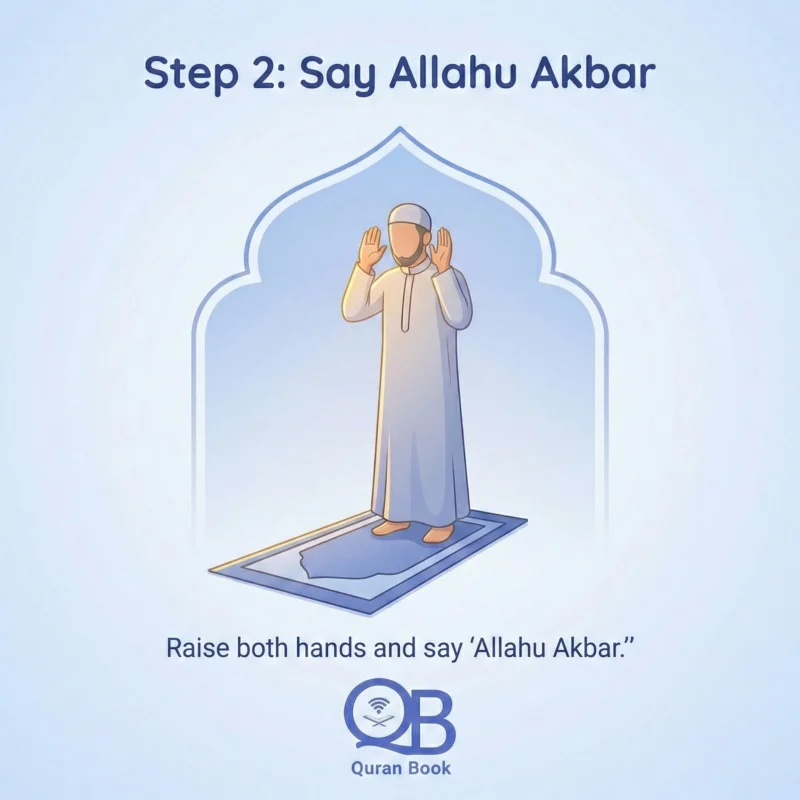
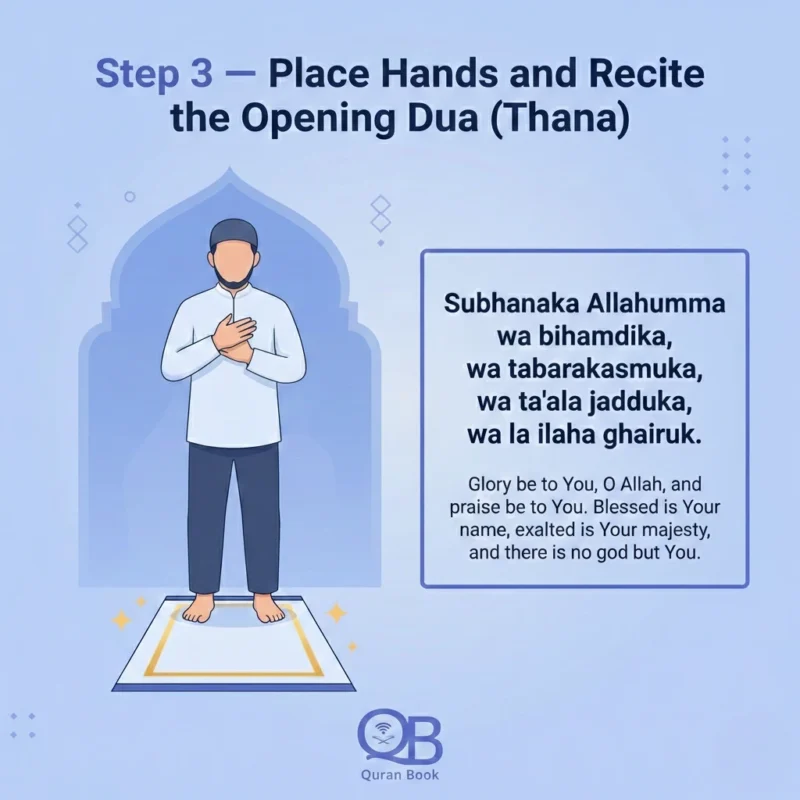
2 Rakats
Fard Fajr. Sit after the 2nd rakat for the final Tashahhud and Salawat, then give the Tasleem.
3 Rakats
Fard Maghrib. Sit after the 2nd rakat for the first Tashahhud, stand for the 3rd, then sit for the final Tashahhud and Salawat.
4 Rakats
Fard Dhuhr, Asr, and Isha. First Tashahhud after the 2nd rakat, then the 3rd and 4th rakats, then the final Tashahhud and Salawat.
How Many Rakats Are in All 5 Daily Prayers? (Complete Rakat Table)
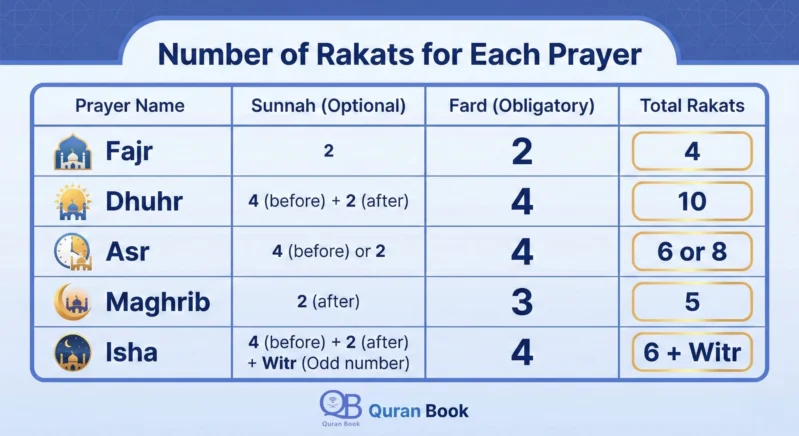
A common question many beginners ask is: “Is Asr 3 or 4 rakats?” Asr is always 4 fard rakats. There is no 3-rakat option for Asr. Maghrib is the only prayer with 3 obligatory rakats, which sometimes causes this confusion.
In total, the five daily prayers include 17 obligatory (fard) rakats and approximately 12 Sunnah rakats, giving you a daily total of around 29 rakats when you include the voluntary prayers.
Struggling to memorize this? An Islamic studies course for kids and adults can break this down into bite-sized, easy-to-remember chunks.
How to Pray Each of the 5 Daily Salah
How to Pray Fajr (Dawn Prayer — 2 Rakats)
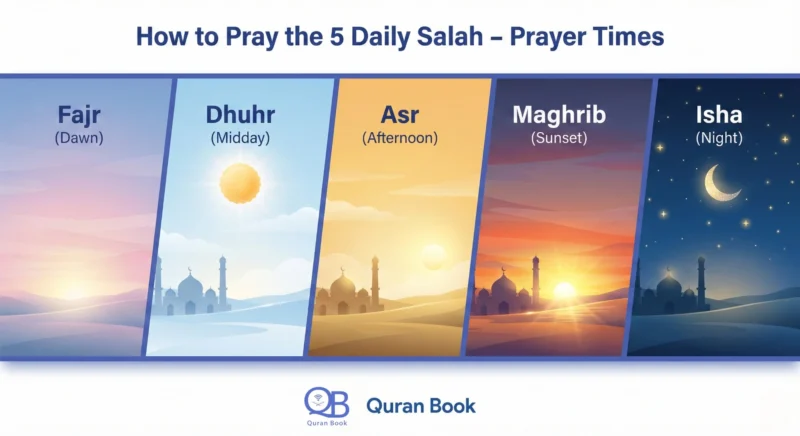
To pray Fajr, perform 2 Sunnah rakats followed by 2 Fard rakats. Both fard rakats are recited aloud. Fajr is prayed between the first light of dawn and just before sunrise. It is considered the most rewarding prayer to establish consistently. The Prophet ﷺ said: “He who prayed the morning prayer (in congregation), he is in fact under the protection of Allah.” (Sahih Muslim 657a). If you are just learning how to pray salah, start with Fajr — it is the shortest and simplest prayer.
How to Pray Dhuhr (Noon Prayer — 4 Rakats)
Dhuhr consists of 4 Sunnah rakats before, 4 Fard rakats, and 2 Sunnah rakats after. All fard rakats are recited silently. Dhuhr is prayed after the sun passes its zenith (highest point) until the shadow of an object equals its length. Think of Dhuhr as your midday spiritual reset — a moment to pause, reconnect with Allah, and refocus before the afternoon.
How to Pray Asr (Afternoon Prayer — 4 Rakats)
Asr has 4 Fard rakats, all recited silently. There are also 4 optional Sunnah rakats before the fard that some Muslims pray. The Quran emphasizes protecting Asr in particular: “Guard strictly your prayers, especially the middle prayer.” (Quran 2:238). Many scholars interpret “the middle prayer” as Asr. Asr should be prayed promptly within its preferred time, and delaying it without a valid reason until the sun has turned yellow is blameworthy. This does not mean the prayer becomes impossible or should be abandoned once the sunlight changes colour — check the exact times for your area through a reliable local mosque or an accurately configured prayer timetable.
How to Pray Maghrib (Sunset Prayer — 3 Rakats)
Maghrib has 3 Fard rakats followed by 2 Sunnah rakats. The first 2 fard rakats are recited aloud, and the 3rd is recited silently. Maghrib begins immediately after sunset and has a relatively narrow time window compared to other prayers, so it should be prayed promptly. It is the only daily prayer with an odd number of obligatory rakats.
How to Pray Isha (Night Prayer — 4 Rakats)
Isha consists of 4 Fard rakats, 2 Sunnah rakats, and Witr (either 1 or 3 rakats). The first 2 fard rakats are recited aloud, and the last 2 are silent. Isha begins when the twilight (red or white afterglow) disappears from the sky. The Witr prayer after Isha is strongly recommended and is considered the last prayer of the night — a beautiful way to end your day in remembrance of Allah.
Join our Telegram channel for daily Quran & Tajweed practice to strengthen your recitation alongside your prayer journey.
What Should I Recite During Salah? (Recitations Made Simple)
Knowing what to recite during salah is one of the biggest concerns for beginners. Here is a simplified breakdown of the recitations for each position:
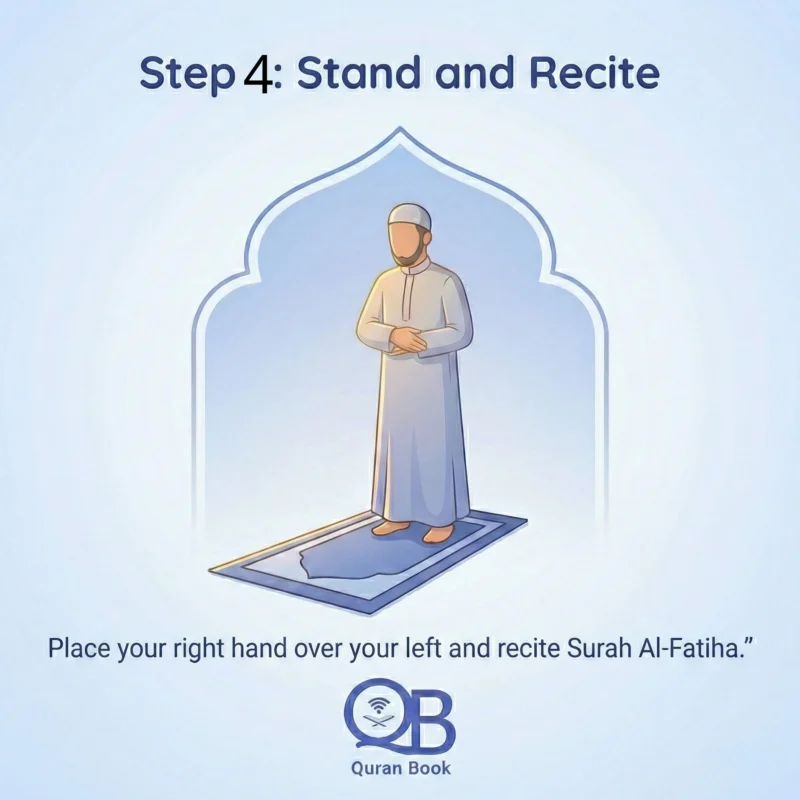
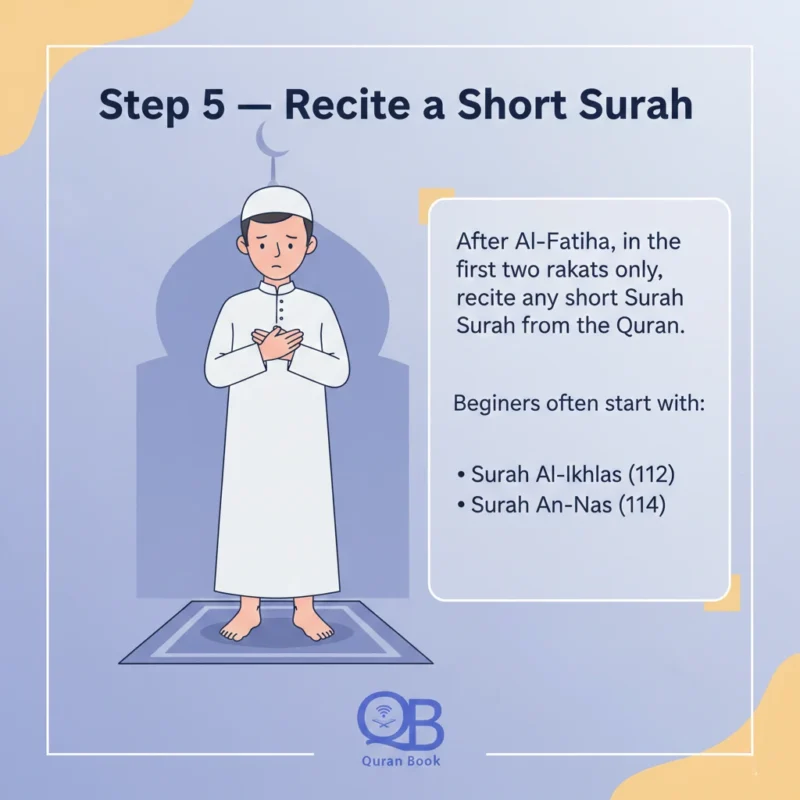
Standing (Qiyam): Recite Surah Al-Fatiha — essential in every rakat for the imam and for the person praying alone according to the majority, with recognised scholarly disagreement about the follower behind an imam — followed by a short Surah in the first two rakats.
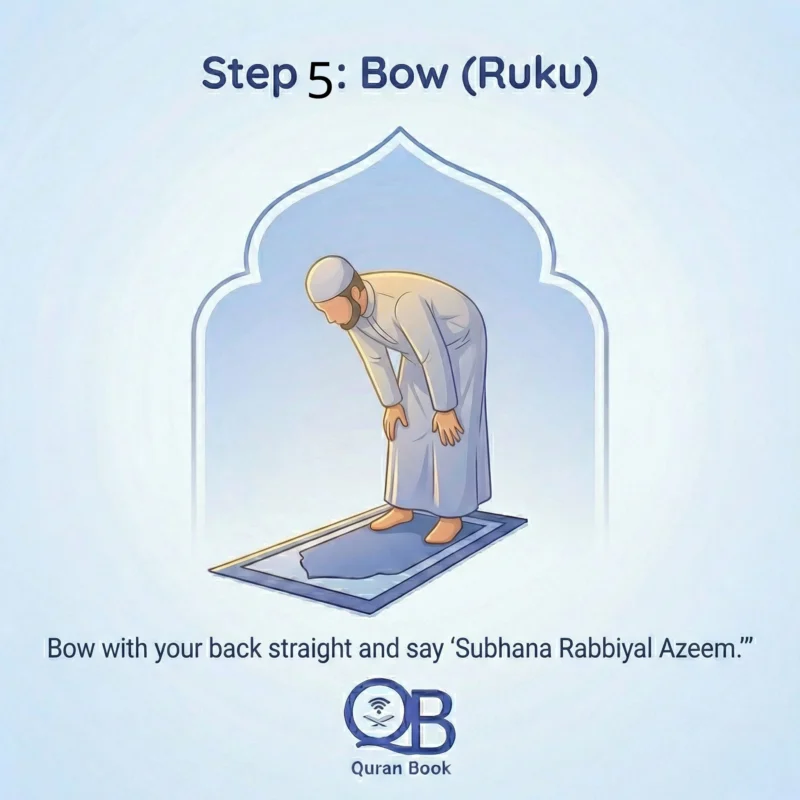
Bowing (Ruku): Say “Subhana Rabbiyal Adheem,” commonly taught as three times.
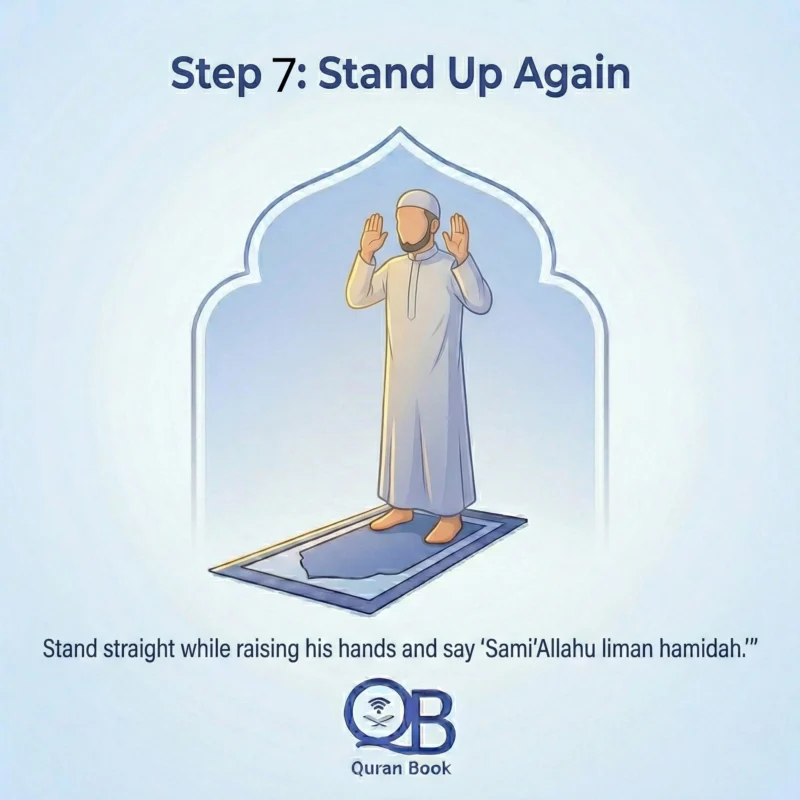
Rising from Ruku: The imam and the person praying alone say “Sami’a Allahu liman hamidah,” then “Rabbana wa laka al-hamd.” A follower behind an imam says “Rabbana wa laka al-hamd.”
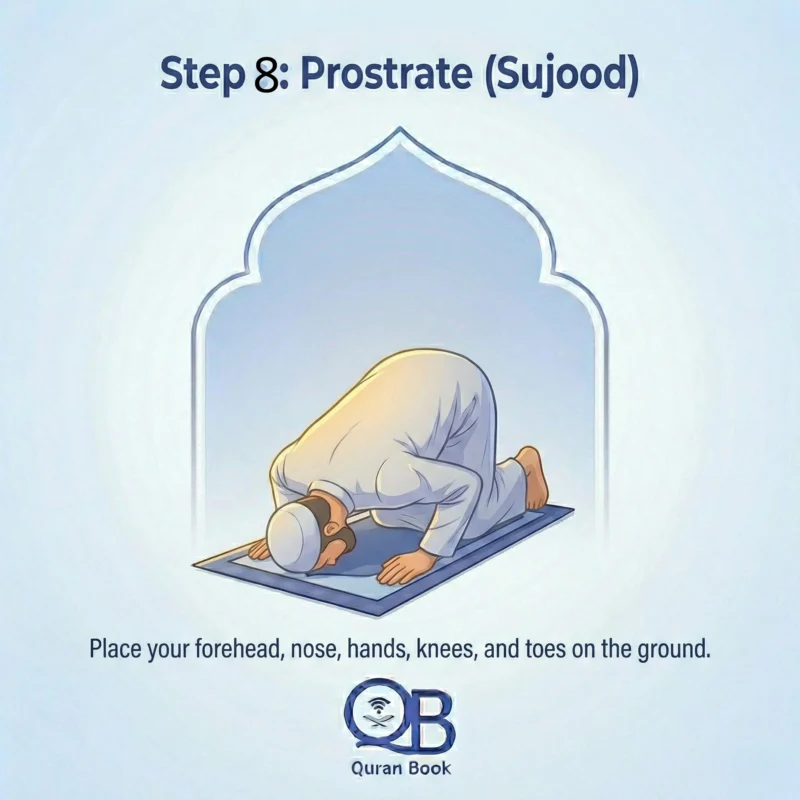
Prostration (Sujud): Say “Subhana Rabbiyal A’la,” commonly taught as three times.
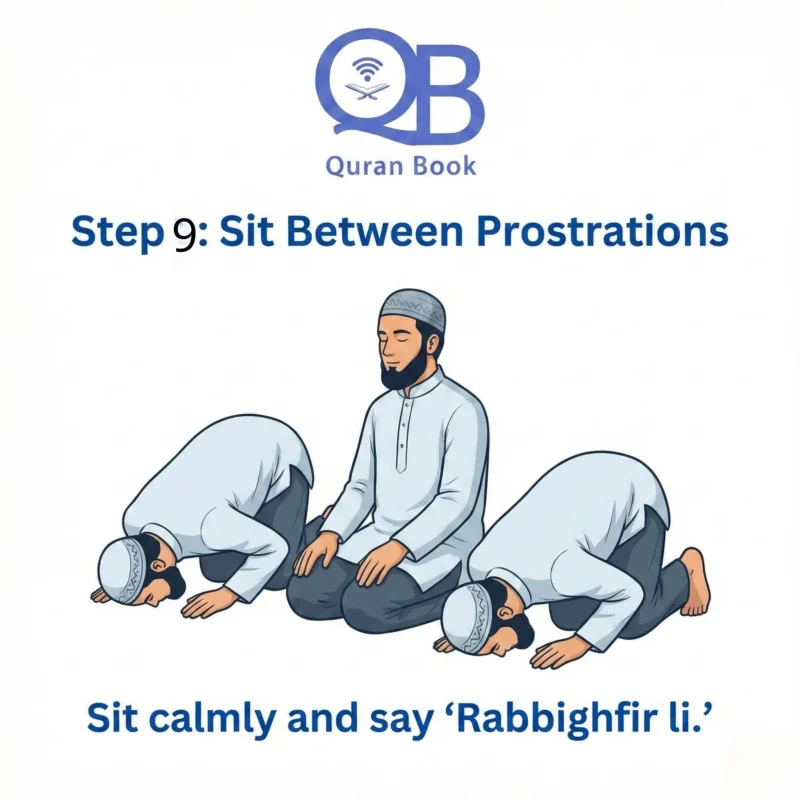
Sitting between Sujud: Say “Rabbi ighfir li.”
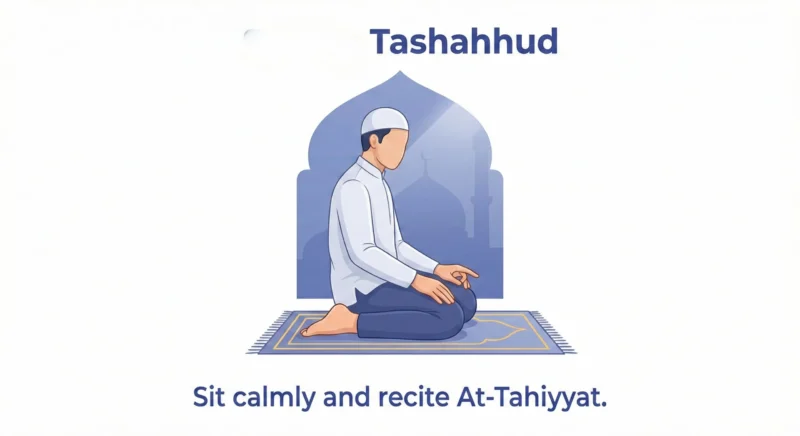
Tashahhud (Sitting after 2 rakats): Recite At-Tahiyyatu, followed by the Salawat on the Prophet ﷺ in the final sitting.
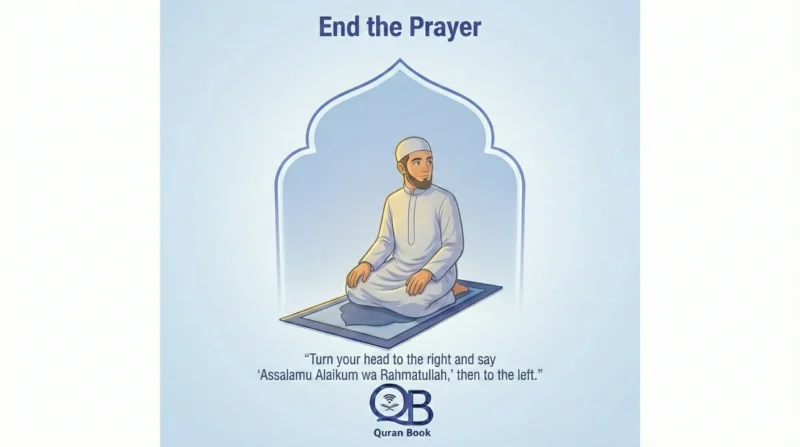
Tasleem (Ending): Say “Assalamu Alaikum wa Rahmatullah” turning right, then left.
The Words of the Tashahhud and the Salawat
These are well-known authentic wordings; other authentic forms are also reported in the hadith collections.
1. Tashahhud (At-Tahiyyat)
التَّحِيَّاتُ لِلَّهِ وَالصَّلَوَاتُ وَالطَّيِّبَاتُ، السَّلاَمُ عَلَيْكَ أَيُّهَا النَّبِيُّ وَرَحْمَةُ اللَّهِ وَبَرَكَاتُهُ، السَّلاَمُ عَلَيْنَا وَعَلَى عِبَادِ اللَّهِ الصَّالِحِينَ، أَشْهَدُ أَنْ لاَ إِلَهَ إِلاَّ اللَّهُ وَأَشْهَدُ أَنَّ مُحَمَّدًا عَبْدُهُ وَرَسُولُهُ
Transliteration: At-tahiyyatu lillahi was-salawatu wat-tayyibat. As-salamu ‘alayka ayyuha an-Nabiyyu wa rahmatullahi wa barakatuh. As-salamu ‘alayna wa ‘ala ‘ibadillahi as-salihin. Ash-hadu an la ilaha illa Allah, wa ash-hadu anna Muhammadan ‘abduhu wa rasuluh.
Meaning: “All greetings, prayers and good things are due to Allah. Peace be upon you, O Prophet, and the mercy of Allah and His blessings. Peace be upon us and upon the righteous servants of Allah. I bear witness that there is no god but Allah, and I bear witness that Muhammad is His servant and His Messenger.”
Source: Sahih al-Bukhari 831
2. Salat Ibrahimiyyah (Salawat upon the Prophet ﷺ)
اللَّهُمَّ صَلِّ عَلَى مُحَمَّدٍ وَعَلَى آلِ مُحَمَّدٍ، كَمَا صَلَّيْتَ عَلَى إِبْرَاهِيمَ وَعَلَى آلِ إِبْرَاهِيمَ، إِنَّكَ حَمِيدٌ مَجِيدٌ، اللَّهُمَّ بَارِكْ عَلَى مُحَمَّدٍ وَعَلَى آلِ مُحَمَّدٍ، كَمَا بَارَكْتَ عَلَى إِبْرَاهِيمَ وَعَلَى آلِ إِبْرَاهِيمَ، إِنَّكَ حَمِيدٌ مَجِيدٌ
Transliteration: Allahumma salli ‘ala Muhammadin wa ‘ala ali Muhammad, kama sallayta ‘ala Ibrahima wa ‘ala ali Ibrahim, innaka Hamidun Majid. Allahumma barik ‘ala Muhammadin wa ‘ala ali Muhammad, kama barakta ‘ala Ibrahima wa ‘ala ali Ibrahim, innaka Hamidun Majid.
Meaning: “O Allah, send Your mercy upon Muhammad and upon the family of Muhammad, as You sent Your mercy upon Ibrahim and upon the family of Ibrahim; indeed You are Praiseworthy, Most Glorious. O Allah, send Your blessings upon Muhammad and upon the family of Muhammad, as You sent Your blessings upon Ibrahim and upon the family of Ibrahim; indeed You are Praiseworthy, Most Glorious.”
Source: Sahih al-Bukhari 3370
Beginner Tip: If you are just starting out, focus on memorizing Surah Al-Fatiha and Surah Al-Ikhlas (Quran 112:1-4). Al-Fatiha is the first passage of the Quran a beginner should prioritise, and a short surah such as Al-Ikhlas is useful for the first two rakats — scholars differ over whether that additional surah is obligatory, so it should not be presented as agreed upon. Alongside them, gradually learn the takbir, the adhkar of bowing and prostration, the Tashahhud, the Salawat, and the Tasleem. As you grow more comfortable, add more surahs to your repertoire.
Our Quran memorization course helps you memorize these surahs with proper Tajweed pronunciation in just a few weeks.
7 Common Mistakes Beginners Make in Salah (And How to Avoid Them)
When you first learn how to pray salah, certain mistakes are very common. Being aware of them from the start will help you build a strong foundation:
1. Rushing through the prayer without khushu (focus): Salah is a conversation with Allah, not a race. Slow down, feel each word, and be present in every position.
2. Not straightening the back fully during ruku: Your back should be flat and parallel to the ground during bowing, not curved or hunched.
3. Not placing the forehead and the nose properly in sujud: Both the forehead and the nose should rest on the ground in prostration, together with the hands, the knees, and the toes. Prostrating on the forehead alone leaves the prostration incomplete.
4. Moving too quickly between positions: Tranquillity — allowing the body to settle in each essential posture before moving to the next — is required, and seriously omitting it can affect the validity of the prayer. Praying at an ordinary pace is not automatically invalid; what matters is whether the body actually settled in each position.
5. Reciting Surah Al-Fatiha too quietly or skipping it entirely: According to the majority of scholars, Al-Fatiha is essential in every rakat for the imam and for the person praying alone, so in the silent prayers you still recite it quietly to yourself. Scholars differ over the follower’s recitation behind an imam — follow the guidance of a trusted local scholar, mosque, or qualified teacher.
6. Forgetting to face the qibla direction: Always verify the qibla direction before starting your salah, especially when praying in a new location.
7. Praying without valid wudu: The Prophet ﷺ said that prayer without wudu is not accepted (Sahih Muslim 224a). If your wudu breaks, you must renew it before praying.
The Prophet ﷺ warned: “The worst of thieves among people is the one who steals his prayer” — and when asked how a person steals his prayer, he explained that he does not complete its bowing and prostration properly (Sahih Ibn Hibban 1888; graded authentic — Encyclopedia of Translated Prophetic Hadiths).
Bonus FAQs: Does crying break your salah? No — crying from emotion or fear of Allah does not break salah, though loud wailing with discernible words can invalidate it according to some scholars. Can you pray without wudu? No — wudu is an absolute prerequisite for the validity of salah.
Quick Salah Quiz for Beginners
Use these five questions to check that the key steps of the prayer have settled in your memory. Every answer is explained in the guide above, and you can reveal each answer at any time.
The Academy Method: How Quran Book Academy Teaches You to Pray Salah Online

At Quran Book Academy, we have developed a unique teaching approach called The Academy Method — designed specifically for beginners who want to learn how to pray salah with confidence and without stress.
Psychological Chunking
We break salah down into small, manageable “chunks.” You first learn wudu, then master just one rakat, then two, building your confidence step by step before adding complexity. This mirrors the evidence-based approach educational psychologists recommend for skill acquisition.
Live Zoom Sessions
Every student learns salah in real-time with a certified Quran teacher via Zoom — not through pre-recorded videos. You can ask questions on the spot, get your posture corrected live, and hear proper Arabic pronunciation directly from your instructor.
Custom LMS Tracking
Our custom Learning Management System tracks your progress lesson by lesson. Parents and adult learners receive detailed progress reports by email after each session, so you always know exactly where you stand and what comes next.
For Kids and Adults
We offer tailored Islamic courses for kids using engaging, age-appropriate methods, as well as comprehensive Islamic courses for adults — perfect for new Muslims and those reconnecting with their faith.
Whether you want to learn how to pray salah properly or master Quran recitation with Tajweed, the Academy Method ensures no student is left behind. Explore our full course catalog — from Tajweed to Tafsir — and find the right path for your journey.
FAQ — Your Salah Questions Answered
Q: How do I pray as a beginner?
Begin by learning wudu (ablution), then memorize Surah Al-Fatiha and one short Surah like Al-Ikhlas. Practice with a step-by-step guide or, ideally, with a live teacher. Start with Fajr — it has only 2 rakats and is the simplest prayer to learn.
Q: How many rakats are in all 5 daily prayers?
Fajr has 2, Dhuhr has 4, Asr has 4, Maghrib has 3, and Isha has 4 obligatory (fard) rakats. Including Sunnah prayers, the daily total is approximately 17 fard rakats and 12 Sunnah rakats.
Q: Does discharge break salah?
If seminal fluid (mani) is discharged, ghusl (full-body purification) is required before praying. Minor discharge (madhi) requires washing the affected area and renewing wudu only.
Q: Is it permissible to smile during salah?
A slight, involuntary smile does not invalidate salah. However, laughing audibly with sound does break the prayer according to the majority of scholars.
Q: Can I wear glasses while praying in Islam?
Yes, wearing glasses during salah is completely permissible. It does not affect the validity of your prayer in any way.
Q: Is it haram to pray with eyes open?
No, it is not haram. However, scholars recommend keeping your gaze directed at the place of sujud (prostration) during standing and at your lap during sitting to maintain khushu (focus and humility).
Q: What should I recite during salah?
Recite Surah Al-Fatiha in every rakat — essential for the imam and the person praying alone according to the majority, with recognised scholarly disagreement about the follower behind an imam. In the first two rakats, follow it with a short Surah or some Quran verses. In ruku, say “Subhana Rabbiyal Adheem.” In sujud, say “Subhana Rabbiyal A’la.” In the sitting, recite the Tashahhud, and the Salawat in the final sitting.
Ready to Learn How to Pray Salah the Right Way?
Start Your Free Trial Today
You have already taken the most important step — seeking knowledge. Now let a qualified teacher guide you through every position, every word, and every prayer until it becomes second nature.
At Quran Book Academy, we have helped thousands of beginners across the USA, Canada, UK, and Australia learn how to pray salah with confidence, patience, and personalized attention.
Book Your FREE Trial LessonNo pressure. No judgment. Just a patient teacher and your first rakat.
Still exploring? Read our complete guide to learning Quran online for all ages.
Hafidha of the Quran · Arabic Language Graduate · Writer on Islamic Sciences
Jehad Mahmoud is a graduate of the Arabic Language department and a Hafidha of the Quran who writes Islamic educational content for Quran Book Academy.
She specialises in Quranic Arabic, Tajweed, and Islamic studies, making Arabic pronunciation and foundational Islamic teachings accessible to English-speaking Muslim families.
Her background in Quranic and Arabic studies supports the clear, beginner-friendly explanations presented in this guide to Salah.
Her articles are educational and do not constitute a personal fatwa. For a ruling concerning a specific situation, readers should consult a qualified scholar or mufti.
References & Sources
Hadith Collections:
Sahih al-Bukhari 631 — “Pray as you have seen me praying.”
Sahih al-Bukhari 796 — The follower says “Rabbana wa laka al-hamd” when the imam says “Sami’a Allahu liman hamidah.”
Sahih al-Bukhari 812 — Prostration on seven points, the forehead together with the tip of the nose.
Sahih al-Bukhari 831 — Wording of the Tashahhud (At-Tahiyyat).
Sahih al-Bukhari 3370 — Wording of the Salat Ibrahimiyyah.
Sahih Muslim 224a — “No Salat is accepted without Wudu’.”
Sahih Muslim 657a — The one who prays the morning prayer in congregation is under the protection of Allah.
Sunan an-Nasa’i 465 — The first matter a person is brought to account for is the prayer. Graded Sahih (Darussalam).
Sunan Abi Dawud 492 — “The whole earth is a place of prayer except public baths and graveyards.” Graded Sahih (Al-Albani).
Sahih Ibn Hibban 1888 — “The worst of thieves among people is the one who steals his prayer.” Classified as authentic by the Encyclopedia of Translated Prophetic Hadiths.
Quranic References:
Quran 4:103 — Prayer decreed at specified times — quran.com
Quran 29:45 — Prayer prohibits immorality and wrongdoing — quran.com
Quran 2:238 — Guard strictly your prayers — quran.com
Quran 1:1-7 — Surah Al-Fatiha — quran.com
Video:
Salah for Kids: How to Pray Step by Step (Simple & Fun) — Quran Book Academy, published 8 July 2026.
Scholarly Resources:
IslamQA — Scholarly tafsir and fatwas on the obligation of salah — islamqa.info
Sunnah.com — Comprehensive hadith database — sunnah.com
Leave a Reply