🎓 100% Free — No Credit Card Needed
📖

Wait! Before You Go...
Try Our Free Learning!

Explore our free resources — no subscription required.

🎮 Start Learning for Free Now
🏠 Home About
🕌 About Us ⚙️ How It Works 👨‍🏫 Meet Our Teachers
🧒 For Kids
Fiqh for Kids Arabic Online for Kids Islamic School for Kids Tajweed Made Easy Quran Memorization Nour El Bayan Noorani Qaida
👨 For Adults
Tajweed for Adults Islamic School for Adults Quran Memorization Arabic Online Online Quran for Adults
🧕 Ladies Section
Online Quran for Ladies Islamic Studies for Sisters Female Quran Teachers
✨ More Programs
Online Islamic School Quran with Tajweed Quranic Arabic Ijaza in Quran Online Quran Classes Qiraat Course Online Hifz Course Quran Memorization Course New Muslim Programs
🎓 Learn Free
🔤 Arabic Alphabet 📖 Free Quran Lessons 📚 Free Resources
📝 Articles 💰 Price 📱 Follow Us
🎁 Free Trial

Category: Uncategorized

  • How to finish khatam in ramadan

    How to Complete Quran in Ramadan 2026 (Even with a Busy Schedule)

    📖 Ramadan 2026 Guide

    How to Complete Quran in Ramadan 2026

    (Even with a Busy Schedule)

    By Quran Book Academy | Reading Time: 15 min | Updated for Ramadan 2026

    How to complete Quran in Ramadan 2026 - Muslim reading Quran during blessed month
    A serene image of a Muslim reading the Quran during Ramadan, with soft lighting suggesting dawn or evening time, creating an atmosphere of peace and devotion.

    Every Ramadan, millions of Muslims set out to complete the Quran—and many fall short, not due to lack of faith, but because life gets overwhelming. If you’ve ever felt the guilt of an unfinished Quran or wondered how to complete Quran in Ramadan while juggling work, family, and daily prayers, you’re not alone.

    The beautiful truth? Khatam Quran isn’t reserved for scholars or the retired—it’s achievable for anyone with the right system. Whether you’re a busy professional in New York, a parent managing a household in London, or a student balancing studies in Sydney, this guide will show you exactly how to finish your Ramadan Quran reading with confidence and barakah.

    This comprehensive guide breaks down the exact steps, realistic timelines, and psychological strategies that have helped thousands of students at Quran Book Academy complete their Ramadan recitation successfully. By the end, you’ll have a clear Ramadan Quran reading schedule tailored to your lifestyle.

    Why Completing the Quran in Ramadan Holds Special Significance

    Completing the Quran during Ramadan carries immense spiritual reward because this blessed month is when the Quran was first revealed. The Prophet Muhammad ﷺ reviewed the entire Quran with Jibreel every Ramadan, and twice in his final year. This practice, known as Khatam Quran, multiplies blessings during the month when good deeds are magnified.

    “The month of Ramadan [is that] in which the Quran was revealed, a guidance for the people and clear proofs of guidance and criterion.”

    — Surah Al-Baqarah 2:185

    The connection between Ramadan and Quran runs deep in Islamic tradition. This is the month when the heavens opened, and divine guidance descended to humanity. Reading Quran during Ramadan isn’t just a tradition—it’s a way of connecting with the very essence of what makes this month sacred.

    “Jibreel used to meet the Prophet ﷺ every night during Ramadan and review the Quran with him.”

    — Sahih Al-Bukhari, 6

    During Laylatul Qadr (the Night of Power), the rewards multiply exponentially—worship on this single night is better than a thousand months. Many Muslims increase their Quran recitation significantly during the last ten nights of Ramadan, seeking the blessings of this magnificent night while striving to complete their Khatam Quran.

    How Long Does It Take to Complete the Quran?
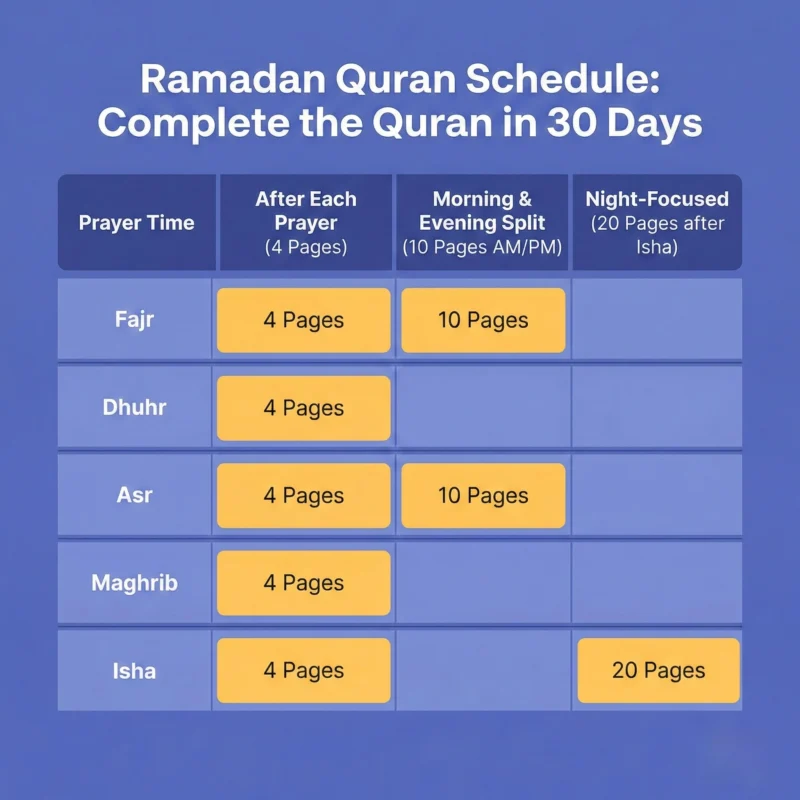
    Ramadan Quran reading schedule - 30-day plan to complete Quran in Ramadan
    An infographic showing a visual 30-day Ramadan Quran reading schedule with daily Juz breakdown, perfect for visual learners planning their Quran reading plan.

    Understanding the time commitment is crucial for creating a realistic Quran reading plan. The Quran contains 30 Juz (parts), approximately 604 pages, and around 77,000 words. Here’s what this means in practical terms:

    • 1 Reading 1 Juz takes 30–45 minutes for most readers
    • 2 Completing the full Quran takes 15–23 hours total
    • 3 In Ramadan (30 days), that’s just 30–45 minutes daily
    • 4 Beginners may need 60–90 minutes per Juz initially

    Understanding How Long One Juz Takes

    How long is one Juz? Each Juz contains approximately 20 pages of the Quran. Your reading time depends on your fluency level and whether you’re focusing on Tajweed (proper pronunciation rules):

    • Fluent Arabic readers: 20–30 minutes per Juz
    • Non-Arabic speakers reading transliteration: 45–60 minutes
    • New learners with Tajweed focus: 60–90 minutes

    The Math Behind Your Ramadan Quran Reading Schedule

    Let’s break down exactly what you need based on your reading speed. This table helps you understand how long it takes to complete the Quran and plan accordingly:

    Reading Speed Time per Juz Daily Commitment 30-Day Feasibility
    Fast (fluent) 25 min 25 min/day ✅ Very achievable
    Moderate 40 min 40 min/day ✅ Achievable
    Beginner 60 min 60 min/day ✅ Achievable with planning
    New learner 90 min 90 min/day ⚠️ Consider half-Quran goal

    New to Quran reading? Our Online Quran Reading Course can help you build the foundation you need.

    “Whoever reads a letter from the Book of Allah will receive a hasanah (good deed) from it, and the hasanah is multiplied by ten.”

    — Jami’ at-Tirmidhi, 2910

    7 Proven Steps to Complete Quran in Ramadan 2026

    Now let’s dive into the practical methodology. These seven steps have been refined through years of teaching experience and have helped thousands of students successfully finish their Ramadan Quran reading:

    1. 1 Set your intention (Niyyah) before Ramadan begins
    2. 2 Create a personalized Ramadan Quran reading schedule
    3. 3 Anchor reading to your 5 daily prayers
    4. 4 Use the “chunking” method for psychological ease
    5. 5 Leverage technology and accountability tools
    6. 6 Join a community or study circle
    7. 7 Build flexibility for difficult days

    1 Set Your Intention (Niyyah) Before Ramadan Begins

    Before Ramadan arrives, take time to set a sincere intention for completing your Quran reading. The power of Niyyah in Islam cannot be overstated—it transforms routine actions into acts of worship. Write down your goal, make dua (supplication) for success, and mentally commit to this blessed journey.

    Research in behavioral psychology confirms what our faith teaches: pre-commitment dramatically increases follow-through. When you declare your intention before Ramadan begins, you’re not just hoping to finish the Quran—you’re making a promise to yourself and to Allah.

    “Actions are judged by intentions, and every person will be rewarded according to their intention.”

    — Sahih Al-Bukhari, 1

    2 Create Your Personalized Ramadan Quran Reading Schedule
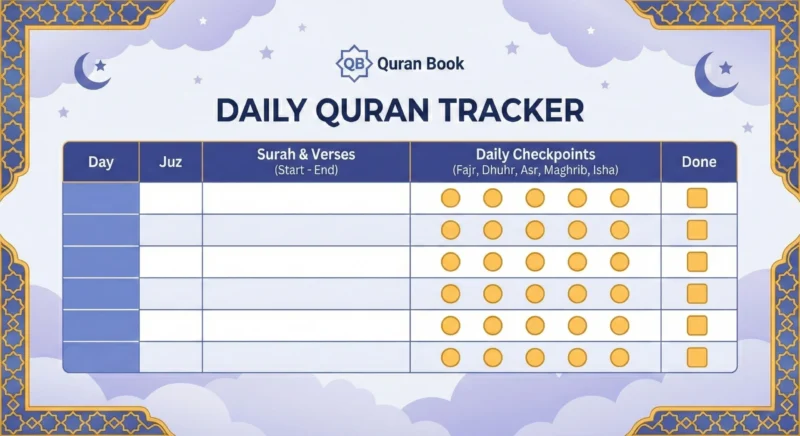
    Quran reading plan - daily schedule to finish Quran in Ramadan
    A clean, easy-to-follow chart showing different Ramadan Quran reading schedule options with time blocks for each prayer, helping readers visualize how to finish Quran in Ramadan.

    A Ramadan Quran reading schedule isn’t one-size-fits-all. Your optimal plan depends on your daily routine, energy levels, and personal preferences. The key formula is simple: 1 Juz per day for 30 days equals Khatam Quran. Here are four proven schedule types:

    Schedule Type When to Read Juz Coverage
    After Fajr Plan Post-Fajr until sunrise 1 Juz (best focus)
    Prayer-Linked Plan After each of 5 prayers 6 pages = 1 Juz total
    Night Owl Plan After Taraweeh 1 Juz (quiet environment)
    Split Session Plan Half Juz morning + half evening 1 Juz (for busy schedules)

    The After Fajr Plan works exceptionally well because your mind is fresh, the house is quiet, and you start your day with barakah. However, if you’re not a morning person, don’t force it—the best Quran reading plan is the one you’ll actually follow consistently.

    📥 Download your free schedule: Get our Free Ramadan Quran Schedule PDF to track your daily progress!

    3 Anchor Your Reading to the 5 Daily Prayers

    One of the most effective strategies for reading Quran during Ramadan is anchoring your recitation to your five daily prayers. This approach leverages a powerful psychological principle called habit stacking—attaching a new behavior to an existing routine increases your success rate by up to 70%.

    Here’s how it works: read 4–6 pages after each Salah. Since you’re already in a state of wudu and spiritual focus, transitioning to Quran recitation feels natural. The Adhan serves as a built-in reminder five times daily, and since prayers are non-negotiable for practicing Muslims, you’ll never completely miss a reading session.

    This method distributes your reading throughout the day, preventing fatigue and making the goal of one Juz feel effortless. Many of our students report that this approach transformed their entire relationship with Quran—it stopped being a task to complete and became a natural part of their daily rhythm.

    4 Use the “Chunking” Method for Psychological Ease
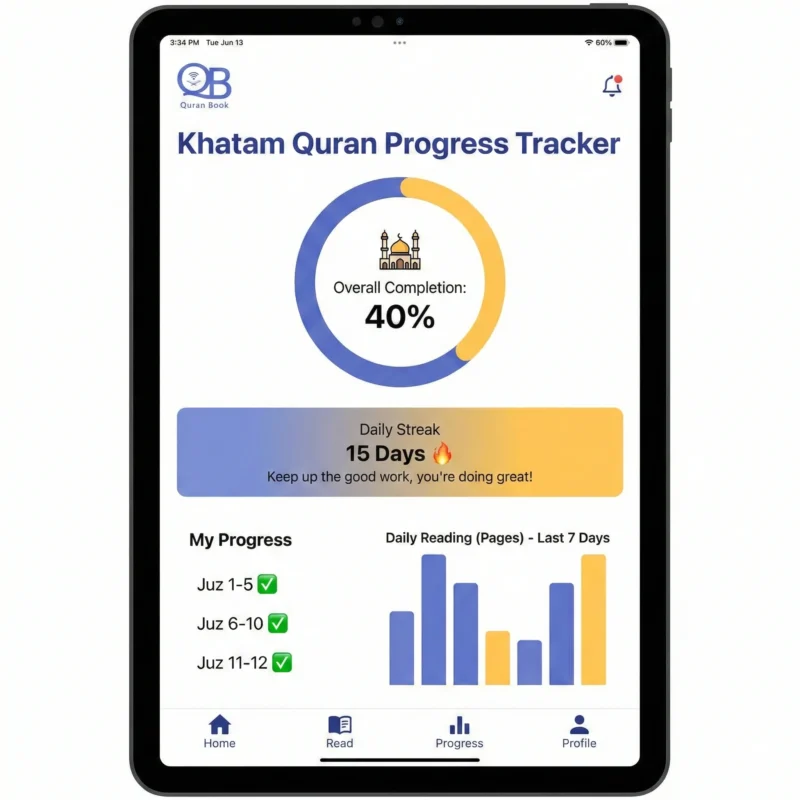
    Khatam Quran progress tracker - chunking method for completing Quran in Ramadan
    A screenshot or mockup of a Quran reading progress dashboard showing completed Juz, daily streaks, and motivational elements that help students achieve Quran Khatam.

    At Quran Book Academy, we’ve discovered that the biggest barrier to completing Quran isn’t time—it’s psychological overwhelm. Looking at 604 pages feels insurmountable, but our “Chunking Method” transforms this mountain into manageable hills. Here’s how it works:

    Instead of thinking “I need to read the entire Quran,” we train students to focus only on the current page—then the next. This technique, rooted in cognitive load theory, reduces mental fatigue and increases retention. During our live Zoom sessions, our certified teachers guide students through Tajweed-focused reading in digestible 25-minute blocks, followed by 5-minute breaks.

    Our custom Learning Management System (LMS) tracks your daily progress, automatically generating Gmail reports that show exactly how many pages you’ve completed, your consistency streak, and personalized recommendations for catching up if you fall behind.

    The psychology is simple: small wins create momentum. When you complete one Juz and see the progress bar move on your student dashboard, your brain releases dopamine—the same reward chemical that makes social media addictive, but channeled toward Quran completion. Our students report that after the first week of following this system, reading Quran stops feeling like a chore and becomes something they look forward to.

    5 Leverage Technology and Accountability Tools

    Modern technology offers incredible resources to support your Quran for Ramadan journey. Here are the most effective tools our students use:

    • 📱 Quran apps with bookmarking (Quran.com, Tarteel AI) – Track your position and resume instantly
    • Daily reminder alarms – Set for your chosen reading times
    • 📊 Progress tracking spreadsheets – Visual representation of your journey
    • 👥 Accountability partner check-ins – Share daily progress with a friend or family member

    6 Join a Community or Study Circle
    Quran Khatam community - virtual study circle for Ramadan Quran completion
    An image showing diverse Muslims engaged in online Quran learning, representing the community aspect of achieving Khatam Quran during Ramadan through group study.

    There’s profound wisdom in learning together. Group accountability significantly increases completion rates, and virtual halaqas (study circles) make this accessible regardless of your location. At Quran Book Academy, our live classes create a supportive community where students encourage each other through the Ramadan journey.

    “No people gather in a house of Allah, reciting the Book of Allah and studying it together, except that tranquility descends upon them, mercy covers them, angels surround them, and Allah mentions them to those near Him.”

    — Sahih Muslim, 2699

    The Prophetic tradition emphasizes learning together, and modern research confirms that social support is one of the strongest predictors of goal achievement. Whether you join an online community, a local mosque program, or simply partner with a friend, don’t underestimate the power of collective motivation.

    Connect with our community: YouTube Channel | Telegram Channel

    7 Build Flexibility for Difficult Days

    Life happens. Work emergencies, family obligations, health issues, or simple exhaustion may disrupt even the best-laid plans. Instead of letting one missed day derail your entire Quran Khatam goal, build flexibility into your system from the start.

    • Plan for catch-up days: Designate Fridays or weekends as buffer days
    • Permission to adjust: Reading half a Juz on hard days is better than nothing
    • “2 Juz days” strategy: Make up missed readings on days with more energy
    • Grace over perfection: Progress matters more than perfect adherence

    💡 Remember: Even if you don’t complete the full Quran, every single ayah you read is rewarded. Allah sees your effort, not just your finish line.

    Common Mistakes That Derail Your Ramadan Quran Goals

    Awareness of common pitfalls helps you avoid them. Here are the five most frequent mistakes we see students make when trying to complete their Quran reading during Ramadan:

    1. 1
      Starting too fast, burning out by week 2 — Enthusiasm in the first days leads to unsustainable pace
    2. 2
      No fixed reading time — Relying on “whenever I have time” rarely works
    3. 3
      Perfectionism paralysis — Stopping completely because of mispronunciation fears
    4. 4
      Isolation — Trying to do it completely alone without support
    5. 5
      Neglecting Tajweed — Prioritizing speed over quality of recitation

    This is exactly why structured learning with qualified teachers makes the difference. Our Tajweed-focused approach ensures you’re reading correctly while maintaining pace. You don’t have to choose between speed and accuracy—proper technique actually makes reading faster over time.

    What If You Can’t Complete the Entire Quran?

    Let’s address this important question with honesty and compassion. Not everyone can realistically finish the entire Quran in 30 days, and that’s perfectly okay. What matters is sincere effort and consistent worship.

    “The most beloved deeds to Allah are those done consistently, even if they are small.”

    — Sahih Al-Bukhari, 6464

    Consider these alternative goals based on your circumstances:

    Goal Daily Commitment Total Pages
    Full Quran 20 pages/day 604 pages
    Half Quran 10 pages/day 302 pages
    Quarter Quran 5 pages/day 151 pages
    Juz Amma Focus 2-3 pages/day 37 pages (with deep understanding)

    A half-Quran goal (15 Juz) is still immensely blessed. Some students choose to read fewer pages but with deeper reflection and understanding. Others focus on memorizing Juz Amma with proper Tajweed. Quality and consistency often matter more than quantity.

    Frequently Asked Questions

    How many pages of Quran should I read daily in Ramadan?

    To complete the Quran in Ramadan, read approximately 20 pages (1 Juz) per day. This equals about 4 pages after each of the 5 daily prayers, taking 30–45 minutes total depending on your reading speed. Beginners should allow more time and may consider starting with 10 pages daily.

    Can beginners complete Quran in Ramadan?

    Yes, beginners can complete the Quran in Ramadan with proper planning. Beginners should allow 60–90 minutes daily and may benefit from following along with audio recitation. Starting with a qualified teacher before Ramadan helps build confidence and proper pronunciation. Our Academy offers pre-Ramadan preparation courses specifically designed for this purpose.

    What is the best time to read Quran during Ramadan?

    The best time to read Quran during Ramadan is after Fajr prayer, when the mind is fresh and distractions are minimal. Other effective times include after each of the five daily prayers, during the last third of the night, and after Taraweeh prayers. Choose the time that aligns best with your natural energy patterns.

    How can I read Quran faster without losing quality?

    To read Quran faster while maintaining quality, practice consistent daily reading to build fluency, use your finger to track lines, minimize subvocalization for familiar passages, and learn proper Tajweed rules to avoid hesitation. Audio recitation can also help establish natural reading rhythm. Speed comes naturally with practice—don’t sacrifice accuracy for pace.

    Is it okay to read Quran in English during Ramadan?

    While reading the Arabic Quran holds the primary reward for recitation, reading the Quran in English is beneficial for understanding. Many scholars recommend reading Arabic text alongside the translation to gain both the reward of recitation and the benefit of comprehension. The goal is connection with Allah’s words in whatever form is most meaningful to you.

    What is Khatam Quran and why is it important?
    Quran Khatam completion - how to finish Quran in Ramadan successfully
    A celebratory, peaceful image representing the achievement of completing Quran Khatam, inspiring readers to begin their journey of reading Quran during Ramadan.

    Khatam Quran means completing a full reading of the entire Quran from Al-Fatiha to An-Nas. It’s particularly significant during Ramadan because the Prophet ﷺ completed the Quran with Jibreel every Ramadan, and twice in his final year. This practice connects Muslims worldwide in a blessed tradition that has continued for over 1,400 years.

    Start Your Ramadan Quran Journey with Expert Guidance

    Completing the Quran in Ramadan doesn’t have to be a solo struggle. At Quran Book Academy, we’ve helped thousands of students—from complete beginners to intermediate readers—achieve their Ramadan Quran goals through our structured, supportive approach.

    What You Get with Our Free Trial:

    • One-on-one live session with a certified Quran teacher via Zoom
    • Personalized assessment of your current reading level
    • Custom Ramadan reading plan tailored to your schedule
    • Introduction to our LMS tracking system
    • No commitment, no pressure—just pure learning

    🎯 This Ramadan, don’t just hope to complete the Quran—prepare to succeed.

    Book Your Free Trial Lesson Now

    Also explore: Tajweed Course for Beginners

    Learn More

    Continue your Quran learning journey with these helpful resources:

    References

    Hadith Collections

    • Sunnah.com — Authentic Hadith collections including Sahih Al-Bukhari, Sahih Muslim, and Jami’ at-Tirmidhi

    Quran Resources

    • Quran.com — Digital Quran with translations and audio recitations
    • Tarteel AI — AI-powered Quran recitation assistant

    Community Resources

    📖 Quran Book Academy

    Helping Muslims worldwide connect with the Quran through quality online education.

    © 2026 Quran Book Academy. All rights reserved.

  • Virtues of Surah Al-Mulk

    7 Powerful Surah Al Mulk Benefits That Transform Your Akhirah | Quran Book Academy
    ✦ Spiritual Guide ✦

    7 Powerful Surah Al Mulk Benefits That Transform Your Akhirah

    By Quran Book Academy • Comprehensive Islamic Study Guide

    15 min read 30 Verses
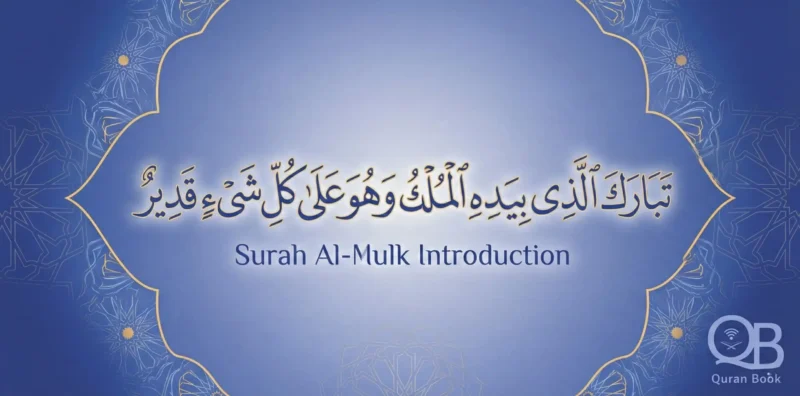
    Beautiful Quran Al-Mulk surah with Arabic calligraphy - surah al mulk benefits spiritual guide
    A serene, inspirational image featuring the Arabic text of Surah Al-Mulk opening verse with soft Islamic geometric patterns

    You want to build a stronger connection with the Quran, but between a demanding schedule, the fear of mispronouncing Arabic, and not knowing where to start, it feels overwhelming. Many Muslims recognize the importance of daily Quranic practice yet struggle to find a manageable entry point that doesn’t require years of study.

    What if there was one surah—just 30 verses—that the Prophet ﷺ himself recited every single night, and that carries life-changing surah al mulk benefits both in this world and the next? Surah Al-Mulk is exactly that spiritual resource. Despite its brevity, the surah al mulk benefits backed by authentic hadith are profound, touching every stage of a believer’s journey: from this earthly life through the grave, to the Day of Judgement itself.

    This comprehensive guide explores the proven surah al mulk benefits through the lens of classical Islamic scholarship and Hadith. You’ll discover not only what these virtues are, but how to integrate this surah into your daily routine with proper Tajweed pronunciation. Whether you’re a complete beginner intimidated by Arabic or an intermediate learner seeking deeper meaning, this article will equip you with everything you need to unlock the transformative power of these 30 blessed verses. For beginners looking to start their Quranic journey, our learn Quran reading online program provides the perfect foundation.

    HADITH

    “There is a Surah in the Quran of thirty verses which intercedes for a man until he is forgiven. It is Tabarak Alladhi Biyadihil-Mulk.”

    Ready to discover how you can access these surah al mulk benefits for yourself? Let’s begin.

    What Is Surah Al-Mulk? Meaning and Background

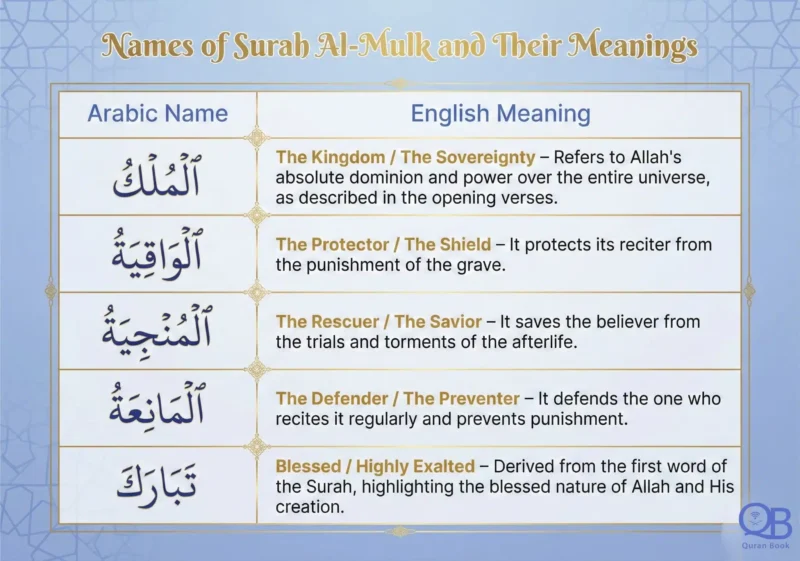
    Surah Al-Mulk names meanings table - Islamic calligraphy - surah al mulk benefits explained
    An infographic showing the five names of Surah Al-Mulk with Arabic script and English translations

    Surah Al-Mulk is the 67th chapter of the Quran, consisting of 30 verses revealed in Makkah. The name Al-Mulk means “The Sovereignty” or “The Dominion,” referring to Allah’s complete authority over all creation. Beyond this primary title, Surah Al-Mulk carries multiple names in Islamic tradition, each highlighting a different facet of its spiritual significance and the surah al mulk benefits associated with recitation and contemplation.

    The surah addresses fundamental truths about existence: Allah’s perfect creation of the heavens, the purpose of human life as a test of deeds, and the inevitable accountability on the Day of Judgment. For contemporary learners, these themes resonate powerfully. In a world of distraction and spiritual drift, the surah al mulk benefits include a profound realignment with purpose and divine consciousness. To deepen your understanding, explore our Quran Tafseer classes.

    The Many Names of Surah Al-Mulk

    Arabic Name English Meaning Significance
    Al-Mulk (المُلك) The Sovereignty Reflects Allah’s supreme authority over creation
    Tabarak (تبارك) The Blessed Derived from the opening word of verse 1
    Al-Mani’ah (المانعة) The Protector Prevents punishment and torment of the grave
    Al-Munjiyah (المنجية) The Saviour Saves its sincere reciters from hellfire
    Al-Waqiyah (الواقية) The Shield Acts as a spiritual shield for the believer

    Learn Surah Al-Mulk with Beautiful Tajweed

    Surah Al Mulk – سورة الملك | English and Arabic Translation | Mishary Rashid Alafasy

    Watch on YouTube
    7

    Authentic Benefits of Surah Al Mulk From Hadith

    The benefits of Surah Al Mulk are established in multiple authentic narrations across the most reliable hadith collections. These surah al mulk benefits include protection from the punishment of the grave, intercession on the Day of Judgement, multiplied good deeds for every letter, nightly spiritual protection, and a confirmed Sunnah of the Prophet ﷺ who never slept without reciting it. Below, we explore each of these transformative surah al mulk benefits in detail.

    1

    Protection From the Punishment of the Grave

    Islamic protection from grave - Surah Al-Mulk benefits spiritual shield concept illustration
    A serene illustration representing spiritual safety and protection

    The grave represents a pivotal threshold in Islamic theology—a place of either peace or torment depending on one’s faith and deeds. Among the most celebrated surah al mulk benefits is its protective function against the suffering of the grave, a concept that resonates deeply with Islamic spirituality.

    “Whoever reads Tabarak Alladhi Biyadihil-Mulk every night, Allah will protect him from the torment of the grave.”

    This hadith connects consistent, nightly recitation to Divine protection. For modern believers, this surah al mulk benefits directly addresses existential anxiety. Rather than fearing the unknown stages after death, the reciter rests assured in the Quranic promise of Divine protection.

    2

    Intercession on the Day of Judgement

    Beyond protection in the grave, one of the most powerful surah al mulk benefits is the surah’s ability to intercede on behalf of its reciter on the Day of Judgment—the most consequential day in Islamic eschatology.

    “There is a Surah in the Quran of thirty verses which intercedes for a man until he is forgiven. It is Tabarak Alladhi Biyadihil-Mulk.”

    The Quran itself is described as having agency—it “argues” and “pleads” on behalf of those who recited it faithfully. Your commitment to these 30 verses today directly influences your spiritual standing in the Hereafter.

    3

    A Confirmed Sunnah of the Prophet ﷺ

    Among the surah al mulk benefits often overlooked by Western learners is the spiritual elevation that comes from following a documented practice of the Prophet ﷺ himself. The surah al mulk benefits are amplified by the fact that this recitation is not merely recommended but was the nightly custom of the best of all creation.

    “The Prophet ﷺ would not sleep until he recited Alif Lam Mim Tanzil (Surah As-Sajdah) and Tabarak Alladhi Biyadihil-Mulk (Surah Al-Mulk).”

    Each night, millions of believers worldwide align themselves with this Sunnah, creating a spiritual continuity spanning fourteen centuries. For contemporary Muslims, this includes a profound sense of continuity and spiritual authenticity.

    4

    Multiplied Good Deeds for Every Letter

    Islamic theology teaches that reciting the Quran yields exponential spiritual rewards. With Surah Al-Mulk containing approximately 1,316 letters, the surah al mulk benefits scale dramatically with each recitation.

    “Whoever recites a letter from the Book of Allah, he will receive one good deed as ten good deeds like it.”

    1,316
    Letters
    13,000+
    Deeds/Recitation
    390,000+
    Deeds/Month
    5

    It Argues and Defends You in the Grave

    Ibn Mas’ud (RA) reported that the surah al mulk benefits include protective arguments that block punishment from every direction. Reported by Al-Hakim with a sound chain.

    6

    Seventy Extra Virtues Over Other Surahs

    Among the most extraordinary surah al mulk benefits is a distinction in spiritual merit compared to all other chapters of the Quran. Islamic scholars have long emphasized its recitation.

    7

    A Nightly Shield of Spiritual Peace

    In a world saturated with digital stimulation, anxiety, and existential concern, the surah al mulk benefits include a counterbalance to late-night worry and a template for spiritual hygiene.

    How to Read Surah Al-Mulk with Proper Tajweed—A Beginner’s Guide

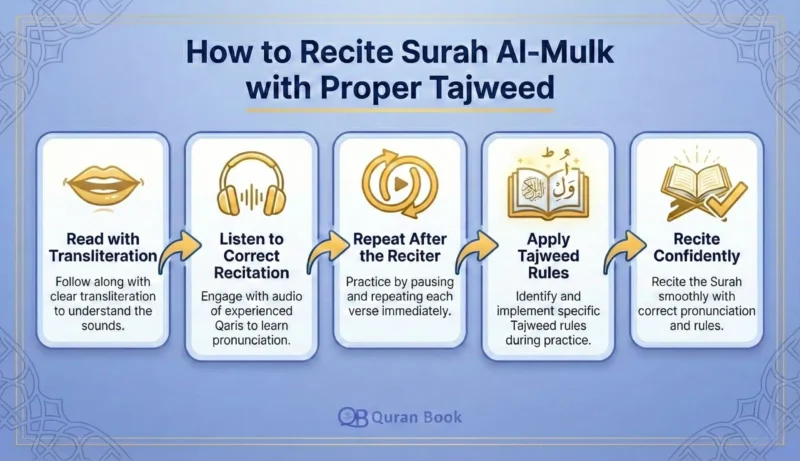
    Learn Surah Al-Mulk Tajweed proper pronunciation - surah al mulk benefits reading guide steps
    A step-by-step visual flowchart showing the 5 stages of learning to recite Surah Al-Mulk correctly

    To read Surah Al-Mulk correctly and fully unlock the surah al mulk benefits, beginners should learn basic Tajweed rules including proper letter pronunciation (Makharij), elongation (Madd), and nasalization (Ghunnah). Starting with a transliteration alongside Arabic text helps non-Arabic speakers build confidence before transitioning to reading Arabic directly. Our Tajweed course covers all these fundamentals.

    Step-by-Step Guide for Beginners:

    1
    Start with the Arabic text alongside an English transliteration:

    Familiarize yourself with how each Arabic letter sounds by comparing it to the English phonetic representation.

    2
    Learn the 5 essential Tajweed rules:

    Master Makharij (articulation points), Madd (elongation), Ghunnah (nasalization), Idgham (merging sounds), and Ikhfa (concealment). You can learn Tajweed online with our certified instructors.

    3
    Listen to a Qari recite it slowly:

    Seek out slow, clear recitations by renowned Qaris like Mishary Al-Afasy or Abdul Basit.

    4
    Break it into daily chunks:

    Master just 1 verse per day. In thirty days, you’ll complete the full surah. Consider our Quran memorization course for structured guidance.

    5
    Get feedback from a qualified teacher:

    A live instructor catches pronunciation errors that audio alone cannot.

    The Academy Method—How Quran Book Academy Teaches Surah Al-Mulk

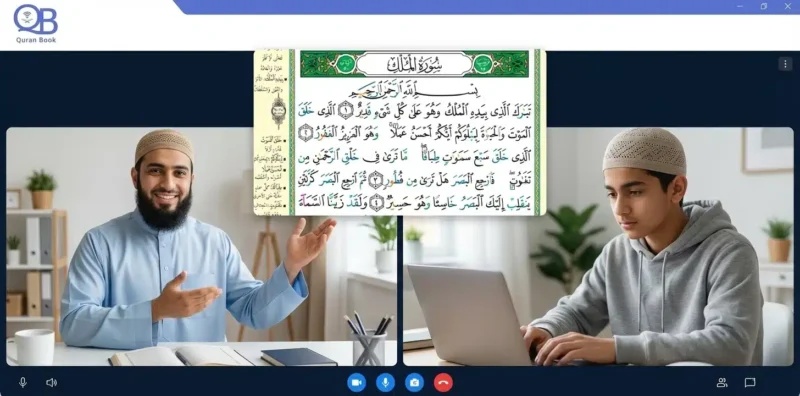
    Quran Book Academy live Zoom teacher Tajweed instruction - surah al mulk benefits learning method
    A professional image showing a teacher-student interaction on a Zoom call with Arabic text and Tajweed markers

    Quran Book Academy uses a structured “chunking” method based on proven educational psychology to help students learn Surah Al-Mulk with Tajweed. Live Zoom sessions with certified teachers, combined with our custom LMS (Learning Management System) for progress tracking and Gmail progress reports, ensure consistent improvement and maximum engagement with the surah al mulk benefits.

    🧠 Psychological Chunking

    The surah is broken into 5-6 manageable “chunks” of 5 verses each. Research shows this increases retention by 40%.

    💻 Live Zoom Sessions

    Every student receives one-on-one or small-group lessons with certified Tajweed instructors for real-time correction.

    📊 Custom LMS Tracking

    The Academy’s proprietary LMS tracks progress verse by verse with weekly Gmail progress reports.

    ❤️ Emotional Safety Net

    Instructors create a judgment-free space where mistakes are learning opportunities—warm, patient, milestone-based.

    The Meaning of Surah Al-Mulk—Key Themes for Beginners

    The meaning of Surah Al-Mulk revolves around three core, interconnected themes: Allah’s absolute sovereignty over creation, the purpose of human life as a test of deeds, and the consequences of denying the truth. For deeper exploration, consider our understanding Quran in English resources.

    Allah’s Sovereignty and Perfect Creation

    Surah Al-Mulk opens with a stunning affirmation: “Blessed is He in Whose Hands rests all authority. And He is Most Capable of everything.” The first five verses establish Allah’s complete dominion and the flawless design of creation—the perfect alignment of planets, the intricate balance of ecosystems, the precision of physical laws.

    Life and Death as a Test

    The surah pivots to the purpose of human existence: “Who created death and life to test which of you is best in deed.” This verse encapsulates Islamic theology’s most profound truth: life is not random—it is a deliberate test. Every choice, every moment, every action is an opportunity to demonstrate character and obedience.

    Warnings and Accountability

    The final verses describe the consequences of denying truth. The surah’s stark warnings against denial and arrogance serve as an anchor in an age of moral relativism. This realization—that you cannot escape accountability—paradoxically liberates you to live ethically.

    When and How to Recite Surah Al-Mulk—Surah Al Mulk Before Sleep

    The best time to recite Surah Al-Mulk is every night before going to sleep, following the explicit Sunnah of the Prophet ﷺ. It takes approximately 5–7 minutes to recite at a moderate pace. You can read it from a Mushaf (physical Quran), a Quran app on your phone or tablet, or from memory after committing it to heart.

    🌙 Daily Recitation Routine

    1
    Perform Wudu (Ablution) Before Bed

    Create a psychological boundary between worldly activity and spiritual practice.

    2
    Sit Comfortably and Set Your Intention (Niyyah)

    Silently affirm: “I recite seeking Allah’s pleasure and protection.”

    3
    Recite Surah Al-Mulk (5–7 Minutes)

    Whether from a Mushaf or memory, the surah al mulk benefits remain consistent.

    4
    Reflect Briefly on the Meaning (1-2 Minutes)

    Contemplate a verse that particularly resonated with you.

    5
    Make Du’a and Go to Sleep

    Ask Allah to grant you the benefits of what you’ve recited and peaceful sleep.

    Frequently Asked Questions About Surah Al-Mulk

    Q1: What are the main surah al mulk benefits? +
    The main benefits include protection from the punishment of the grave, intercession on the Day of Judgement, and following a confirmed Sunnah of the Prophet ﷺ. It also carries multiplied good deeds for every letter recited (approximately 13,000+ per recitation).
    Q2: Can I read Surah Al-Mulk in English? +
    You can read the translation in English to understand the meaning and theological significance. However, the specific spiritual rewards of recitation are tied to reading the Arabic text. Beginners can start with a transliteration to learn pronunciation and gradually transition to reading Arabic directly.
    Q3: How long does it take to recite Surah Al-Mulk? +
    Surah Al-Mulk has 30 verses and takes approximately 5 to 7 minutes to recite at a moderate pace with proper Tajweed. Even the busiest individuals can easily fit this into their nightly routine before sleeping.
    Q4: Is reading Surah Al-Mulk before sleep a Sunnah? +
    Yes, definitively. The Prophet ﷺ would not sleep without reciting Surah Al-Mulk (and Surah As-Sajdah) every night, as reported in Sunan al-Tirmidhi 2892. This makes it a strongly recommended and well-documented nightly practice.
    Q5: Can I recite Surah Al-Mulk without Wudu? +
    Scholars agree that you can recite Quran from memory without Wudu. However, having Wudu is preferred and more spiritually rewarding. If reading from a physical Mushaf, most scholars require Wudu.
    Q6: How can I memorize Surah Al-Mulk easily? +
    Break it into manageable chunks of 5 verses per week. Listen to a slow recitation daily, repeat after the Qari, and review previous verses before adding new ones. Quran Book Academy’s structured memorization course uses this exact methodology.
    Q7: What is the best time to read Surah Al-Mulk? +
    The best and most authentic time is every night before sleeping, based on explicit Hadith. While there is no harm in reading it at other times, there is no authentic narration specifying morning recitation.
    Q8: How many letters are in Surah Al-Mulk? +
    Surah Al-Mulk contains approximately 1,316 letters. Since each letter earns a minimum of 10 good deeds, a single reading can earn over 13,000 good deeds. Across a month, this totals over 390,000 good deeds.
    Book free trial Quran lesson Surah Al-Mulk - surah al mulk benefits start learning today
    Start your Quranic journey today with Quran Book Academy

    Start Your Journey—Free Trial Lesson

    You’ve learned about the incredible surah al mulk benefits. Now imagine being able to recite those verses beautifully, with proper Tajweed, guided by a patient, certified teacher on Zoom.

    1-on-1 Live Zoom Sessions with Certified Tajweed Teachers
    Custom LMS Tracks Your Progress + Weekly Gmail Reports
    Flexible Scheduling for USA, Canada, UK & Australia
    Beginner-Friendly—No Prior Arabic Knowledge Required
    Book Your FREE Trial Lesson Now

    No commitment • No payment required • 30-minute session

    📚 References & Sources

    Hadith Collections

    Quranic Verses

    Additional Resources

  • best methods arabic kids

    7 Best Methods to Teach Arabic to Kids at Home — Fun & Faith-Based Guide

    7 Best Methods to Teach Arabic to Kids at Home (Fun & Faith-Based Guide)

    By Quran Book Academy · Updated 2026

    Book Your FREE Trial Lesson
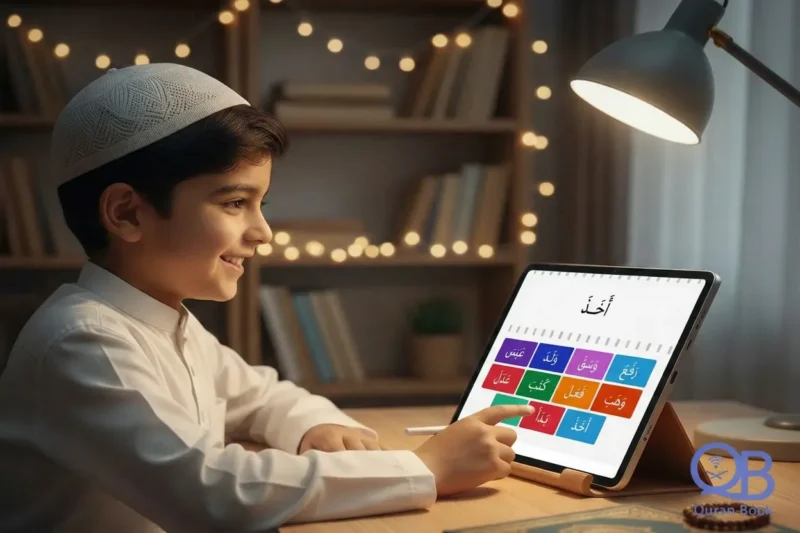
    Best methods to teach Arabic to kids — child learning Arabic letters at home with a parent
    A Muslim child learning Arabic letters at home with a parent — the journey starts here

    Introduction: Why This Guide Matters

    You open an Arabic textbook for your child, and within five minutes, frustration takes over. The letters look foreign, the sounds feel impossible, and you wonder: Am I failing my child’s Islamic education? If this sounds familiar, you are not alone. Thousands of Muslim parents across the USA, Canada, the UK, and Australia face this exact struggle every single day.

    The truth is, learning Arabic is absolutely achievable with the right approach, even if you do not speak Arabic yourself. In this comprehensive guide, we reveal the 7 best methods to teach Arabic to kids at home — proven strategies backed by educational psychology and Islamic pedagogy that make learning fun, not frustrating. Whether your child is 4 or 14, these methods will transform their Arabic journey from a chore into an adventure they actually look forward to.

    Allah (SWT) Himself reassures us in the Quran:

    “Indeed, We have made this Qur’an easy to remember. Is there anyone who will be mindful?”

    Surah Al-Qamar 54:17

    This divine promise applies to our children too. With the right methods, the Arabic language opens its doors wide. Let us show you how.

    ✦ ✦ ✦

    Why Teaching Arabic to Kids Early Is a Game-Changer

    Teaching Arabic to kids early — children reading Quran together in Islamic homeschooling
    Children reading Quran together in an Islamic homeschooling environment

    Teaching Arabic to kids early enhances cognitive development, builds a deep spiritual connection to the Quran, and develops powerful bilingual advantages. Research confirms that children between the ages of 3 and 7 are in a critical window for language acquisition, making this the golden period for introducing Arabic.

    🧠

    Cognitive Benefits

    Studies from leading universities, including Harvard, show that bilingual children develop stronger problem-solving abilities, enhanced memory, and greater mental adaptability. When children learn Arabic alongside English, their brains build denser neural networks that benefit all areas of learning.

    🕌

    Spiritual Foundation

    Arabic is the language of Salah, the Quran, and Du’a. When a child understands what they are reciting in prayer, it transforms a routine act into a deeply personal conversation with Allah (SWT). This spiritual connection becomes the anchor of their Islamic identity.

    Critical Age Window

    Between ages 3 and 7, the brain is most receptive to new phonetic systems. Children in this window can absorb Arabic sounds, including the unique throat and emphatic letters, far more naturally than older learners.

    🌍

    Cultural Identity

    Arabic bridges children to their heritage and connects them to the global Muslim Ummah. It fosters a sense of belonging that transcends borders.

    The Prophet Muhammad (ﷺ) emphasized the importance of Quran education:

    “The best of you are those who learn the Qur’an and teach it.”

    Sahih al-Bukhari 5027
    ✦ ✦ ✦

    7 Best Methods to Teach Arabic to Kids

    Arabic learning games for kids — gamification in teaching Arabic alphabet to children
    Arabic learning games for kids — gamification in teaching the Arabic alphabet

    The 7 best methods to teach Arabic to kids include gamification, consistent micro-lessons, visual aids, the Nour El Bayan phonics method, the chunking technique, interactive online classes, and storytelling with Islamic themes. Each method is grounded in educational research and enhanced with Islamic values.

    1

    Gamification — Turn Every Arabic Lesson Into a Game

    Gamification is one of the most powerful best methods to teach Arabic to kids because it taps into the brain’s natural reward system. When children play Arabic learning games, their brains release dopamine, the feel-good chemical that strengthens memory and motivation. Instead of dreading Arabic practice, children actually ask for more.

    Start with simple, hands-on games: Arabic Bingo, where children match Arabic letters to called-out sounds; Letter Treasure Hunts, where flashcards are hidden around the house; and Memory Card Matching, where kids pair Arabic letters with pictures. For digital learners, apps that use achievement badges, points, and streaks keep the excitement going between lessons.

    At Quran Book Academy, we integrate gamified elements directly into our custom LMS. Children earn rewards for completing milestones, keeping them engaged and eager to progress through their Arabic and Tajweed courses.

    2

    Consistency Over Intensity — Why 10 Minutes a Day Beats 2 Hours a Week

    One of the most overlooked best methods to teach Arabic to kids is simply being consistent. Educational psychology shows that spaced repetition, which means short daily sessions, builds neural pathways far faster than cramming. We call it the 10-Minute Arabic Rule: just ten focused minutes every day produces dramatically better results than a two-hour weekend marathon.

    Here is how this works in practice:

    Factor 10 Min/Day 2 Hours/Week Winner
    Retention Rate 85%+ (spaced repetition) 40–50% (cramming) 10 Min/Day ✓
    Child Engagement High (short & fun) Low (fatigue & boredom) 10 Min/Day ✓
    Parent Commitment Easy to maintain Hard to schedule 10 Min/Day ✓
    Monthly Progress Steady & measurable Inconsistent 10 Min/Day ✓

    For busy working parents, this is liberating. Even on the most hectic day, ten minutes is always achievable. And over the course of a month, those small sessions compound into remarkable progress.

    3

    Visual Aids — Colors, Animation & the Power of Images

    Visual aids for Arabic — colorful Arabic flashcards and alphabet chart for kids
    Colorful Arabic flashcards and alphabet charts — powerful visual aids for kids

    Research shows that approximately 65% of children are visual learners, making visual aids one of the best methods to teach Arabic to kids effectively. When Arabic letters are paired with colors, animations, and images, retention rates skyrocket.

    Start with color-coded Arabic letters. For instance, use different colors for similar-looking letters like ب, ت, and ث to help children distinguish between them at a glance. Pair each letter with a relatable image: ج for جمل (camel), ب for بيت (house). Arabic flashcards with vibrant illustrations are inexpensive to make and incredibly effective.

    For animated learning, the Quran Book Academy YouTube channel offers fun, engaging Arabic letter videos that children love. Embedding video content into your child’s daily routine maximizes dwell time and creates multi-sensory learning connections that stick.

    4

    The Nour El Bayan Method — A Proven Phonics-First Approach

    Nour El Bayan for kids — Arabic phonics method teaching letter sounds to children
    Nour El Bayan — a proven phonics-first approach to Arabic for kids

    The Nour El Bayan method is a structured phonics-based approach that teaches children Arabic letter sounds before their names. This phonics-first strategy is one of the best methods to teach Arabic to kids because it enables them to actually read Arabic, not just memorize letter shapes.

    The method follows a clear progression: individual sounds, then connected letters, then short words, and finally Quran verses. By starting with sounds, children build a solid decoding foundation that makes Quran reading with Tajweed feel natural and intuitive.

    Quran Book Academy offers a full Nour El Bayan course on our YouTube channel for free practice, and our live Zoom classes follow this method with certified native Arabic teachers who guide each child through the progression at their own pace.

    5

    The Chunking Technique — Manageable Psychological Chunks

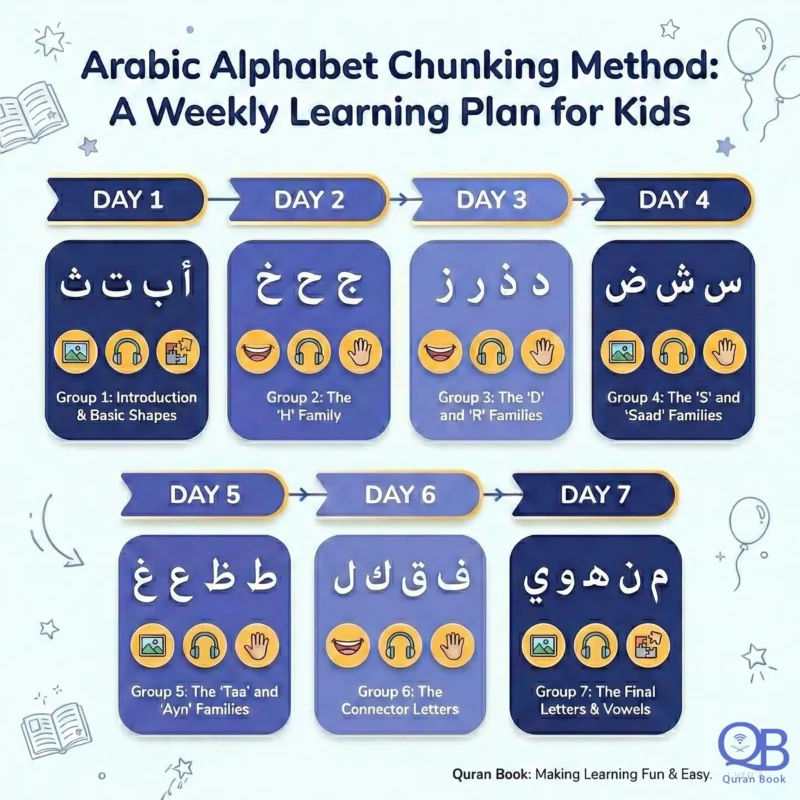
    Arabic alphabet for kids — chunking technique to teach Arabic letters in small groups
    Chunking technique — teaching Arabic letters in manageable small groups

    The concept of “chunking” was introduced by cognitive psychologist George Miller in 1956, and it remains one of the most effective best methods to teach Arabic to kids to this day. Miller’s research demonstrated that the human brain can process only 5 to 9 pieces of new information at any given time. For Arabic learning, this means you should never attempt to teach all 28 letters at once. Instead, break them into manageable groups of 3 to 5 letters. Each chunk should be paired with a visual cue, a sound recording, and a hands-on activity to engage multiple senses simultaneously.

    For example, in Week 1, you might introduce ا (Alif), ب (Ba), and ت (Ta), pairing each with a picture, a short song, and a clay-molding activity where children shape the letters with their hands. By the end of 6 to 8 weeks, your child will have mastered the full Arabic alphabet without the overwhelming feeling that causes most kids to quit.

    This technique is exactly how Quran Book Academy structures its Arabic homeschool curriculum: our live Zoom sessions break every lesson into digestible 15-minute focus chunks with interactive exercises, and our custom LMS tracks each child’s progress through these chunks, sending parents detailed progress reports via Gmail after every session.

    This approach directly eliminates the number one reason children abandon Arabic: cognitive overload. Instead of thinking “I will never learn this,” they experience small, meaningful wins every single day. The Prophet Muhammad (ﷺ) taught us the same principle of steady, consistent progress:

    “The most beloved deeds to Allah are those done consistently, even if they are small.”

    Sahih al-Bukhari 6464
    6

    Interactive Online Arabic Classes — Live, Personal & Effective

    Learn Arabic online for kids — interactive live Zoom Arabic class with teacher
    Interactive live Zoom Arabic class with a certified teacher

    Live interactive classes are among the best methods to teach Arabic to kids because they combine real-time feedback with personal connection and accountability. Unlike pre-recorded lessons, live sessions allow teachers to correct pronunciation instantly, adjust pace based on the child’s needs, and build meaningful mentor-student relationships.

    Quran Book Academy’s approach combines live Zoom sessions with certified native Arabic teachers, a custom LMS that tracks letters learned, Surahs completed, and attendance, plus Gmail progress reports sent directly to parents. Whether your family is in the USA, Canada, the UK, or Australia, your child can learn from home with zero commute.

    The social element matters too. Group classes with other Muslim kids create peer motivation, friendly competition, and a sense of community that keeps children excited about their Arabic and Quran journey.

    7

    Storytelling & Islamic Themes — Making Arabic Meaningful

    Arabic learning for kids — Islamic storytelling with Quran stories and Nasheeds
    Islamic storytelling — making Arabic meaningful through Quran stories and Nasheeds

    The final and perhaps most inspiring of the best methods to teach Arabic to kids is storytelling rooted in Islamic themes. When children learn Arabic vocabulary through the stories of the Prophets, daily Du’as like Bismillah, Alhamdulillah, and SubhanAllah, and beautiful Nasheeds, the language becomes alive with meaning and purpose.

    Arabic stories for kids drawn from the Quran teach vocabulary in context. A story about Prophet Yusuf (AS) naturally introduces words for family, patience, trust, and faith. Daily Du’as serve as vocabulary builders that children practice multiple times a day without even realizing they are learning. And simple Islamic Nasheeds with repetitive Arabic words boost memory through rhythm and melody.

    Once children have learned letters through stories and songs, the transition to reading short Surahs feels natural and rewarding. Allah (SWT) tells us:

    “We relate to you the best of stories through this Qur’an.”

    Surah Yusuf 12:3
    ✦ ✦ ✦

    The Academy Method — How Quran Book Academy Teaches Arabic & Tajweed

    Quran Book Academy — best methods to teach Arabic to kids with live Zoom and LMS
    Quran Book Academy — the complete Arabic & Tajweed learning ecosystem

    Quran Book Academy uses a unique blend of the best methods to teach Arabic to kids — combining live Zoom sessions, a custom LMS, and the Nour El Bayan phonics method to teach children Arabic and Tajweed in manageable, engaging chunks with real-time feedback and parent progress reports.

    📚

    Our Methodology

    Every student receives live one-on-one and group Zoom sessions with certified native Arabic teachers, many of whom are Al-Azhar graduates. Lessons follow the Nour El Bayan phonics progression, ensuring children build genuine reading skills from day one.

    🕋

    Tajweed Integration

    Every Arabic lesson connects directly to Quran reading fluency with proper Tajweed rules. Children do not just learn letters; they learn to recite the Quran beautifully and correctly.

    💻

    Our Tech Stack

    Zoom provides live interaction with instant feedback. Our custom LMS tracks letters learned, Surahs completed, and attendance milestones. Gmail Reports keep parents informed with weekly progress updates delivered straight to their inbox.

    🧩

    Psychological Approach

    Lessons are broken into 15-minute focus chunks, rewards are given for milestones, and positive reinforcement ensures every child feels confident and motivated. Plus, our YouTube channel offers free resources including Arabic letter animations and a complete Nour El Bayan course.

    ✦ ✦ ✦

    Arabic Alphabet for Kids — A Step-by-Step Starter Guide

    To teach the Arabic alphabet for kids, start with phonics by teaching sounds before letter names, introduce 3 to 5 letters per week using visual aids and hands-on activities, and use songs and games to reinforce learning daily.

    01
    Phonics First: Teach the sound of each letter before its name. This is the foundation of the Nour El Bayan method and the fastest path to actual reading ability.
    02
    One Letter a Day: Go slow and steady. Pair each letter with a visual image and practice its sound throughout the day.
    03
    Hands-On Practice: Use sand tracing, clay molding, and coloring worksheets to make Arabic handwriting practice engaging and tactile.
    04
    Look-Alike Letter Challenge: Use color coding to differentiate similar-looking letters like ب, ت, and ث. Assign each a distinct color so children never confuse them.

    🎯 Milestone: With consistent daily practice of 10 to 15 minutes, most children master all 28 Arabic letters within 2 to 3 months. The Arabic alphabet for kids becomes an achievable and exciting goal.

    ✦ ✦ ✦

    Building an Arabic Homeschool Curriculum That Works

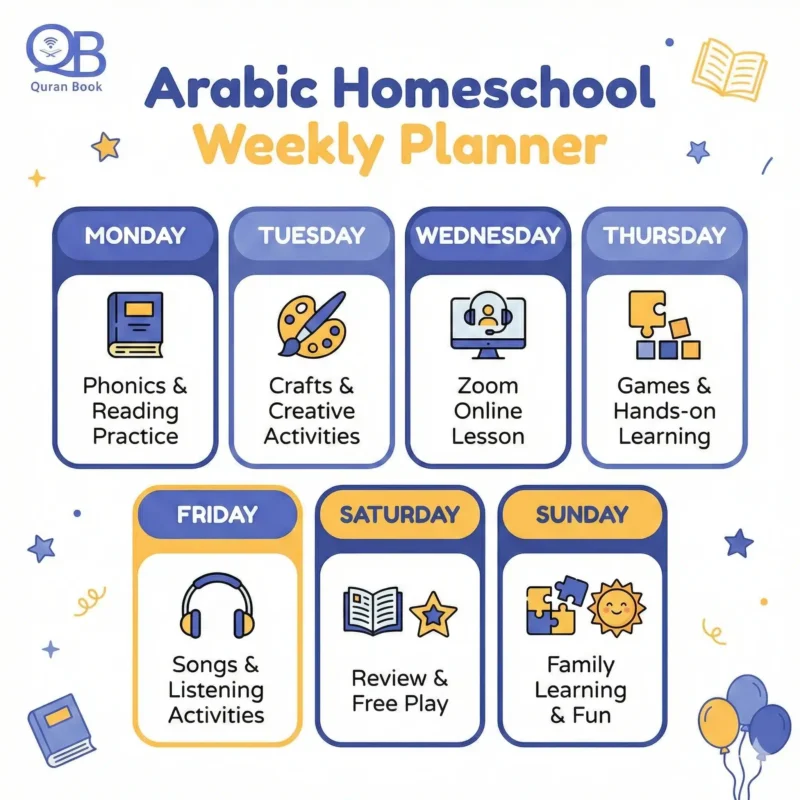
    Arabic homeschool curriculum — weekly Arabic learning schedule for kids at home
    A sample weekly Arabic homeschool curriculum for kids

    An effective Arabic homeschool curriculum combines structured phonics lessons, daily 10 to 15 minute practice sessions, visual aids, live online classes, and Islamic storytelling to keep kids engaged and progressing. Here is a sample weekly schedule you can start using today:

    Day Activity (10–15 min) Resource
    MonNew letters (phonics + visuals)Nour El Bayan YouTube
    TueArabic handwriting practice + clay lettersPrintable worksheets
    WedLive Zoom class with teacherQuran Book Academy
    ThuArabic games + flashcardsDIY games + apps
    FriQuran listening + short Surah reviewQuran.com + Academy LMS
    SatStorytelling + Islamic NasheedsYouTube + Islamic books
    SunReview week’s progress + fun quizLMS Progress Report

    This Arabic homeschooling schedule is flexible. Adjust the activities to your child’s energy levels, and remember: consistency matters more than perfection. Even following this plan three or four days a week will produce noticeable results within the first month.

    ✦ ✦ ✦

    Frequently Asked Questions About Teaching Arabic to Kids

    Q What is the best age to start teaching Arabic to kids?

    Most experts recommend starting between ages 3 and 5, when children’s brains are highly receptive to new sounds and phonetic patterns. However, older children can start anytime with the right methods. At Quran Book Academy, we accept students from age 4 and customize lessons to each child’s level.

    Q Can I teach my child Arabic if I don’t speak it myself?

    Absolutely. Many of our most successful students have non-Arabic-speaking parents. Use structured online programs like Quran Book Academy where certified native teachers handle instruction via Zoom. You can even learn alongside your child using our free YouTube channel for Arabic letters and Nour El Bayan lessons.

    Q How long does it take a child to learn the Arabic alphabet?

    With consistent daily practice of 10 to 15 minutes, most children master all 28 Arabic letters within 2 to 3 months. Using visual aids, games, and the phonics-first approach accelerates this timeline significantly.

    Q What is the Nour El Bayan method for teaching Arabic?

    Nour El Bayan is a structured phonics-based method that teaches children Arabic letter sounds before their names. It progresses from individual sounds to connected letters, short words, and eventually Quran verses. Quran Book Academy offers a complete Nour El Bayan course on our YouTube channel for free.

    Q What is the difference between teaching Arabic and teaching Quran reading?

    Teaching Arabic focuses on the language itself, including the alphabet, vocabulary, and grammar. Quran reading specifically focuses on recitation with proper Tajweed rules. At Quran Book Academy, our method integrates both so children learn Arabic letters and naturally progress into Quran reading with Tajweed.

    Q Is 10 minutes a day really enough to learn Arabic?

    Yes. Research on spaced repetition confirms that short, consistent daily sessions of 10 to 15 minutes are far more effective than long, infrequent sessions. The key is daily consistency, not marathon study sessions. Our live classes are structured in 15-minute focus chunks for maximum retention.

    Q Do you offer a free trial Arabic lesson for kids?

    Yes. Quran Book Academy offers a completely free trial lesson with a certified teacher via Zoom. Your child will experience our teaching method firsthand, and you will receive a progress report via Gmail after the session. Book your free trial at quranbookonline.com.

    Q How do I keep my child motivated to learn Arabic?

    Use gamification with rewards, badges, and challenges. Rotate between activities like games, songs, videos, and crafts. Create short daily routines rather than long sessions. At Quran Book Academy, our LMS tracks milestones and celebrates achievements to keep kids excited about their progress.

    ✦ ✦ ✦

    Start Your Child’s Arabic Journey Today — Free Trial Lesson

    Quran Book Academy free trial — learn Arabic online for kids with certified teachers
    Quran Book Academy — Book your free trial lesson today

    Your child deserves to connect with the Quran in the language it was revealed. At Quran Book Academy, our certified Al-Azhar teachers use the best methods to teach Arabic to kids — live on Zoom, tracked through our LMS, and reported directly to your inbox. Do not let another month pass. Book your FREE trial lesson today and watch your child fall in love with Arabic.

    🟢 BOOK YOUR FREE TRIAL LESSON NOW

    Live Zoom Classes  |  Native Arabic Teachers  |  5,000+ Students Worldwide  |  4.9/5 Parent Rating

    quranbookonline.com — Start Free
    ✦ ✦ ✦

    References & Sources

    Quranic References

    1. Surah Al-Qamar 54:17 — quran.com/54/17
    2. Surah Yusuf 12:3 — quran.com/12/3

    Hadith References

    1. Sahih al-Bukhari 5027 — sunnah.com/bukhari:5027
    2. Sahih al-Bukhari 6464 — sunnah.com/bukhari:6464

    Academy Resources

    1. Quran Book Academy Homepage — quranbookonline.com
    2. Arabic for Kids Course — Arabic Online for Kids
    3. Quran Reading & Tajweed Course — Learn Quran with Tajweed
    4. Nour El Bayan Course — Quran Reading for Beginners
    5. About Our Teachers — About Us
    6. YouTube Channel — Quran Book Academy on YouTube
    7. Telegram Channel (Tajweed Practice) — t.me/maqraquranbookonline
  • 99 names of allah for kids

    99 Names of Allah for Kids: Fun Ways & Beautiful Guide for Young Muslims
    Q
    Quran Book Academy
    Free Trial

    99 Names of Allah for Kids: Fun Ways & Beautiful Guide for Young Muslims

    By Quran Book Academy | Islamic Education for Children

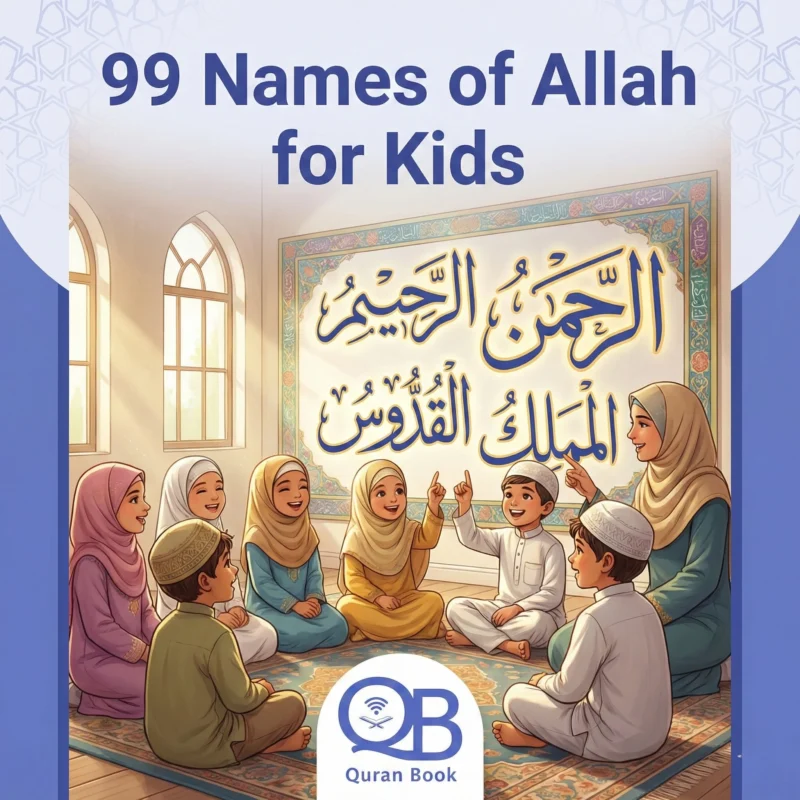
    99 names of Allah for kids displayed on colorful Islamic poster
    99 Names of Allah for Kids – A colorful Islamic educational poster

    Introduction

    The 99 names of Allah for kids, known as Asma ul Husna, are beautiful attributes that help children understand who Allah is. Teaching these names builds love, trust, and connection with the Creator from an early age.

    You want your child to love Allah, but where do you start? Many parents feel overwhelmed by the complexity of Islamic teachings, language barriers, and limited time. The good news is that introducing the names of Allah for kids doesn’t have to be complicated or intimidating.

    With simple, engaging, and proven methods, you can make learning joyful and meaningful for your little ones. The Prophet Muhammad (peace be upon him) said:

    “Allah has ninety-nine names, and whoever preserves them will enter Paradise.”

    Sahih al-Bukhari 2736

    This guide will walk you through everything you need to know about teaching Asma ul Husna for kids in a way that sparks curiosity and nurtures faith. Explore our Islamic Studies for Kids program for comprehensive learning.

    Who is Allah? Explaining Allah for Grade 1 Students

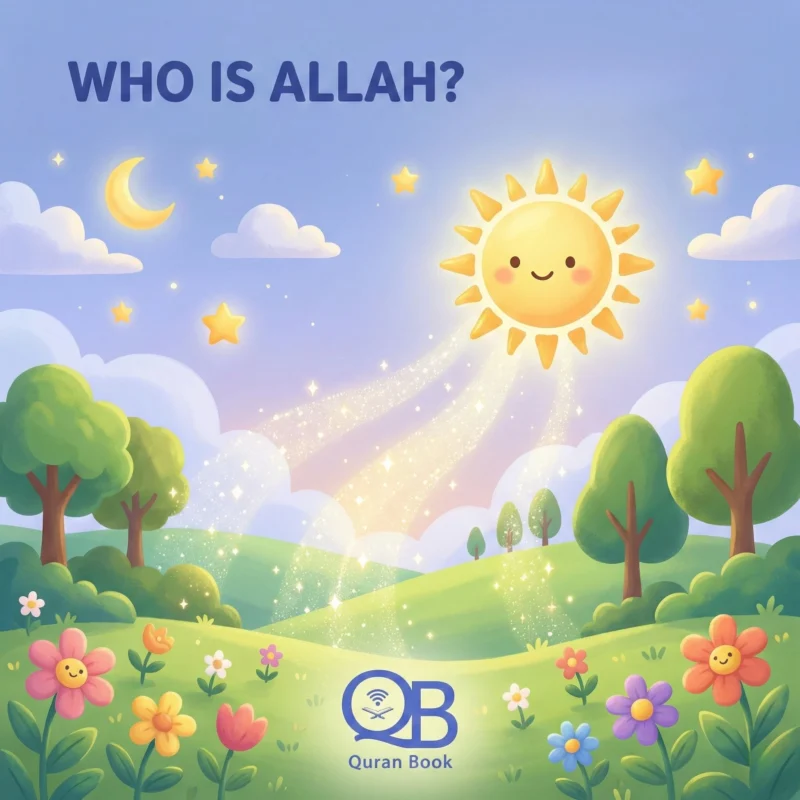
    Who is Allah for grade 1 students illustration with sun moon and stars
    Understanding Allah through His beautiful creation – sun, moon, and stars

    Allah is the Arabic name for God—the One who created everything: the sun, moon, stars, animals, and you! For grade 1 students, Allah is like a loving, caring, and powerful friend who always watches over us and answers our prayers.

    When explaining Allah to young children aged 5-7 years, use relatable analogies they can understand. Think of how much your mommy and daddy love you—then multiply that by infinity! That’s how much Allah loves you.

    The Quran beautifully summarizes this concept:

    “He is Allah, the One.”

    Surah Al-Ikhlas 112:1

    This simple verse teaches children that Allah is unique, incomparable, and the only Creator worthy of worship. For beginners, check out our Quran for Beginners Course.

    What Are the 99 Names of Allah for Kids? (Asma ul Husna)

    The 99 names of Allah for kids are special names that describe Allah’s qualities—like Ar-Rahman (The Most Merciful), Al-Khaliq (The Creator), and Al-Wadud (The Most Loving). Each name teaches children something beautiful about Allah.

    “Asma ul Husna” means “The Most Beautiful Names” in Arabic. These names help us understand Allah’s attributes and how He interacts with His creation. Why 99 names? Because Allah is so magnificent that no single name can fully describe Him!

    ✨ 10 Easy Names to Start With

    # Arabic Name English Meaning Kid-Friendly Explanation
    1 Ar-Rahman The Most Merciful Allah loves you more than mommy & daddy combined
    2 Al-Khaliq The Creator Allah made everything—even dinosaurs!
    3 As-Sami The All-Hearing Allah hears every dua, even whispers
    4 Al-Basir The All-Seeing Allah sees you being kind, even when no one else does
    5 Al-Wadud The Most Loving Allah’s love never runs out

    What Does Al Quddus Mean for Kids?

    Al Quddus means “The Most Holy” or “The Pure One.” For kids, this means Allah is perfect—He has no mistakes, no flaws, and is completely good and pure.

    Help your child understand this concept through simple activities. Discuss things that are “pure” in everyday life: clean water, a clear blue sky, or fresh fallen snow. Then explain that Allah is even more pure and perfect than anything we can imagine!

    Connect it to daily practice: “When we say Subhan Allah, we’re saying Allah is perfect!” This phrase becomes more meaningful when children understand the beautiful name Al Quddus behind it.

    What Does Al Wakeel Mean for Kids?

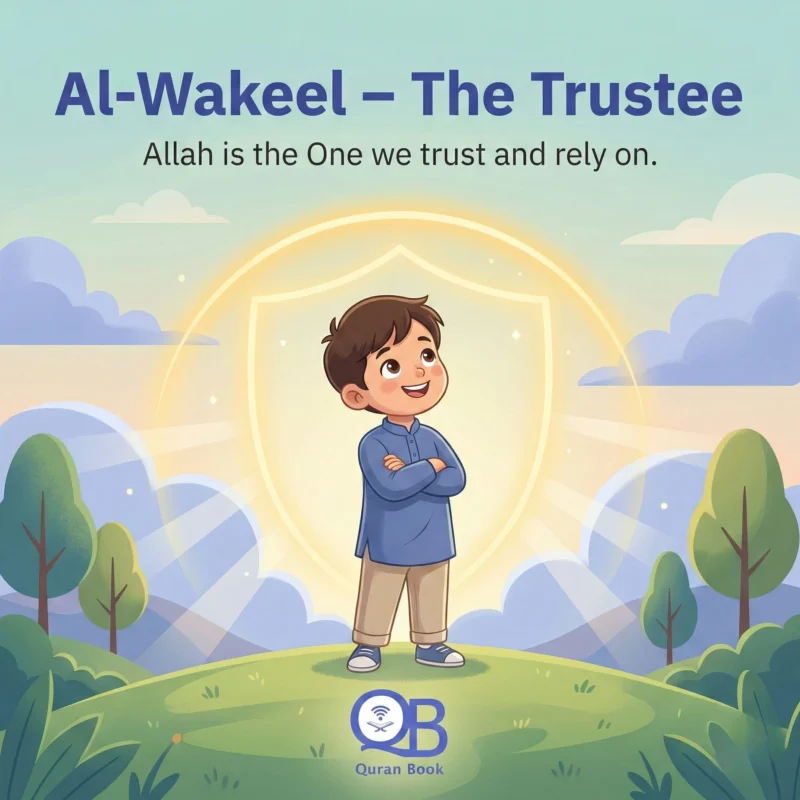
    Al Wakeel meaning for kids The Trustee superhero concept illustration
    Al Wakeel – The Trustee: A child feeling safe under Allah’s protection

    Al Wakeel means “The Trustee” or “The One You Can Rely On.” For kids, it means Allah is the best helper—you can trust Him with anything, like a superhero who never lets you down.

    Teach this name through storytelling. Share how Prophet Ibrahim (peace be upon him) completely trusted Allah when facing difficult times. Even when things seemed impossible, he said: “Hasbunallahu wa ni’mal wakeel” (Allah is sufficient for us, and He is the best Disposer of affairs).

    Encourage children to say this dua when they feel scared, worried, or unsure. Knowing the Al Wakeel meaning helps them develop unshakeable trust in Allah from a young age. Learn more with our Arabic for Kids Program.

    What Does Al Qahhar Mean for Kids?

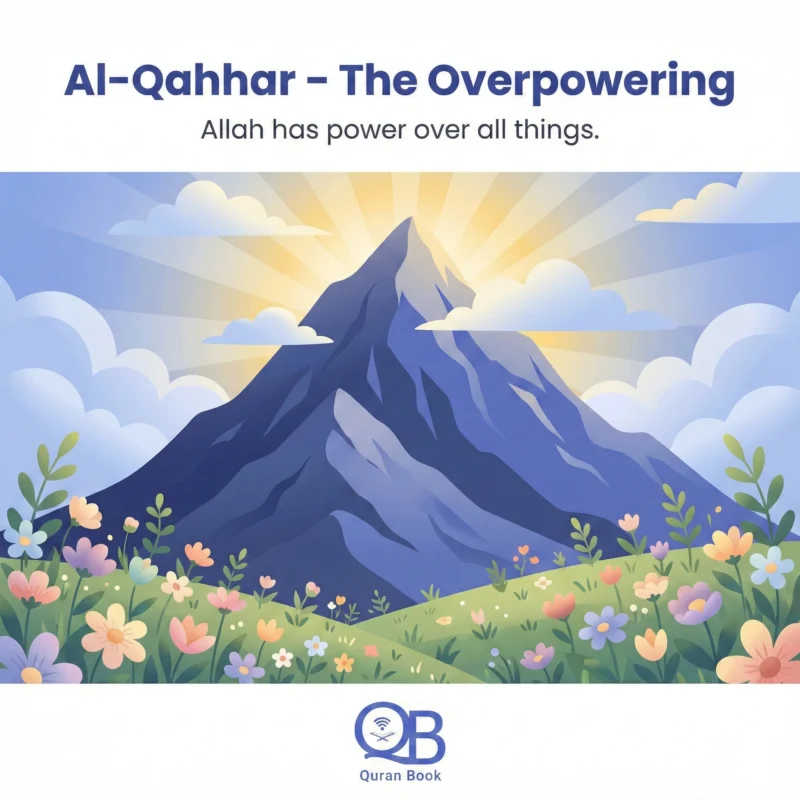
    99 names of Allah for kids Al Qahhar The Overpowering explained
    Al Qahhar – The Overpowering: Strength balanced with mercy and gentleness

    Al Qahhar means “The Subduer” or “The Overpowering.” For kids, it means Allah is stronger than anything—no problem is too big for Him to handle.

    When teaching this name, balance it with Allah’s mercy. Explain that Allah is incredibly strong, but He uses His power to protect those who love Him and to ensure justice. He is strong AND kind.

    “He is the One, the Overpowering.”

    Surah Ar-Ra’d 13:16

    This teaches children that while challenges may seem overwhelming, Allah’s power surpasses everything. Consider enrolling in our Learn Quran with Tajweed course for proper pronunciation.

    5 Fun Ways to Teach the 99 Names of Allah to Kids

    1 Sing Nasheeds Together

    Music and melody make memorization effortless and enjoyable for young minds.

    2 Create a Name-of-the-Week Calendar

    Focus on one name weekly, exploring its meaning through discussions and activities.

    3 Arts & Crafts Projects

    Use coloring pages, posters, and flashcards to make learning visual and hands-on.

    4 Storytelling with Prophets

    Connect names to Quranic stories that illustrate Allah’s attributes in action.

    5 Daily Dua Practice

    Incorporate names into morning and evening adhkar, making them part of daily routine.

    The Academy Method: How Quran Book Academy Teaches Kids

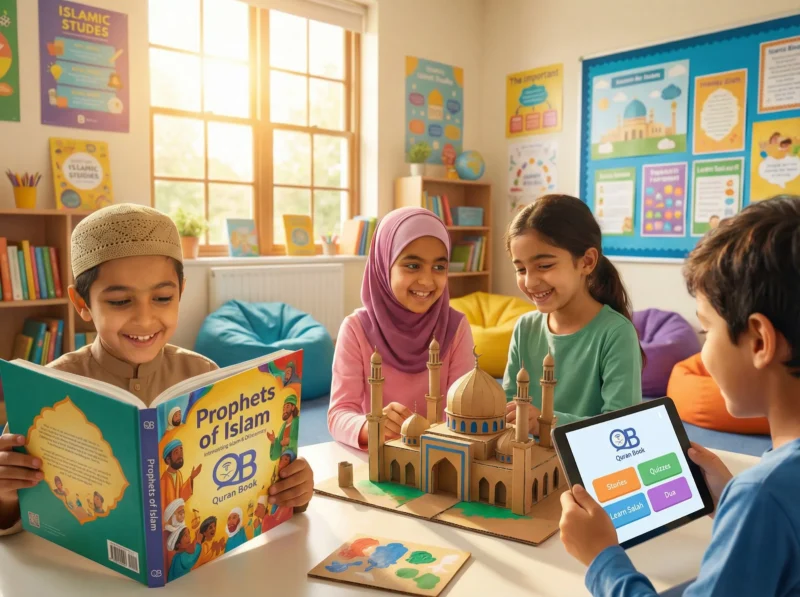
    Islamic courses for kids at Quran Book Academy online learning session
    Interactive online Quran learning session at Quran Book Academy

    At Quran Book Academy, we understand that learning the 99 names of Allah for kids requires more than memorization—it demands connection. Our certified teachers use a psychology-backed “chunking” method, breaking complex concepts into bite-sized, manageable lessons that match a child’s attention span and cognitive development.

    Each live session on Zoom is interactive, engaging, and tailored to the student’s pace. Our custom Learning Management System tracks every milestone, from the first name learned to full memorization, and parents receive detailed progress reports weekly.

    Whether your child is 5 or 15, our Islamic courses for kids make learning Asma ul Husna a joyful, transformative experience. We also offer Islamic courses for adults who want to learn alongside their children. Our approach combines traditional Islamic pedagogy with modern educational psychology—ensuring your child doesn’t just memorize, but truly understands and loves the beautiful names of Allah.

    What Does “الحمدلله سبحان الله الله أكبر” Mean?

    These are three powerful phrases:

    Alhamdulillah

    All praise is for Allah

    Subhan Allah

    Glory be to Allah

    Allahu Akbar

    Allah is the Greatest

    Together, they help kids remember Allah’s blessings, perfection, and greatness. Practice these daily—after salah or before bed. The Tasbih of Fatimah (RA), taught by the Prophet Muhammad (peace be upon him), incorporates these beautiful phrases and connects children to the 99 names of Allah they’re learning. (Sahih al-Bukhari 6318)

    Frequently Asked Questions

    Q1: What are the 99 names of Allah for kids? +

    The 99 names of Allah, called Asma ul Husna, are beautiful attributes describing Allah—such as Ar-Rahman (The Merciful) and Al-Khaliq (The Creator). They help kids understand and love Allah.

    Q2: What does Al Qahhar mean for kids? +

    Al Qahhar means “The Overpowering.” It teaches kids that Allah is stronger than any problem or fear.

    Q3: Who is Allah for grade 1? +

    Allah is the One God who created everything. For young children, He is a loving, caring Creator who always listens.

    Q4: What does Al Wakeel mean? +

    Al Wakeel means “The Trustee.” It teaches kids they can always rely on Allah.

    Q5: What does Al Quddus mean for kids? +

    Al Quddus means “The Most Holy” or “The Pure.” It means Allah is perfect and has no flaws.

    Start Your Child’s Journey Today — Free Trial Lesson

    Book free trial lesson for 99 names of Allah for kids course
    Join hundreds of families learning the beautiful names of Allah

    Ready to help your child fall in love with the 99 names of Allah? Book a FREE Trial Lesson at Quran Book Academy today. Our expert teachers will guide your child step-by-step through the beautiful Asma ul Husna—making learning fun, easy, and meaningful.

    Claim Your Free Trial Now

    References

    Surah Al-Ikhlas (112:1)

    quran.com/112:1

    Surah Ar-Ra’d (13:16)

    quran.com/13:16
    Q
    Quran Book Academy

    Empowering young Muslims with knowledge, love, and connection to Allah

    © 2026 Quran Book Academy. All rights reserved.

  • prophets stories for children

    7 Beautiful Stories of the Prophets for Kids | Quran Book Academy
    📖
    Quran Book Academy
    Free Trial

    7 Beautiful Stories of the Prophets for Kids That Build Faith & Character

    By Quran Book Academy | Islamic Education for Children

    Stories of the prophets for kids - children reading Islamic stories together
    Muslim children engaged in learning beautiful stories of the prophets

    Introduction

    Stories of the prophets for kids are powerful Islamic narratives that teach children about faith, patience, and good character through the lives of Allah’s chosen messengers. These engaging tales make learning Islam memorable and meaningful for young minds eager to understand their heritage.

    We understand how challenging it can be to teach your child about Islam, especially in non-Arabic speaking environments. Many parents worry whether their children will connect with their faith or find religious lessons boring. At Quran Book Academy, we have helped thousands of families in the USA, Canada, UK, and Australia overcome these exact challenges through interactive and joyful Islamic education.

    This comprehensive guide shares seven essential Islamic prophet stories for kids, explains why they matter for spiritual development, and demonstrates how proven teaching methods make Islamic education enjoyable. Whether you are looking for a short story of Prophet Muhammad for kids or exploring stories of the prophets in Islam for kids, this resource will guide your family’s learning journey.

    Why Are Stories of the Prophets Important for Kids?

    Stories of the prophets in Islam for kids build spiritual foundations by teaching moral lessons through relatable narratives. Children learn empathy, patience, trust in Allah, and resilience—qualities that shape their character and strengthen their Muslim identity from an early age.

    There was certainly in their stories a lesson for those of understanding.

    — Surah Yusuf 12:111

    Four Key Benefits of Prophet Stories for Children:

    • 1. Builds love for Allah and His messengers through personal connection
    • 2. Teaches problem-solving through prophetic examples and wisdom
    • 3. Develops emotional intelligence by exploring complex feelings
    • 4. Creates lasting Islamic memories that anchor faith throughout life

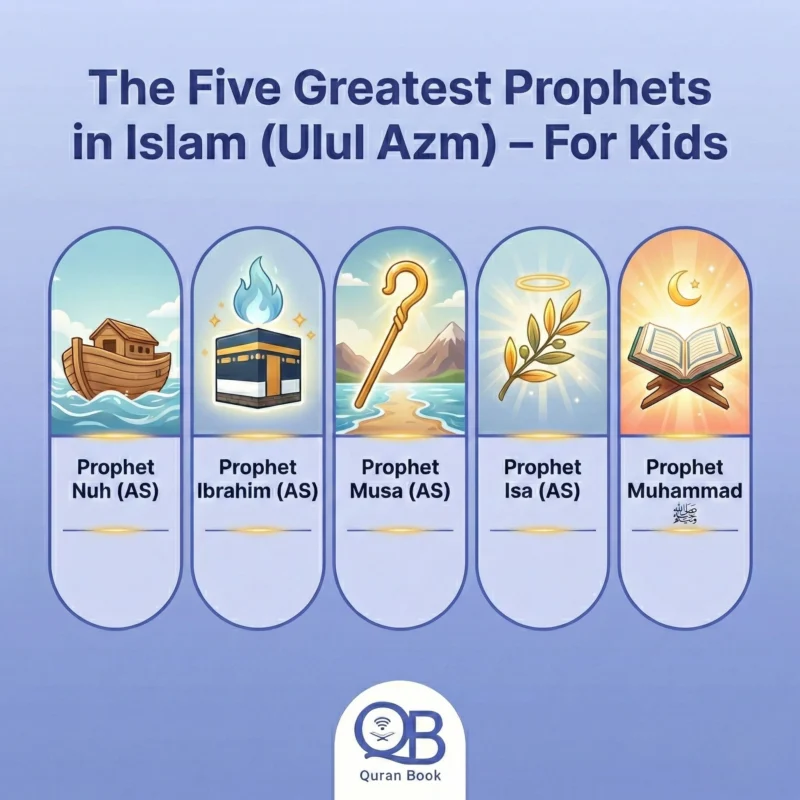
    Who Are the 5 Most Important Prophets in Islam? (Ulul Azm)

    Prophet stories for children featuring the five greatest messengers
    The five greatest prophets (Ulul Azm) and their timeless lessons for children
    Prophet Title Key Lesson for Kids
    Prophet Nuh (Noah) Father of Mankind Patience & perseverance
    Prophet Ibrahim (Abraham) Friend of Allah Trust in Allah
    Prophet Musa (Moses) Speaker to Allah Courage & leadership
    Prophet Isa (Jesus) Spirit of Allah Kindness & miracles
    Prophet Muhammad ﷺ Seal of Prophets Mercy & perfect character

    The Prophet Muhammad ﷺ said: “The prophets are brothers… their religion is one.”

    Understanding these five messengers provides children with a strong foundation in Islamic prophet stories for kids, helping them recognize the unified message of Islam throughout history. Explore our Islamic Courses for Kids to learn more.

    How to Explain What a Prophet Is to Kids (Simple Guide)

    Explaining prophets to children requires simple, age-appropriate language. Here is a proven four-step approach:

    1

    Use relatable terms:

    “A prophet is a special teacher chosen by Allah to show people how to be good and worship Him correctly.”

    2

    Connect to their world:

    “Just like your teacher helps you learn at school, prophets helped all people learn about Allah.”

    3

    Emphasize the core message:

    “Every prophet taught the same thing: There is only one God, Allah, and we should worship Him alone.”

    4

    Make it visual:

    Use picture books, storytelling, and interactive discussions to bring concepts alive.

    These techniques make prophet stories for children accessible and engaging, transforming abstract concepts into memorable lessons. Our expert teachers specialize in these methods.

    7 Essential Islamic Prophet Stories for Kids

    📖 Prophet Muhammad ﷺ — The Trustworthy

    The story of Prophet Muhammad for kids begins in the city of Makkah, where a young orphan grew up with exceptional character. He never lied and always helped others, earning the title “Al-Amin” (The Trustworthy). This short story of Prophet Muhammad for kids teaches children that honesty and kindness matter most, regardless of circumstances.

    Prophet Yusuf — Patience Through Hardship

    Thrown into a well by his brothers and imprisoned unjustly, he never lost faith in Allah and eventually became a leader in Egypt. His journey shows children that difficult times can lead to beautiful outcomes.

    Prophet Musa — Courage & Leadership

    He stood before the powerful Pharaoh to deliver Allah’s message, teaching children to stand for truth despite opposition.

    Prophet Yunus — Accountability & Repentance

    He learned that running from responsibility solves nothing. His sincere supplication inside the whale’s belly shows kids that Allah always forgives those who turn back to Him with genuine hearts.

    Prophet Ibrahim — Complete Trust (Tawakkul)

    His willingness to sacrifice what he loved most demonstrates complete trust in Allah’s wisdom. His story forms the foundation of Eid al-Adha celebrations worldwide.

    Prophet Nuh — Persistence & Conviction

    He built his ark despite people mocking him for years, teaching children persistence and unwavering conviction in their beliefs.

    Prophet Isa — Allah’s Limitless Power

    His story shows children that Allah’s power has no limits through the miracles he performed by Allah’s permission.

    “We relate to you the best of stories.”

    Each narrative in these stories of the prophets for kids plants seeds of iman that blossom throughout their lives, creating Muslims who understand their heritage and embody prophetic character. Enroll in our Online Quran Classes for Children to begin.

    The Academy Method — How We Teach Prophet Stories Online

    Islamic prophet stories for kids taught through online academy method
    A child enjoying interactive Islamic learning with our online academy

    At Quran Book Academy, we create transformative learning experiences that bring stories of the prophets in Islam for kids to life.

    🖥️ Our Technology Stack:

    • Live Zoom Sessions: Face-to-face interaction with certified teachers
    • Custom LMS: Track your child’s progress with detailed reports
    • Psychological Chunking: Lessons divided into 15-20 minute segments matching children’s attention spans

    📚 Our Teaching Approach:

    • Native Arabic-speaking teachers trained in child psychology
    • Interactive storytelling with questions and hands-on activities
    • Weekly progress reports for parents
    • Flexible scheduling for families across USA, Canada, UK, and Australia

    FAQ — Stories of the Prophets for Kids

    Q1: How do I introduce Prophet Muhammad to kids? +

    Start with simple stories about his kindness—how he played with children, cared for animals, and always spoke the truth. Use picture books and interactive discussions to make learning engaging.

    Q2: What are stories of the prophets called in Islam? +

    They are called “Qasas al-Anbiya” (قصص الأنبياء), meaning “Stories of the Prophets.” These narratives appear throughout the Quran.

    Q3: Which prophet is called Jesus in Islam? +

    Prophet Isa (عيسى) is Jesus. Muslims believe he was a mighty messenger of Allah, born miraculously to Maryam (Mary), and will return before the Day of Judgment.

    Q4: What is the main purpose of prophets in Islam? +

    Prophets guide humanity to worship Allah alone, teach moral conduct, and deliver divine revelation. They serve as role models for righteous living.

    Q5: What are the four roles of a prophet? +

    1) Delivering Allah’s message, 2) Teaching and explaining revelation, 3) Being a moral example, 4) Warning about consequences of disbelief.

    Start Your Child’s Journey with Prophet Stories Today

    Prophet stories for children - start free trial today
    Happy Muslim children ready to begin their Islamic learning journey

    Your child deserves to fall in love with Islam through beautiful, engaging stories that shaped history.

    Free Trial Lesson — Experience the difference Expert teachers specialized in Islamic stories Flexible timing for families worldwide
    Book Your Free Trial Now →

    References & Resources

    📖 Quranic References

    📜 Hadith References

    📖
    Quran Book Academy

    Bringing Beautiful Stories of the Prophets to Children Worldwide

    © 2026 Quran Book Academy. All rights reserved.

  • islamic history for kids

    5 Engaging Islamic History for Kids Lessons That Inspire Faith & Pride
    📖
    Quran Book Academy
    Free Trial

    5 Engaging Islamic History for Kids Lessons That Inspire Faith & Pride

    By Quran Book Academy | Islamic Education Experts

    Islamic history for kids - diverse Muslim children learning together
    Diverse Muslim children engaged in learning Islamic history together

    Introduction

    Islamic history for kids opens a window to 1,400 years of inspiring stories, remarkable achievements, and faith-building lessons that every Muslim child deserves to know. These powerful narratives connect children to their heritage while building lasting pride in their identity as Muslims.

    As parents, you face a significant challenge today. Your child grows up surrounded by Western history in school, rarely hearing about the scholars, explorers, and leaders who shaped Islamic civilization. Many parents worry their children feel disconnected from their Muslim roots or find history lessons boring and irrelevant to their modern lives.

    The truth is that Islamic history for children doesn’t have to be dull memorization of dates and names. When taught correctly, the history of Islam for kids becomes an exciting adventure filled with heroes, discoveries, and miraculous events. At Quran Book Academy’s Islamic Studies Course for Kids, thousands of families across the USA, Canada, UK, and Australia have transformed Islamic education from a chore into an unforgettable journey.

    This comprehensive guide shares five essential Islamic history lessons for kids, proven teaching methods, and practical ways to make learning both memorable and meaningful for your child.

    What Is Islamic History? A Simple Explanation for Kids

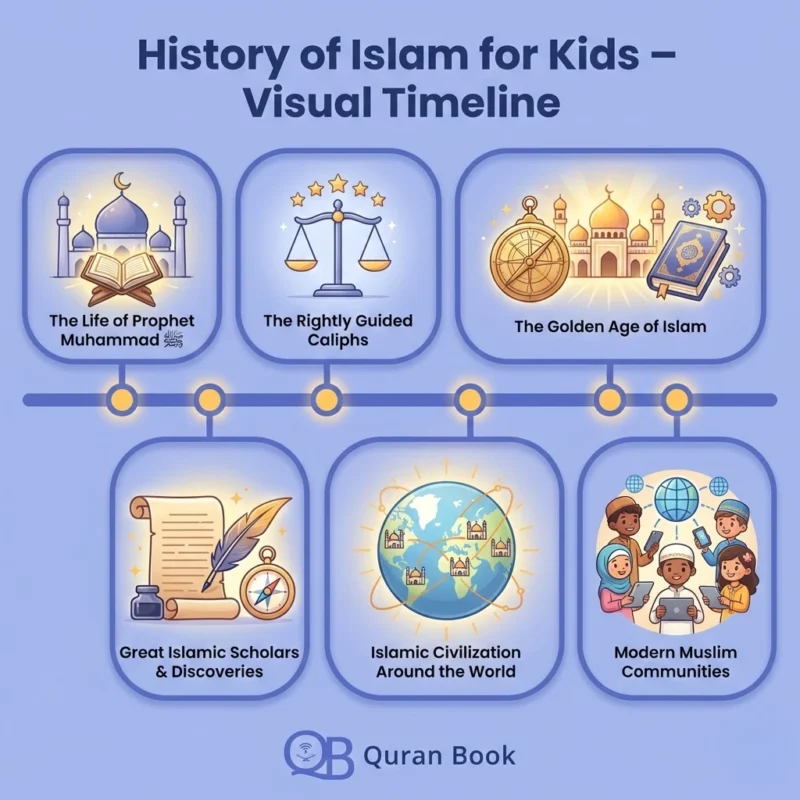
    History of Islam for kids - visual timeline showing key events
    Visual timeline showing key events in Islamic history

    Islamic history is the incredible story of how Islam began with Prophet Muhammad ﷺ and grew into a worldwide civilization known for faith, knowledge, and remarkable achievements. For children, understanding this story provides context for their beliefs and practices.

    Children benefit from viewing history as a living story rather than memorizing dates. When kids see themselves as part of this continuing narrative, Islamic history becomes personal and relevant.

    Three Eras of Islamic History for Kids

    Era Time Period Key Events
    Early Islam 610-661 CE Prophet Muhammad ﷺ, Divine Revelation, Rashidun Caliphs
    Golden Age 750-1258 CE Scientific discoveries, Islamic empire expansion
    Modern Era 1800s-Present Muslim nations, global Muslim community

    “You are the best nation produced for mankind.”

    Surah Al-Imran 3:110

    This verse inspires children to understand that they belong to an exceptional community with a rich heritage worth knowing and celebrating.

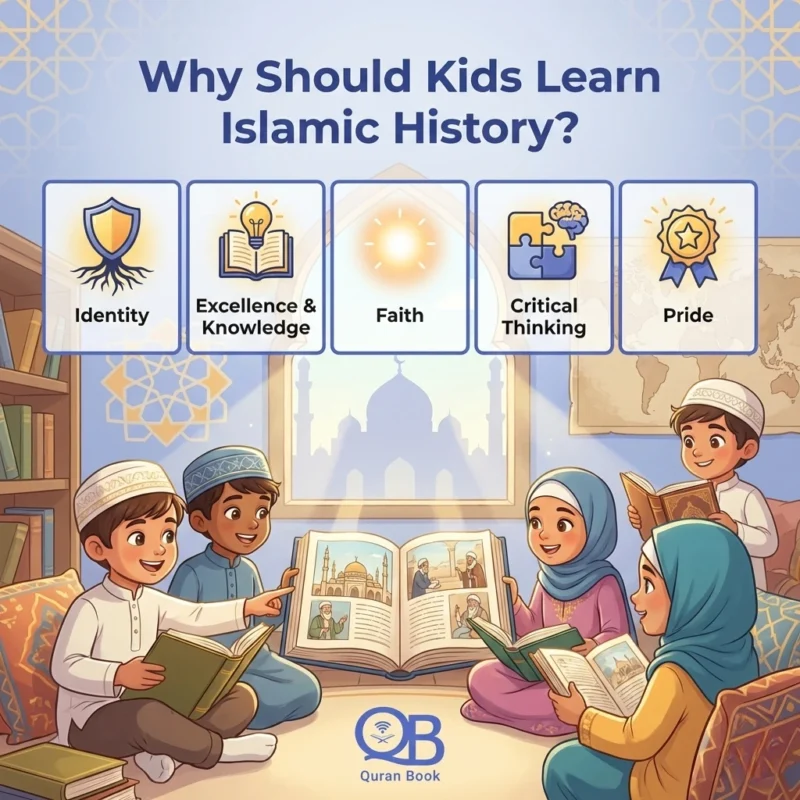
    Why Should Kids Learn Islamic History?

    Muslim history for kids - children reading about Islamic heritage
    Young Muslim children discovering the wonders of Islamic heritage

    Learning Islamic history builds children’s Muslim identity, teaches valuable life lessons, and connects them to a legacy of faith and excellence spanning fourteen centuries. This isn’t just education—it’s identity formation.

    5 Powerful Benefits of Teaching History of Islam for Kids

    1 Building Muslim Identity

    Children understand who they are and where they come from. This foundation creates confidence in diverse environments.

    2 Inspiring Excellence

    Stories of Muslim scholars like Ibn Sina and Al-Khwarizmi motivate academic achievement. Children learn that intellectual pursuit is part of their heritage.

    3 Strengthening Faith

    Historical examples demonstrate Allah’s plan unfolding through generations. Kids see how patience and trust in Allah led to success.

    4 Developing Critical Thinking

    Analyzing historical events builds reasoning skills that benefit children academically and personally.

    5 Creating Lasting Pride

    Children feel confident about their heritage when they know the achievements of Muslim civilization.

    “The best of you are those who learn the Quran and teach it.”

    Sahih al-Bukhari 5027

    Who Were the First Muslims? The Companions’ Stories

    Islamic history for children - the first Muslims and companions
    The brave companions who accepted Islam in the early days

    The first Muslims were the brave companions who accepted Islam in Makkah, including Khadijah (RA), Abu Bakr (RA), Ali (RA), and Bilal (RA). Each faced tremendous hardship with unwavering faith, providing children with relatable heroes. You can explore more inspiring narratives through our Stories of the Prophets series.

    Khadijah (RA) — The First Believer

    The Prophet’s ﷺ beloved wife was the first person to accept Islam. Her unwavering support and sacrifice teach children about loyalty, courage, and standing by truth even when facing opposition. She was a successful businesswoman who used her resources to support the early Muslim community.

    Bilal (RA) — The Voice of Courage

    An enslaved man who endured severe torture for his faith, Bilal (RA) became the first muezzin (caller to prayer). His incredible story teaches children about perseverance, dignity, and the equality that Islam established. When other companions purchased his freedom, he dedicated his life to serving Islam.

    The Young Companions

    Children like Ali (RA), who accepted Islam at approximately ten years old, demonstrate that age doesn’t limit faith or courage. These young companions proved themselves as devoted Muslims, showing today’s children that they too can make meaningful contributions to their faith community.

    The Islamic Golden Age — When Muslims Led the World

    The Islamic Golden Age represents one of history’s most remarkable periods of human achievement, spanning roughly five centuries from 750 to 1258 CE. During this extraordinary era, while much of Europe experienced the Dark Ages, the Muslim world blazed with intellectual brilliance.

    Muslim scholars translated Greek, Persian, and Indian texts into Arabic, preserving ancient knowledge while making groundbreaking discoveries of their own. Baghdad’s House of Wisdom (Bayt al-Hikmah) functioned as the world’s greatest library and research center, attracting scholars from every corner of the known world regardless of their religious background.

    Children learning about this period discover that Muslims invented algebra—the word itself comes from the Arabic “al-jabr.” Muslim scientists developed sophisticated surgical techniques still studied today, mapped the stars with remarkable precision, and created algorithms that power modern computers.

    Ibn Sina (Avicenna) wrote medical textbooks used in European universities for over 600 years. Al-Khwarizmi’s mathematical works gave us the word “algorithm.” Muslim architects designed buildings that still inspire awe worldwide, from the Alhambra in Spain to the magnificent mosques of Istanbul and beyond.

    This wasn’t merely borrowing from other civilizations—it was an explosion of original creativity driven by the Quranic command to seek knowledge. Understanding this heritage helps children realize that pursuing education and scientific inquiry fulfills a sacred Islamic tradition. Enrolling in our Online Quran Classes can complement historical learning with foundational knowledge.

    Muslim Achievements Kids Should Know

    Field Muslim Scholar Achievement
    Mathematics Al-Khwarizmi Invented Algebra
    Medicine Ibn Sina Canon of Medicine
    Geography Al-Idrisi World Maps
    Astronomy Al-Battani Star Calculations
    Optics Ibn al-Haytham Scientific Method

    “Seeking knowledge is an obligation upon every Muslim.”

    Sunan Ibn Majah 224

    How to Teach Islamic History to Kids: 5 Proven Methods

    Teaching Islamic history to kids effectively requires engaging methods that match how children naturally learn—through stories, visuals, activities, and connection to their daily lives. Here are five proven approaches:

    📖

    Start with Stories

    Begin with exciting narratives before introducing dates and facts. Children remember stories long after they forget statistics.

    🗺️

    Use Visual Aids

    Maps, timelines, and illustrations make history tangible. Visual learners especially benefit from seeing where events happened.

    🔗

    Connect to Today

    Show how Islamic innovations affect modern life. When children use mathematics, they’re using Muslim discoveries.

    🎯

    Make It Interactive

    Quizzes, crafts, and discussions deepen understanding. Active participation increases retention significantly.

    ⏱️

    Chunk Information

    Divide lessons into 15-20 minute segments. This matches children’s natural attention spans and prevents overwhelm.

    The Academy Method — How We Teach Islamic History Online

    Islamic studies for kids online - live virtual classroom
    Engaging online Islamic history class with expert teachers

    At Quran Book Academy, we transform Islamic history for kids into an adventure through our proven methodology designed specifically for young learners.

    Our Technology Stack

    Live Zoom Sessions — Face-to-face interaction with expert teachers who specialize in children’s Islamic education.

    Custom LMS Platform — Track progress with detailed reports sent weekly via email to parents.

    Interactive Resources — Digital timelines, maps, and engaging activities keep children interested.

    Our Teaching Approach

    Psychological Chunking — We divide lessons into 15-20 minute segments matching children’s natural attention spans.

    Story-Based Learning — Every historical period becomes an adventure children understand and remember.

    Connection to Faith — We link historical events to Quranic verses and Hadith, reinforcing both knowledge and iman.

    For a comprehensive approach, explore our Quran Memorization Course and Arabic Language Course to build a complete Islamic education foundation for your child.

    FAQ — Islamic History for Kids

    What is the history of Islam in simple terms? +

    Islam began in 610 CE when Prophet Muhammad ﷺ received the first revelation from Allah through Angel Jibreel. From Makkah, Islam spread throughout Arabia and eventually across continents, creating a civilization known for faith, knowledge, and justice.

    Who was the first child born in Islam? +

    Abdullah ibn al-Zubayr (RA) is widely recognized as the first child born among the Muhajirun (emigrants) in Madinah after the Hijrah. His birth brought great joy to the Muslim community.

    Who were Prophet Ibrahim’s wives? +

    Prophet Ibrahim (AS) had two wives: Sarah (RA), his first wife, and Hajar (RA). Both women play significant roles in Islamic history, with Hajar’s story connected to the sacred rituals of Hajj.

    How can I make Islamic history interesting for my child? +

    Use storytelling, visual timelines, interactive activities, and connect historical achievements to things your child uses daily. Online courses with engaging teachers also help tremendously. Our Islamic Studies Curriculum makes learning both fun and meaningful.

    What is Islamic history today? +

    Islamic history today refers to the ongoing story of 1.8 billion Muslims worldwide, including Muslim nations, preserved scholarship, and Muslims contributing to every field of human endeavor.

    Start Your Child’s Islamic History Journey Today

    Islamic civilization for kids - happy child learning online
    Joyful Muslim child engaged in online Islamic history learning

    Your child deserves to know the inspiring history that shaped their faith and civilization. Every day without this knowledge is a missed opportunity to build their identity and pride.

    Free Trial Lesson
    Expert Teachers
    Flexible Scheduling
    Weekly Progress Reports
    Start Free Trial Now

    📚 References & Further Reading

    📖
    Quran Book Academy

    Transforming Islamic Education for Families Across USA, Canada, UK & Australia

    © 2026 Quran Book Academy. All rights reserved.

    ↑ Back to Top