The Beauty of Islamic Greeting
The Islamic greeting “Assalamu Alaikum” (السلام عليكم) means “Peace be upon you” and represents one of the most beautiful expressions of goodwill in any language. This traditional Muslim greeting creates an instant bond of peace, respect, and brotherhood between people, regardless of their background. When you learn how to greet in Islam, you are not merely learning words—you are embracing a spiritual practice that has connected hearts for over 1,400 years.
If you have ever felt hesitant to say Assalamu Alaikum because you worried about mispronouncing it or responding incorrectly, you are not alone. Many people, both Muslims and non-Muslims alike, share this concern. Understanding how to say hello in Arabic properly can feel daunting at first, but this guide will break down every aspect of the Islamic greeting into simple, manageable steps—so you can greet with confidence and spiritual intention.
The Quran itself emphasizes the importance of greeting others with peace:
“When you are greeted with a greeting, greet in return with what is better than it, or at least return it equally.
— Quran 4:86
What Does “Assalamu Alaikum” Mean?
Assalamu Alaikum (السلام عليكم) is the standard Islamic greeting meaning “Peace be upon you.” The phrase comes from the Arabic root “S-L-M” (س-ل-م) which relates to peace, safety, and submission to Allah. It is the same root from which “Islam” and “Muslim” derive their names. When you understand what does Assalamu Alaikum mean, you realize it is not just a greeting—it is a prayer, a supplication (dua) that you offer to the person you are addressing.
The word “Salam” (سلام) means peace, while “Alaikum” (عليكم) means “upon you.” Together, they form a powerful wish for the other person’s wellbeing, safety, and spiritual peace. This is why the Islamic greeting holds such deep significance in Muslim communities worldwide.
✦ Three Levels of the Islamic Greeting
The Prophet Muhammad (ﷺ) encouraged using the complete form of the greeting. As reported in Sunan al-Tirmidhi (2689): “The best Islamic greeting is to say ‘As-salamu Alaikum wa Rahmatullahi wa Barakatuh.’”
What Are the 3 Ways to Greet in Islam?
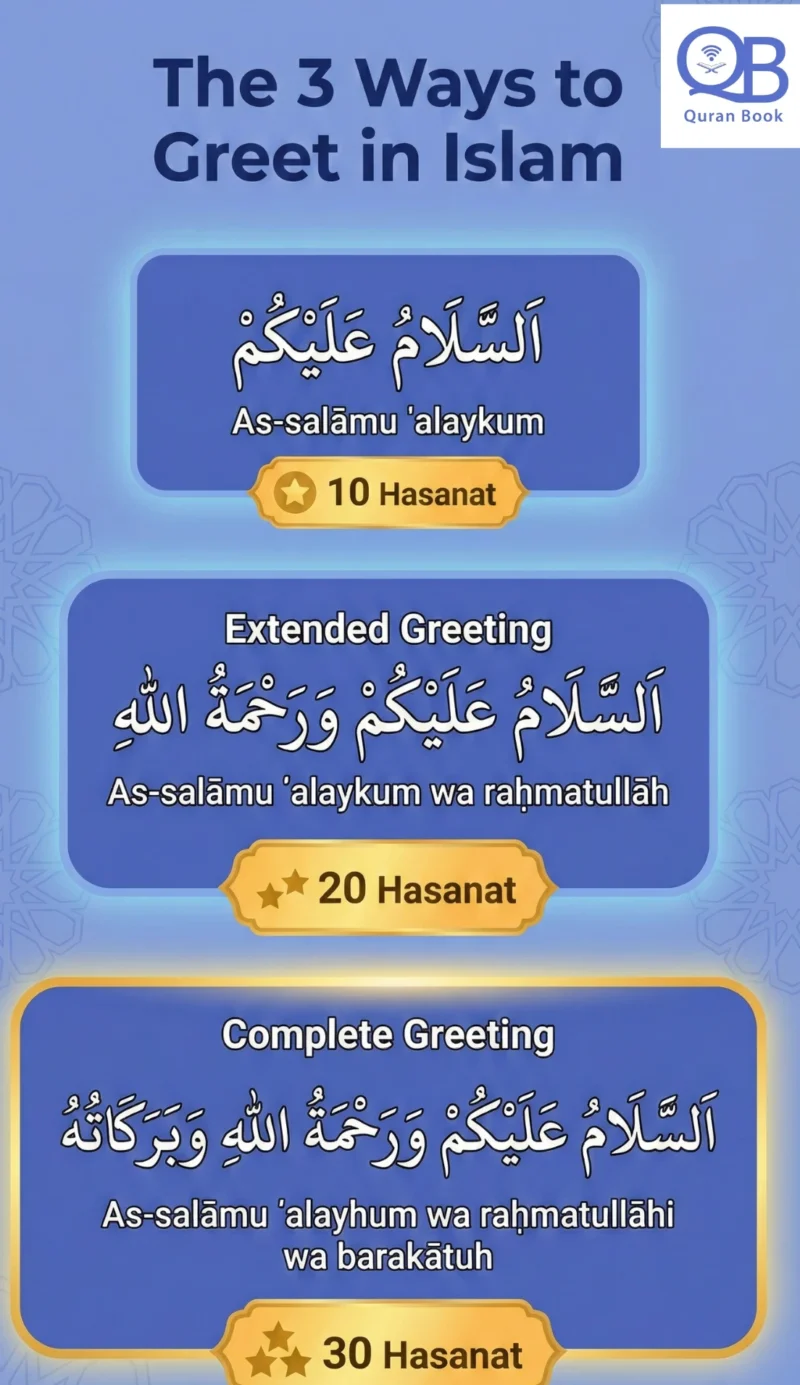
The three ways to greet in Islam are: (1) The short greeting: “Assalamu Alaikum” (Peace be upon you), (2) The medium greeting: “Assalamu Alaikum wa Rahmatullah” (Peace and mercy of Allah be upon you), and (3) The complete greeting: “Assalamu Alaikum wa Rahmatullahi wa Barakatuh” (Peace, mercy, and blessings of Allah be upon you). Each form of the Islamic greeting carries spiritual rewards. Learn more about Understanding Hasanat and Good Deeds.
“A man came to the Prophet (ﷺ) and said: ‘Assalamu Alaikum.’ The Prophet (ﷺ) responded and said: ‘Ten.’ Then another man came and said: ‘Assalamu Alaikum wa Rahmatullah.’ The Prophet (ﷺ) responded and said: ‘Twenty.’ Then another man came and said: ‘Assalamu Alaikum wa Rahmatullahi wa Barakatuh.’ The Prophet (ﷺ) responded and said: ‘Thirty.’”
— Sunan al-Tirmidhi (2689)
How to Pronounce Assalamu Alaikum
To pronounce “Assalamu Alaikum” correctly, break it into syllables: “As-sa-LA-mu A-LAY-kum.” Emphasize the “LA” in both words. The ending should sound like a soft “kum,” not a harsh sound. Learning how to say hello in Arabic becomes much easier when you master each syllable separately.
✦ Syllable Breakdown
⚠ Common Mistakes to Avoid
- Do not rush the greeting—take your time with each syllable
- Do not skip the “wa” in extended versions
- Pronounce each Arabic letter distinctly for clarity
How to Respond to Assalamu Alaikum
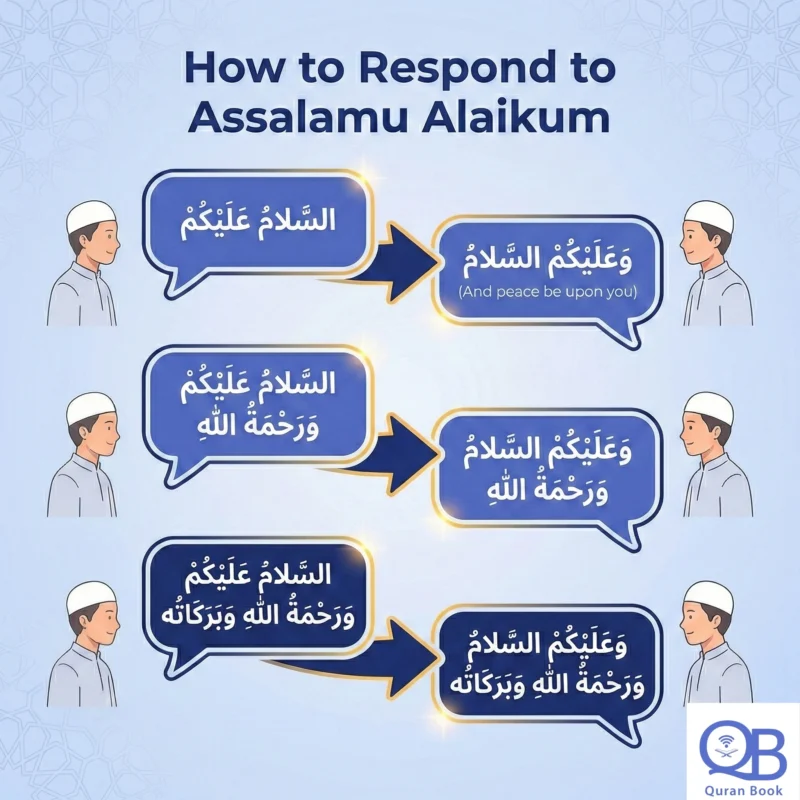
The proper response to “Assalamu Alaikum” is “Wa Alaikum Assalam” (وعليكم السلام), meaning “And upon you be peace.” For a more complete response, say “Wa Alaikum Assalam wa Rahmatullahi wa Barakatuh” to return the Islamic greeting with equal or greater blessings. Knowing how to respond to Assalamu Alaikum is essential for proper Islamic etiquette.
✦ Response Table
The Quran (4:86) instructs Muslims to return greetings with something equal or better. This means when someone gives you a basic salam, you can respond with the extended version to earn extra rewards while showing greater respect. It is obligatory (wajib) to return the Islamic greeting, and the response should be clear and audible.
✦ How to Respond in Text Messages
- Full form: Wa Alaikum Assalam wa Rahmatullahi wa Barakatuh
- Common abbreviations: W.S., WSWR, or simply “Wa Alaikum Assalam”
- Emojis: 🤲 can accompany digital greetings
Islamic Greetings for Every Occasion
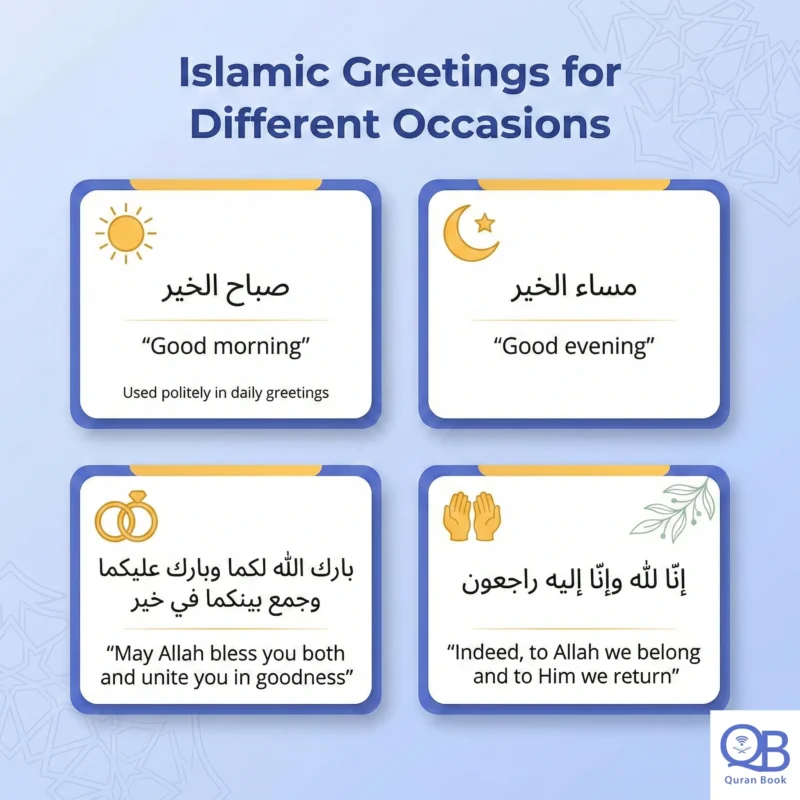
Islamic greetings vary by occasion: say “Sabah al-Khair” (صباح الخير) for good morning, “Inna lillahi wa inna ilayhi raji’un” (إنا لله وإنا إليه راجعون) for condolences, and “Barakallahu lakuma” (بارك الله لكما) to congratulate newlyweds. Each greeting carries specific spiritual meaning and shows how to respect Muslim culture and beliefs appropriately. Explore more Essential Arabic Phrases.
✦ Comprehensive Greeting Table for Different Occasions
✦ Special Greeting for Visiting the Sick
The Prophet (ﷺ) used to visit the sick and say: “La ba’s, tahur in sha Allah” (No harm, purification if Allah wills). This is recorded in Sahih al-Bukhari and demonstrates the compassionate nature of Islamic greetings for every life situation.
Can Non-Muslims Say Assalamu Alaikum?
Yes, non-Muslims can say “Assalamu Alaikum” as a respectful greeting. Many scholars encourage this as a sign of goodwill and interfaith respect. Muslims should respond warmly with “Wa Alaikum Assalam” regardless of who initiates the Islamic greeting. This question about how to greet a Muslim as a non-Muslim is one of the most common inquiries we receive.
The greeting itself is a prayer for peace—a universal concept that transcends religious boundaries. When non-Muslim friends, colleagues, or neighbors use the Islamic greeting, most Muslims deeply appreciate the effort and respect shown. Islam encourages kindness and good relations with people of all faiths.
“Allah does not forbid you from those who do not fight you because of religion… from being kind to them and acting justly toward them.”
— Quran 60:8
Master Islamic Greetings with The Academy Method
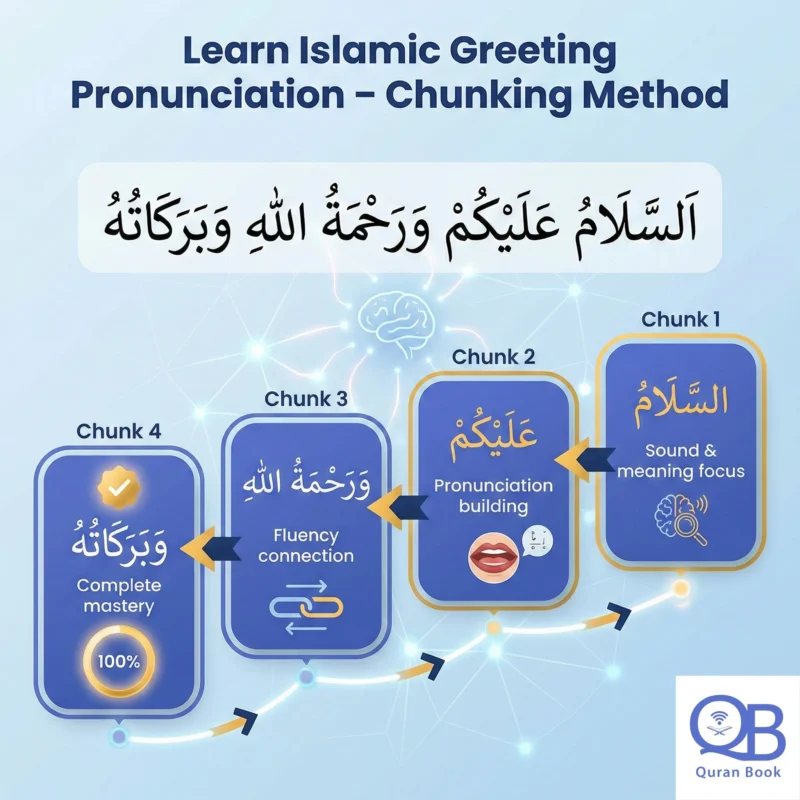
The Academy Method at Quran Book Academy uses cognitive “chunking”—a proven psychological technique that breaks complex Arabic phrases into small, memorable units. This approach reduces overwhelm, builds confidence, and helps non-Arabic speakers master Quranic pronunciation and Islamic greetings in weeks, not years.
At Quran Book Academy, we understand that learning Arabic greetings and Quranic Arabic can feel overwhelming—especially if you have never studied the language before. That is why we developed The Academy Method, a teaching approach rooted in educational psychology and designed specifically for non-Arabic speaking Muslims in the USA, Canada, UK, and Australia. Learn more about Our Teaching Methodology.
✦ How The Academy Method Works
The human brain can only process 4-7 pieces of new information at a time. When you try to learn “Assalamu Alaikum wa Rahmatullahi wa Barakatuh” all at once, your working memory becomes overloaded. Our method breaks this phrase into psychological “chunks” that are easier to remember and perfect:
✦ Our Tech-Stack for Success
💡 Addressing Your Fears
We know what holds you back. Fear of mispronunciation. Worry about looking foolish. Concern about finding time in your busy schedule. Our teachers have helped thousands of students just like you overcome these barriers. Every journey begins with a single step—and that first step is easier than you think.
Frequently Asked Questions
Start Your Arabic Learning Journey Today
You have just learned the beauty, meaning, and proper pronunciation of the Islamic greeting. But this is only the beginning of your journey into the rich world of Arabic and Quranic learning.
At Quran Book Academy, we specialize in helping non-Arabic speakers like you master Quranic recitation, Arabic pronunciation, and Islamic knowledge—all from the comfort of your home. Whether you want to perfect your Islamic greeting or memorize the entire Quran, we have a program designed for you.
📚 Learn More
Expand your knowledge with these valuable resources from Quran Book Academy:
📑 References & External Links
Scholarly Resources
- IslamQA – Scholarly Islamic reference
- Sunnah.com – Hadith verification resource
Community
- Quran Book Academy Telegram – Join our community for daily Tajweed practice
Leave a Reply