🏠 Home About
🕌 About Us ⚙️ How It Works 👨‍🏫 Meet Our Teachers
🧒 For Kids
Fiqh for Kids Arabic Online for Kids Islamic School for Kids Tajweed Made Easy Quran Memorization Nour El Bayan Noorani Qaida
👨 For Adults
Tajweed for Adults Islamic School for Adults Quran Memorization Arabic Online Online Quran for Adults
🧕 Ladies Section
Online Quran for Ladies Islamic Studies for Sisters Female Quran Teachers
✨ More Programs
Online Islamic School Quran with Tajweed Quranic Arabic Ijaza in Quran Online Quran Classes Qiraat Course Online Hifz Course Quran Memorization Course New Muslim Programs
📝 Articles 💰 Price 🎁 Free Trial

Author: rabieabdo06841@gmail.com

  • best methods arabic kids

    7 Best Methods to Teach Arabic to Kids at Home — Fun & Faith-Based Guide

    7 Best Methods to Teach Arabic to Kids at Home (Fun & Faith-Based Guide)

    By Quran Book Academy · Updated 2026

    Book Your FREE Trial Lesson
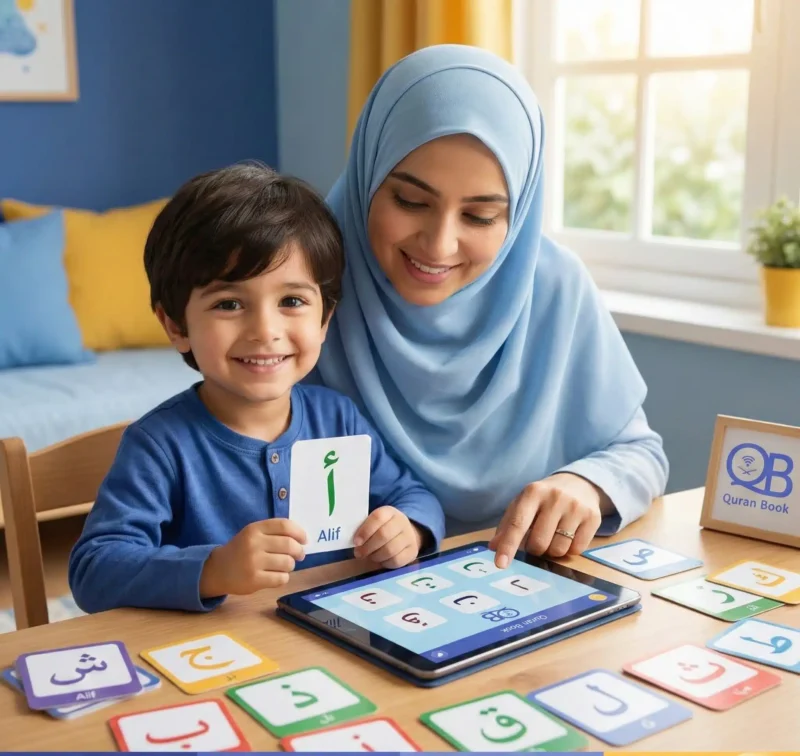
    Best methods to teach Arabic to kids — child learning Arabic letters at home with a parent
    A Muslim child learning Arabic letters at home with a parent — the journey starts here

    Introduction: Why This Guide Matters

    You open an Arabic textbook for your child, and within five minutes, frustration takes over. The letters look foreign, the sounds feel impossible, and you wonder: Am I failing my child’s Islamic education? If this sounds familiar, you are not alone. Thousands of Muslim parents across the USA, Canada, the UK, and Australia face this exact struggle every single day.

    The truth is, learning Arabic is absolutely achievable with the right approach, even if you do not speak Arabic yourself. In this comprehensive guide, we reveal the 7 best methods to teach Arabic to kids at home — proven strategies backed by educational psychology and Islamic pedagogy that make learning fun, not frustrating. Whether your child is 4 or 14, these methods will transform their Arabic journey from a chore into an adventure they actually look forward to.

    Allah (SWT) Himself reassures us in the Quran:

    “Indeed, We have made this Qur’an easy to remember. Is there anyone who will be mindful?”

    Surah Al-Qamar 54:17

    This divine promise applies to our children too. With the right methods, the Arabic language opens its doors wide. Let us show you how.

    ✦ ✦ ✦

    Why Teaching Arabic to Kids Early Is a Game-Changer
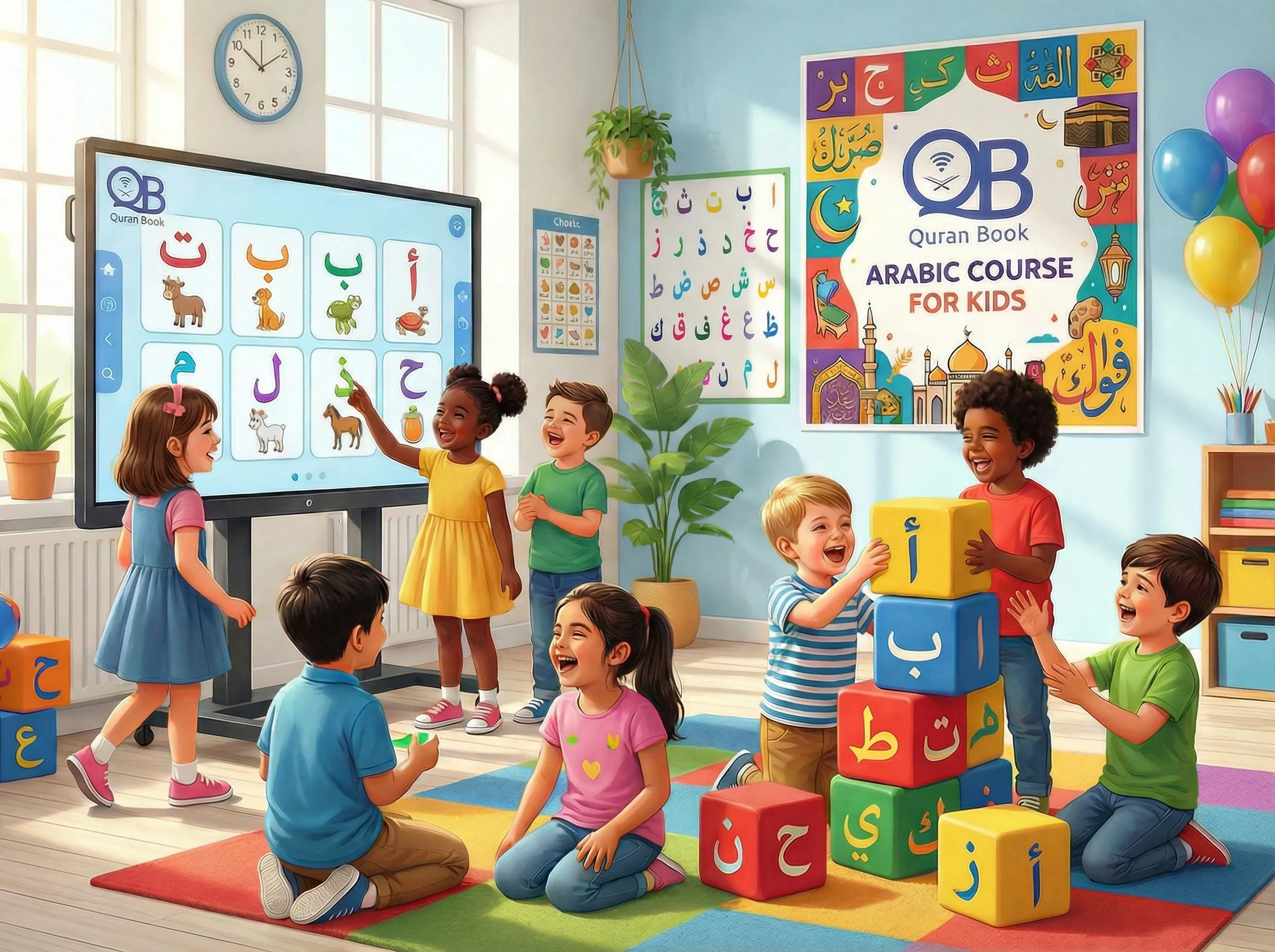
    Teaching Arabic to kids early — children reading Quran together in Islamic homeschooling
    Children reading Quran together in an Islamic homeschooling environment

    Teaching Arabic to kids early enhances cognitive development, builds a deep spiritual connection to the Quran, and develops powerful bilingual advantages. Research confirms that children between the ages of 3 and 7 are in a critical window for language acquisition, making this the golden period for introducing Arabic.

    🧠

    Cognitive Benefits

    Studies from leading universities, including Harvard, show that bilingual children develop stronger problem-solving abilities, enhanced memory, and greater mental adaptability. When children learn Arabic alongside English, their brains build denser neural networks that benefit all areas of learning.

    🕌

    Spiritual Foundation

    Arabic is the language of Salah, the Quran, and Du’a. When a child understands what they are reciting in prayer, it transforms a routine act into a deeply personal conversation with Allah (SWT). This spiritual connection becomes the anchor of their Islamic identity.

    Critical Age Window

    Between ages 3 and 7, the brain is most receptive to new phonetic systems. Children in this window can absorb Arabic sounds, including the unique throat and emphatic letters, far more naturally than older learners.

    🌍

    Cultural Identity

    Arabic bridges children to their heritage and connects them to the global Muslim Ummah. It fosters a sense of belonging that transcends borders.

    The Prophet Muhammad (ﷺ) emphasized the importance of Quran education:

    “The best of you are those who learn the Qur’an and teach it.”

    Sahih al-Bukhari 5027
    ✦ ✦ ✦

    7 Best Methods to Teach Arabic to Kids
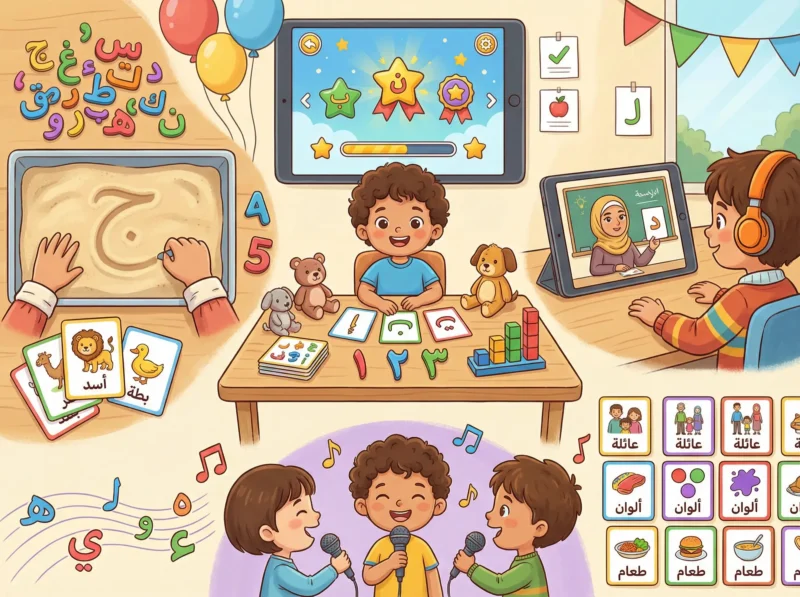
    Arabic learning games for kids — gamification in teaching Arabic alphabet to children
    Arabic learning games for kids — gamification in teaching the Arabic alphabet

    The 7 best methods to teach Arabic to kids include gamification, consistent micro-lessons, visual aids, the Nour El Bayan phonics method, the chunking technique, interactive online classes, and storytelling with Islamic themes. Each method is grounded in educational research and enhanced with Islamic values.

    1

    Gamification — Turn Every Arabic Lesson Into a Game

    Gamification is one of the most powerful best methods to teach Arabic to kids because it taps into the brain’s natural reward system. When children play Arabic learning games, their brains release dopamine, the feel-good chemical that strengthens memory and motivation. Instead of dreading Arabic practice, children actually ask for more.

    Start with simple, hands-on games: Arabic Bingo, where children match Arabic letters to called-out sounds; Letter Treasure Hunts, where flashcards are hidden around the house; and Memory Card Matching, where kids pair Arabic letters with pictures. For digital learners, apps that use achievement badges, points, and streaks keep the excitement going between lessons.

    At Quran Book Academy, we integrate gamified elements directly into our custom LMS. Children earn rewards for completing milestones, keeping them engaged and eager to progress through their Arabic and Tajweed courses.

    2

    Consistency Over Intensity — Why 10 Minutes a Day Beats 2 Hours a Week

    One of the most overlooked best methods to teach Arabic to kids is simply being consistent. Educational psychology shows that spaced repetition, which means short daily sessions, builds neural pathways far faster than cramming. We call it the 10-Minute Arabic Rule: just ten focused minutes every day produces dramatically better results than a two-hour weekend marathon.

    Here is how this works in practice:

    Factor 10 Min/Day 2 Hours/Week Winner
    Retention Rate 85%+ (spaced repetition) 40–50% (cramming) 10 Min/Day ✓
    Child Engagement High (short & fun) Low (fatigue & boredom) 10 Min/Day ✓
    Parent Commitment Easy to maintain Hard to schedule 10 Min/Day ✓
    Monthly Progress Steady & measurable Inconsistent 10 Min/Day ✓

    For busy working parents, this is liberating. Even on the most hectic day, ten minutes is always achievable. And over the course of a month, those small sessions compound into remarkable progress.

    3

    Visual Aids — Colors, Animation & the Power of Images
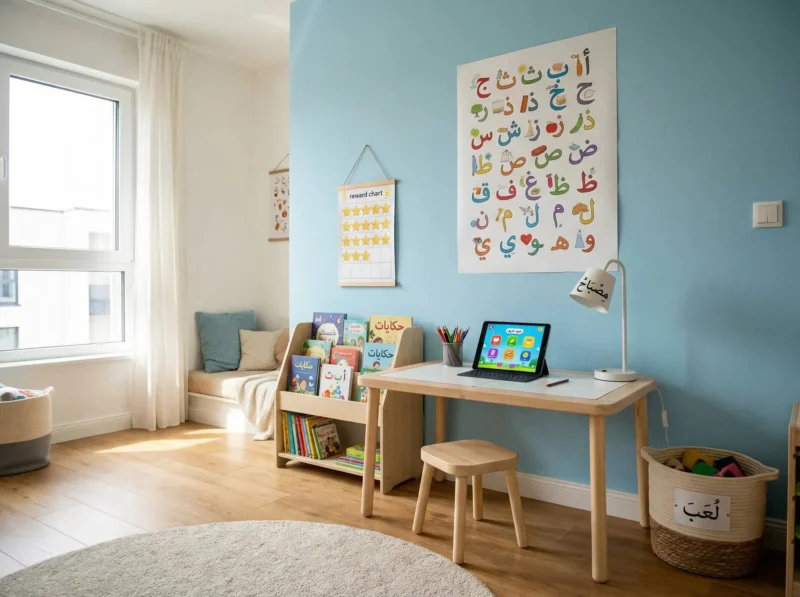
    Visual aids for Arabic — colorful Arabic flashcards and alphabet chart for kids
    Colorful Arabic flashcards and alphabet charts — powerful visual aids for kids

    Research shows that approximately 65% of children are visual learners, making visual aids one of the best methods to teach Arabic to kids effectively. When Arabic letters are paired with colors, animations, and images, retention rates skyrocket.

    Start with color-coded Arabic letters. For instance, use different colors for similar-looking letters like ب, ت, and ث to help children distinguish between them at a glance. Pair each letter with a relatable image: ج for جمل (camel), ب for بيت (house). Arabic flashcards with vibrant illustrations are inexpensive to make and incredibly effective.

    For animated learning, the Quran Book Academy YouTube channel offers fun, engaging Arabic letter videos that children love. Embedding video content into your child’s daily routine maximizes dwell time and creates multi-sensory learning connections that stick.

    4

    The Nour El Bayan Method — A Proven Phonics-First Approach
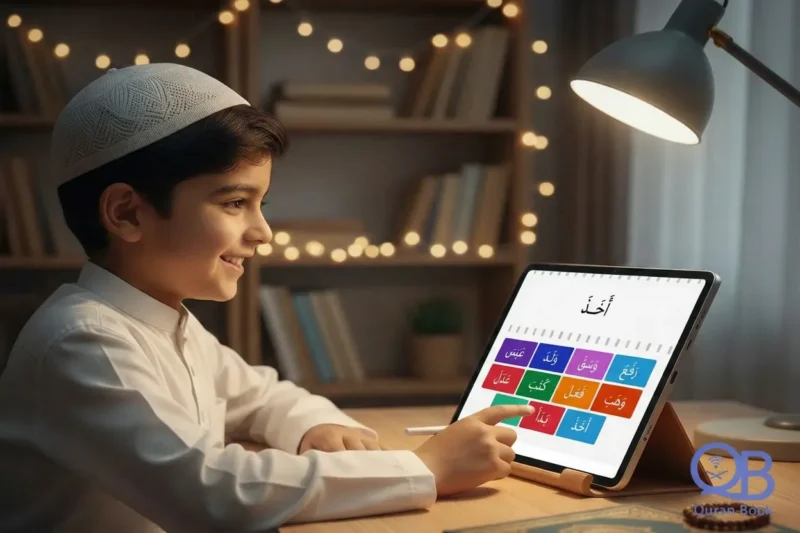
    Nour El Bayan for kids — Arabic phonics method teaching letter sounds to children
    Nour El Bayan — a proven phonics-first approach to Arabic for kids

    The Nour El Bayan method is a structured phonics-based approach that teaches children Arabic letter sounds before their names. This phonics-first strategy is one of the best methods to teach Arabic to kids because it enables them to actually read Arabic, not just memorize letter shapes.

    The method follows a clear progression: individual sounds, then connected letters, then short words, and finally Quran verses. By starting with sounds, children build a solid decoding foundation that makes Quran reading with Tajweed feel natural and intuitive.

    Quran Book Academy offers a full Nour El Bayan course on our YouTube channel for free practice, and our live Zoom classes follow this method with certified native Arabic teachers who guide each child through the progression at their own pace.

    5

    The Chunking Technique — Manageable Psychological Chunks
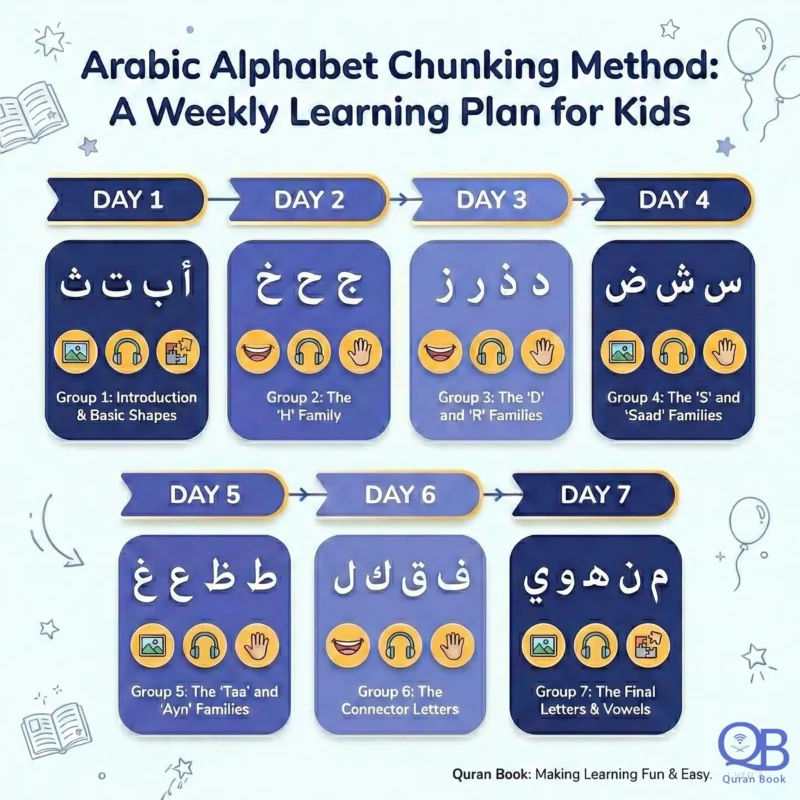
    Arabic alphabet for kids — chunking technique to teach Arabic letters in small groups
    Chunking technique — teaching Arabic letters in manageable small groups

    The concept of “chunking” was introduced by cognitive psychologist George Miller in 1956, and it remains one of the most effective best methods to teach Arabic to kids to this day. Miller’s research demonstrated that the human brain can process only 5 to 9 pieces of new information at any given time. For Arabic learning, this means you should never attempt to teach all 28 letters at once. Instead, break them into manageable groups of 3 to 5 letters. Each chunk should be paired with a visual cue, a sound recording, and a hands-on activity to engage multiple senses simultaneously.

    For example, in Week 1, you might introduce ا (Alif), ب (Ba), and ت (Ta), pairing each with a picture, a short song, and a clay-molding activity where children shape the letters with their hands. By the end of 6 to 8 weeks, your child will have mastered the full Arabic alphabet without the overwhelming feeling that causes most kids to quit.

    This technique is exactly how Quran Book Academy structures its Arabic homeschool curriculum: our live Zoom sessions break every lesson into digestible 15-minute focus chunks with interactive exercises, and our custom LMS tracks each child’s progress through these chunks, sending parents detailed progress reports via Gmail after every session.

    This approach directly eliminates the number one reason children abandon Arabic: cognitive overload. Instead of thinking “I will never learn this,” they experience small, meaningful wins every single day. The Prophet Muhammad (ﷺ) taught us the same principle of steady, consistent progress:

    “The most beloved deeds to Allah are those done consistently, even if they are small.”

    Sahih al-Bukhari 6464
    6

    Interactive Online Arabic Classes — Live, Personal & Effective
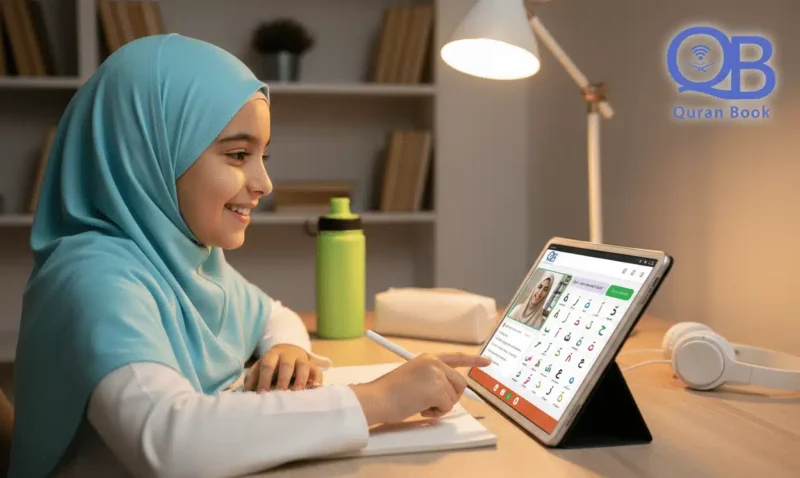
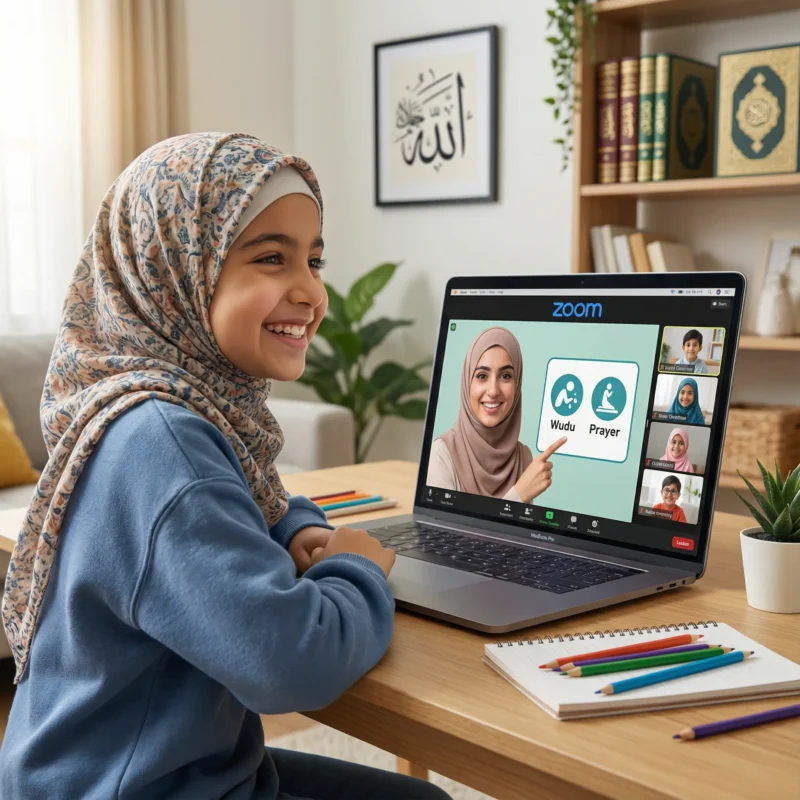
    Learn Arabic online for kids — interactive live Zoom Arabic class with teacher
    Interactive live Zoom Arabic class with a certified teacher

    Live interactive classes are among the best methods to teach Arabic to kids because they combine real-time feedback with personal connection and accountability. Unlike pre-recorded lessons, live sessions allow teachers to correct pronunciation instantly, adjust pace based on the child’s needs, and build meaningful mentor-student relationships.

    Quran Book Academy’s approach combines live Zoom sessions with certified native Arabic teachers, a custom LMS that tracks letters learned, Surahs completed, and attendance, plus Gmail progress reports sent directly to parents. Whether your family is in the USA, Canada, the UK, or Australia, your child can learn from home with zero commute.

    The social element matters too. Group classes with other Muslim kids create peer motivation, friendly competition, and a sense of community that keeps children excited about their Arabic and Quran journey.

    7

    Storytelling & Islamic Themes — Making Arabic Meaningful
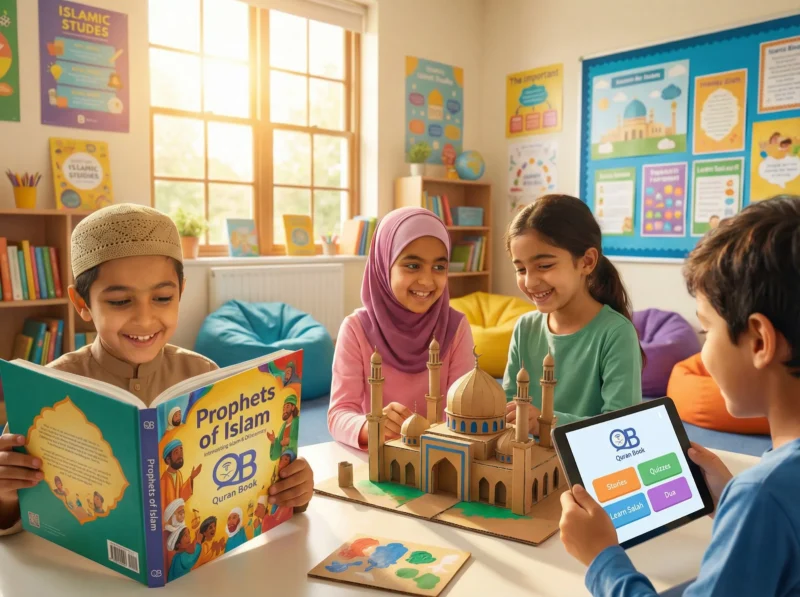
    Arabic learning for kids — Islamic storytelling with Quran stories and Nasheeds
    Islamic storytelling — making Arabic meaningful through Quran stories and Nasheeds

    The final and perhaps most inspiring of the best methods to teach Arabic to kids is storytelling rooted in Islamic themes. When children learn Arabic vocabulary through the stories of the Prophets, daily Du’as like Bismillah, Alhamdulillah, and SubhanAllah, and beautiful Nasheeds, the language becomes alive with meaning and purpose.

    Arabic stories for kids drawn from the Quran teach vocabulary in context. A story about Prophet Yusuf (AS) naturally introduces words for family, patience, trust, and faith. Daily Du’as serve as vocabulary builders that children practice multiple times a day without even realizing they are learning. And simple Islamic Nasheeds with repetitive Arabic words boost memory through rhythm and melody.

    Once children have learned letters through stories and songs, the transition to reading short Surahs feels natural and rewarding. Allah (SWT) tells us:

    “We relate to you the best of stories through this Qur’an.”

    Surah Yusuf 12:3
    ✦ ✦ ✦

    The Academy Method — How Quran Book Academy Teaches Arabic & Tajweed

    Quran Book Academy — best methods to teach Arabic to kids with live Zoom and LMS
    Quran Book Academy — the complete Arabic & Tajweed learning ecosystem

    Quran Book Academy uses a unique blend of the best methods to teach Arabic to kids — combining live Zoom sessions, a custom LMS, and the Nour El Bayan phonics method to teach children Arabic and Tajweed in manageable, engaging chunks with real-time feedback and parent progress reports.

    📚

    Our Methodology

    Every student receives live one-on-one and group Zoom sessions with certified native Arabic teachers, many of whom are Al-Azhar graduates. Lessons follow the Nour El Bayan phonics progression, ensuring children build genuine reading skills from day one.

    🕋

    Tajweed Integration

    Every Arabic lesson connects directly to Quran reading fluency with proper Tajweed rules. Children do not just learn letters; they learn to recite the Quran beautifully and correctly.

    💻

    Our Tech Stack

    Zoom provides live interaction with instant feedback. Our custom LMS tracks letters learned, Surahs completed, and attendance milestones. Gmail Reports keep parents informed with weekly progress updates delivered straight to their inbox.

    🧩

    Psychological Approach

    Lessons are broken into 15-minute focus chunks, rewards are given for milestones, and positive reinforcement ensures every child feels confident and motivated. Plus, our YouTube channel offers free resources including Arabic letter animations and a complete Nour El Bayan course.

    ✦ ✦ ✦

    Arabic Alphabet for Kids — A Step-by-Step Starter Guide

    To teach the Arabic alphabet for kids, start with phonics by teaching sounds before letter names, introduce 3 to 5 letters per week using visual aids and hands-on activities, and use songs and games to reinforce learning daily.

    01
    Phonics First: Teach the sound of each letter before its name. This is the foundation of the Nour El Bayan method and the fastest path to actual reading ability.
    02
    One Letter a Day: Go slow and steady. Pair each letter with a visual image and practice its sound throughout the day.
    03
    Hands-On Practice: Use sand tracing, clay molding, and coloring worksheets to make Arabic handwriting practice engaging and tactile.
    04
    Look-Alike Letter Challenge: Use color coding to differentiate similar-looking letters like ب, ت, and ث. Assign each a distinct color so children never confuse them.

    🎯 Milestone: With consistent daily practice of 10 to 15 minutes, most children master all 28 Arabic letters within 2 to 3 months. The Arabic alphabet for kids becomes an achievable and exciting goal.

    ✦ ✦ ✦

    Building an Arabic Homeschool Curriculum That Works
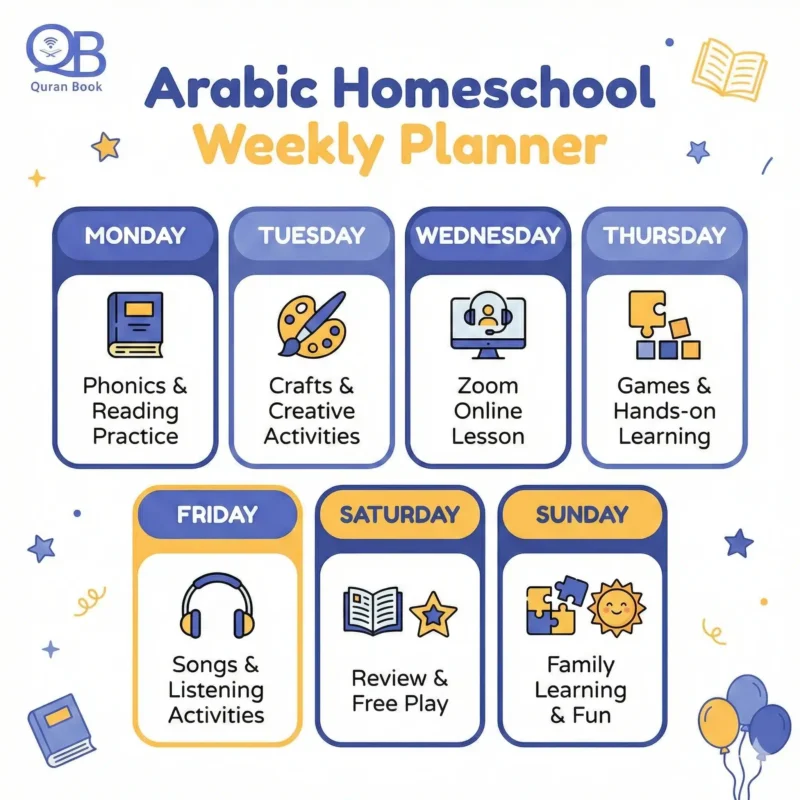
    Arabic homeschool curriculum — weekly Arabic learning schedule for kids at home
    A sample weekly Arabic homeschool curriculum for kids

    An effective Arabic homeschool curriculum combines structured phonics lessons, daily 10 to 15 minute practice sessions, visual aids, live online classes, and Islamic storytelling to keep kids engaged and progressing. Here is a sample weekly schedule you can start using today:

    Day Activity (10–15 min) Resource
    MonNew letters (phonics + visuals)Nour El Bayan YouTube
    TueArabic handwriting practice + clay lettersPrintable worksheets
    WedLive Zoom class with teacherQuran Book Academy
    ThuArabic games + flashcardsDIY games + apps
    FriQuran listening + short Surah reviewQuran.com + Academy LMS
    SatStorytelling + Islamic NasheedsYouTube + Islamic books
    SunReview week’s progress + fun quizLMS Progress Report

    This Arabic homeschooling schedule is flexible. Adjust the activities to your child’s energy levels, and remember: consistency matters more than perfection. Even following this plan three or four days a week will produce noticeable results within the first month.

    ✦ ✦ ✦

    Frequently Asked Questions About Teaching Arabic to Kids

    Q What is the best age to start teaching Arabic to kids?

    Most experts recommend starting between ages 3 and 5, when children’s brains are highly receptive to new sounds and phonetic patterns. However, older children can start anytime with the right methods. At Quran Book Academy, we accept students from age 4 and customize lessons to each child’s level.

    Q Can I teach my child Arabic if I don’t speak it myself?

    Absolutely. Many of our most successful students have non-Arabic-speaking parents. Use structured online programs like Quran Book Academy where certified native teachers handle instruction via Zoom. You can even learn alongside your child using our free YouTube channel for Arabic letters and Nour El Bayan lessons.

    Q How long does it take a child to learn the Arabic alphabet?

    With consistent daily practice of 10 to 15 minutes, most children master all 28 Arabic letters within 2 to 3 months. Using visual aids, games, and the phonics-first approach accelerates this timeline significantly.

    Q What is the Nour El Bayan method for teaching Arabic?

    Nour El Bayan is a structured phonics-based method that teaches children Arabic letter sounds before their names. It progresses from individual sounds to connected letters, short words, and eventually Quran verses. Quran Book Academy offers a complete Nour El Bayan course on our YouTube channel for free.

    Q What is the difference between teaching Arabic and teaching Quran reading?

    Teaching Arabic focuses on the language itself, including the alphabet, vocabulary, and grammar. Quran reading specifically focuses on recitation with proper Tajweed rules. At Quran Book Academy, our method integrates both so children learn Arabic letters and naturally progress into Quran reading with Tajweed.

    Q Is 10 minutes a day really enough to learn Arabic?

    Yes. Research on spaced repetition confirms that short, consistent daily sessions of 10 to 15 minutes are far more effective than long, infrequent sessions. The key is daily consistency, not marathon study sessions. Our live classes are structured in 15-minute focus chunks for maximum retention.

    Q Do you offer a free trial Arabic lesson for kids?

    Yes. Quran Book Academy offers a completely free trial lesson with a certified teacher via Zoom. Your child will experience our teaching method firsthand, and you will receive a progress report via Gmail after the session. Book your free trial at quranbookonline.com.

    Q How do I keep my child motivated to learn Arabic?

    Use gamification with rewards, badges, and challenges. Rotate between activities like games, songs, videos, and crafts. Create short daily routines rather than long sessions. At Quran Book Academy, our LMS tracks milestones and celebrates achievements to keep kids excited about their progress.

    ✦ ✦ ✦

    Start Your Child’s Arabic Journey Today — Free Trial Lesson

    Quran Book Academy free trial — learn Arabic online for kids with certified teachers
    Quran Book Academy — Book your free trial lesson today

    Your child deserves to connect with the Quran in the language it was revealed. At Quran Book Academy, our certified Al-Azhar teachers use the best methods to teach Arabic to kids — live on Zoom, tracked through our LMS, and reported directly to your inbox. Do not let another month pass. Book your FREE trial lesson today and watch your child fall in love with Arabic.

    🟢 BOOK YOUR FREE TRIAL LESSON NOW

    Live Zoom Classes  |  Native Arabic Teachers  |  5,000+ Students Worldwide  |  4.9/5 Parent Rating

    quranbookonline.com — Start Free
    ✦ ✦ ✦

    References & Sources

    Quranic References

    1. Surah Al-Qamar 54:17 — quran.com/54/17
    2. Surah Yusuf 12:3 — quran.com/12/3

    Hadith References

    1. Sahih al-Bukhari 5027 — sunnah.com/bukhari:5027
    2. Sahih al-Bukhari 6464 — sunnah.com/bukhari:6464

    Academy Resources

    1. Quran Book Academy Homepage — quranbookonline.com
    2. Arabic for Kids Course — Arabic Online for Kids
    3. Quran Reading & Tajweed Course — Learn Quran with Tajweed
    4. Nour El Bayan Course — Quran Reading for Beginners
    5. About Our Teachers — About Us
    6. YouTube Channel — Quran Book Academy on YouTube
    7. Telegram Channel (Tajweed Practice) — t.me/maqraquranbookonline
  • 99 names of allah for kids

    99 Names of Allah for Kids: Fun Ways & Beautiful Guide for Young Muslims
    Q
    Quran Book Academy
    Free Trial

    99 Names of Allah for Kids: Fun Ways & Beautiful Guide for Young Muslims

    By Quran Book Academy | Islamic Education for Children

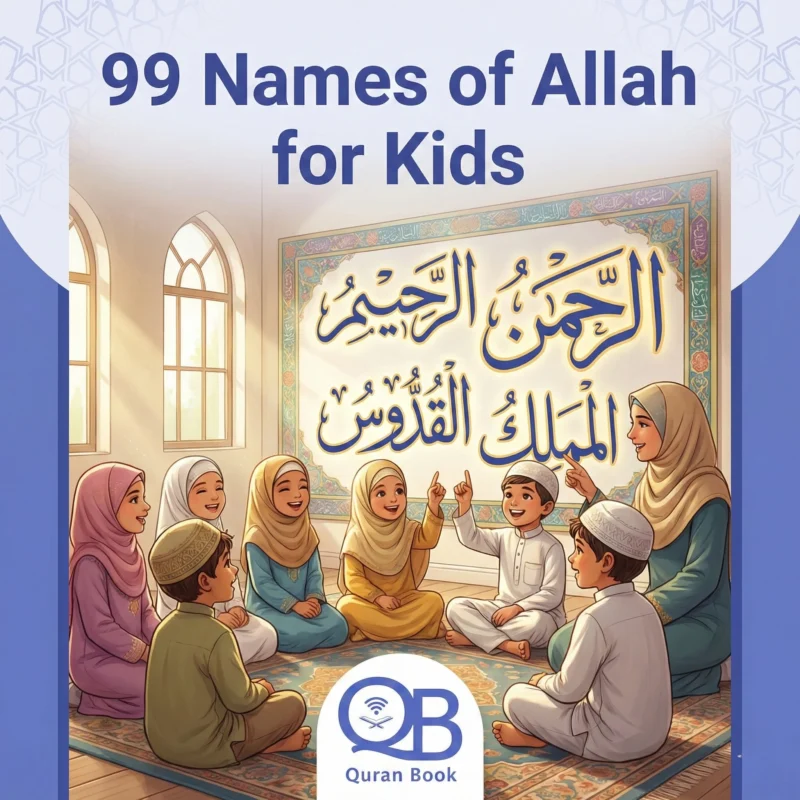
    99 names of Allah for kids displayed on colorful Islamic poster
    99 Names of Allah for Kids – A colorful Islamic educational poster

    Introduction

    The 99 names of Allah for kids, known as Asma ul Husna, are beautiful attributes that help children understand who Allah is. Teaching these names builds love, trust, and connection with the Creator from an early age.

    You want your child to love Allah, but where do you start? Many parents feel overwhelmed by the complexity of Islamic teachings, language barriers, and limited time. The good news is that introducing the names of Allah for kids doesn’t have to be complicated or intimidating.

    With simple, engaging, and proven methods, you can make learning joyful and meaningful for your little ones. The Prophet Muhammad (peace be upon him) said:

    “Allah has ninety-nine names, and whoever preserves them will enter Paradise.”

    Sahih al-Bukhari 2736

    This guide will walk you through everything you need to know about teaching Asma ul Husna for kids in a way that sparks curiosity and nurtures faith. Explore our Islamic Studies for Kids program for comprehensive learning.

    Who is Allah? Explaining Allah for Grade 1 Students

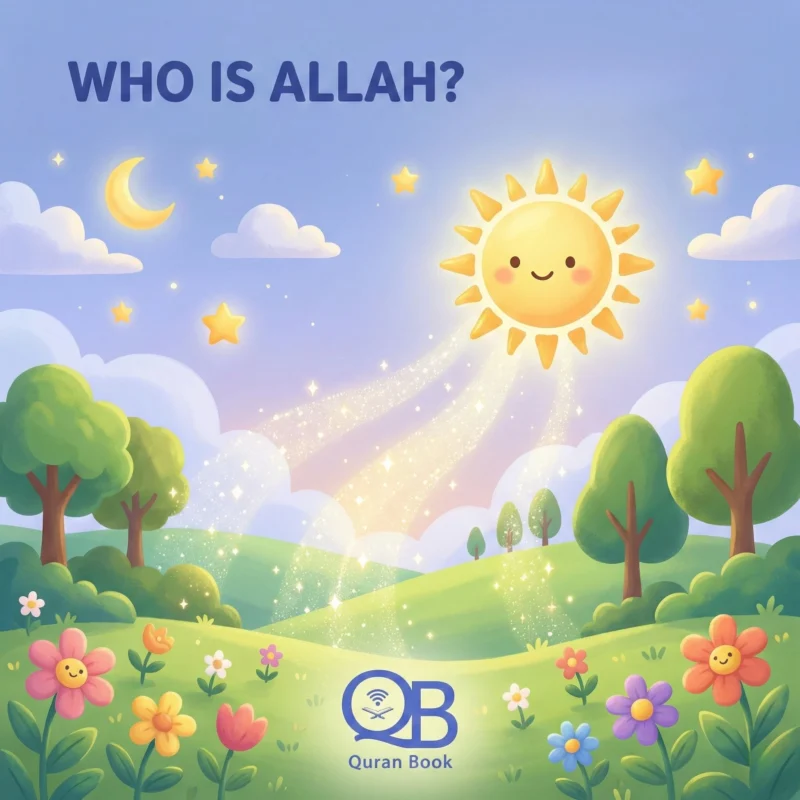
    Who is Allah for grade 1 students illustration with sun moon and stars
    Understanding Allah through His beautiful creation – sun, moon, and stars

    Allah is the Arabic name for God—the One who created everything: the sun, moon, stars, animals, and you! For grade 1 students, Allah is like a loving, caring, and powerful friend who always watches over us and answers our prayers.

    When explaining Allah to young children aged 5-7 years, use relatable analogies they can understand. Think of how much your mommy and daddy love you—then multiply that by infinity! That’s how much Allah loves you.

    The Quran beautifully summarizes this concept:

    “He is Allah, the One.”

    Surah Al-Ikhlas 112:1

    This simple verse teaches children that Allah is unique, incomparable, and the only Creator worthy of worship. For beginners, check out our Quran for Beginners Course.

    What Are the 99 Names of Allah for Kids? (Asma ul Husna)

    The 99 names of Allah for kids are special names that describe Allah’s qualities—like Ar-Rahman (The Most Merciful), Al-Khaliq (The Creator), and Al-Wadud (The Most Loving). Each name teaches children something beautiful about Allah.

    “Asma ul Husna” means “The Most Beautiful Names” in Arabic. These names help us understand Allah’s attributes and how He interacts with His creation. Why 99 names? Because Allah is so magnificent that no single name can fully describe Him!

    ✨ 10 Easy Names to Start With

    # Arabic Name English Meaning Kid-Friendly Explanation
    1 Ar-Rahman The Most Merciful Allah loves you more than mommy & daddy combined
    2 Al-Khaliq The Creator Allah made everything—even dinosaurs!
    3 As-Sami The All-Hearing Allah hears every dua, even whispers
    4 Al-Basir The All-Seeing Allah sees you being kind, even when no one else does
    5 Al-Wadud The Most Loving Allah’s love never runs out

    What Does Al Quddus Mean for Kids?

    Al Quddus means “The Most Holy” or “The Pure One.” For kids, this means Allah is perfect—He has no mistakes, no flaws, and is completely good and pure.

    Help your child understand this concept through simple activities. Discuss things that are “pure” in everyday life: clean water, a clear blue sky, or fresh fallen snow. Then explain that Allah is even more pure and perfect than anything we can imagine!

    Connect it to daily practice: “When we say Subhan Allah, we’re saying Allah is perfect!” This phrase becomes more meaningful when children understand the beautiful name Al Quddus behind it.

    What Does Al Wakeel Mean for Kids?

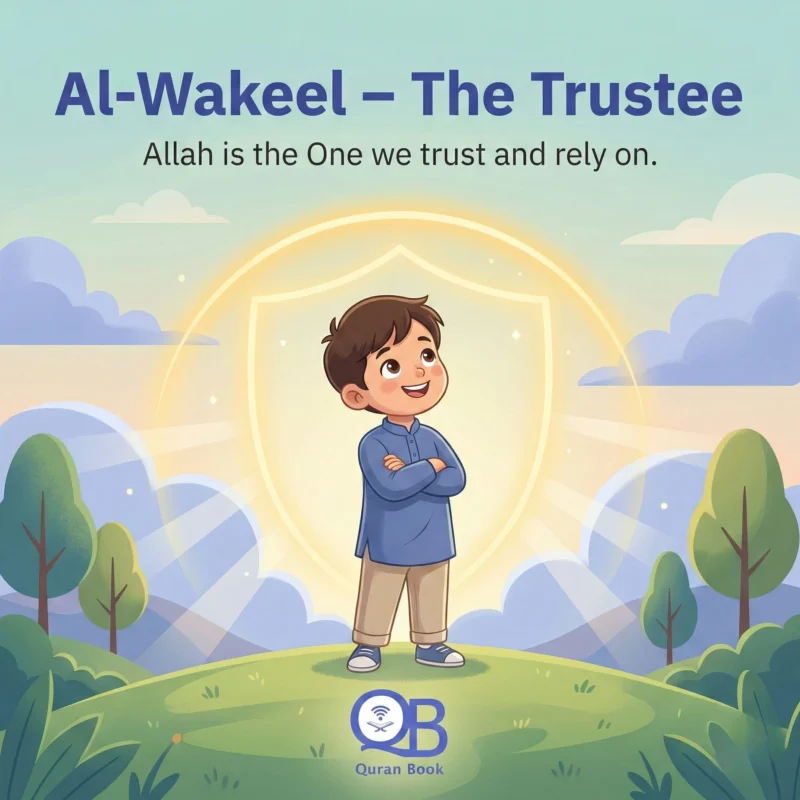
    Al Wakeel meaning for kids The Trustee superhero concept illustration
    Al Wakeel – The Trustee: A child feeling safe under Allah’s protection

    Al Wakeel means “The Trustee” or “The One You Can Rely On.” For kids, it means Allah is the best helper—you can trust Him with anything, like a superhero who never lets you down.

    Teach this name through storytelling. Share how Prophet Ibrahim (peace be upon him) completely trusted Allah when facing difficult times. Even when things seemed impossible, he said: “Hasbunallahu wa ni’mal wakeel” (Allah is sufficient for us, and He is the best Disposer of affairs).

    Encourage children to say this dua when they feel scared, worried, or unsure. Knowing the Al Wakeel meaning helps them develop unshakeable trust in Allah from a young age. Learn more with our Arabic for Kids Program.

    What Does Al Qahhar Mean for Kids?

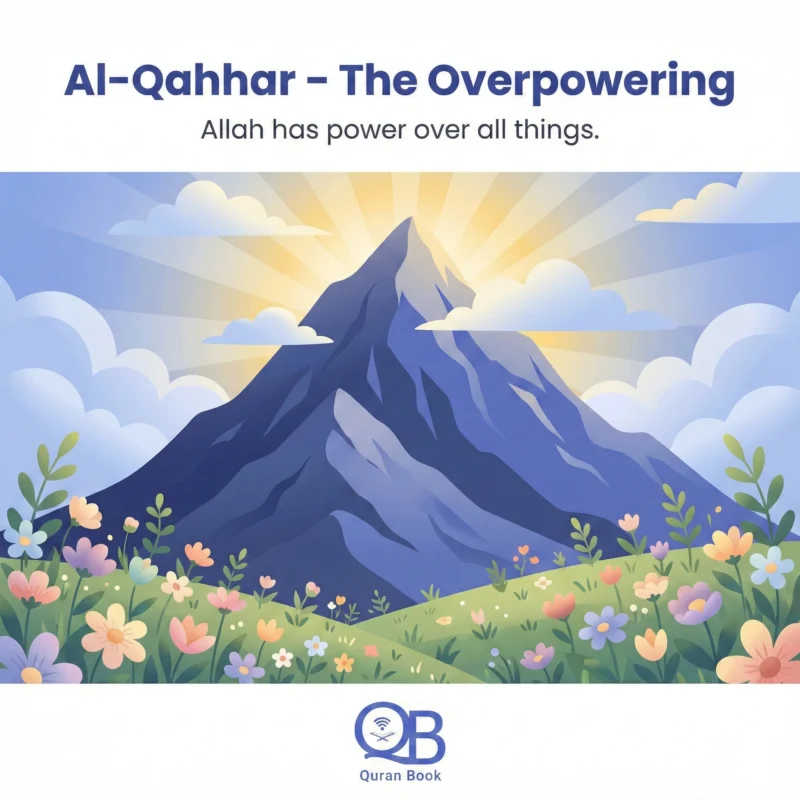
    99 names of Allah for kids Al Qahhar The Overpowering explained
    Al Qahhar – The Overpowering: Strength balanced with mercy and gentleness

    Al Qahhar means “The Subduer” or “The Overpowering.” For kids, it means Allah is stronger than anything—no problem is too big for Him to handle.

    When teaching this name, balance it with Allah’s mercy. Explain that Allah is incredibly strong, but He uses His power to protect those who love Him and to ensure justice. He is strong AND kind.

    “He is the One, the Overpowering.”

    Surah Ar-Ra’d 13:16

    This teaches children that while challenges may seem overwhelming, Allah’s power surpasses everything. Consider enrolling in our Learn Quran with Tajweed course for proper pronunciation.

    5 Fun Ways to Teach the 99 Names of Allah to Kids

    1 Sing Nasheeds Together

    Music and melody make memorization effortless and enjoyable for young minds.

    2 Create a Name-of-the-Week Calendar

    Focus on one name weekly, exploring its meaning through discussions and activities.

    3 Arts & Crafts Projects

    Use coloring pages, posters, and flashcards to make learning visual and hands-on.

    4 Storytelling with Prophets

    Connect names to Quranic stories that illustrate Allah’s attributes in action.

    5 Daily Dua Practice

    Incorporate names into morning and evening adhkar, making them part of daily routine.

    The Academy Method: How Quran Book Academy Teaches Kids

    Islamic courses for kids at Quran Book Academy online learning session
    Interactive online Quran learning session at Quran Book Academy

    At Quran Book Academy, we understand that learning the 99 names of Allah for kids requires more than memorization—it demands connection. Our certified teachers use a psychology-backed “chunking” method, breaking complex concepts into bite-sized, manageable lessons that match a child’s attention span and cognitive development.

    Each live session on Zoom is interactive, engaging, and tailored to the student’s pace. Our custom Learning Management System tracks every milestone, from the first name learned to full memorization, and parents receive detailed progress reports weekly.

    Whether your child is 5 or 15, our Islamic courses for kids make learning Asma ul Husna a joyful, transformative experience. We also offer Islamic courses for adults who want to learn alongside their children. Our approach combines traditional Islamic pedagogy with modern educational psychology—ensuring your child doesn’t just memorize, but truly understands and loves the beautiful names of Allah.

    What Does “الحمدلله سبحان الله الله أكبر” Mean?

    These are three powerful phrases:

    Alhamdulillah

    All praise is for Allah

    Subhan Allah

    Glory be to Allah

    Allahu Akbar

    Allah is the Greatest

    Together, they help kids remember Allah’s blessings, perfection, and greatness. Practice these daily—after salah or before bed. The Tasbih of Fatimah (RA), taught by the Prophet Muhammad (peace be upon him), incorporates these beautiful phrases and connects children to the 99 names of Allah they’re learning. (Sahih al-Bukhari 6318)

    Frequently Asked Questions

    Q1: What are the 99 names of Allah for kids? +

    The 99 names of Allah, called Asma ul Husna, are beautiful attributes describing Allah—such as Ar-Rahman (The Merciful) and Al-Khaliq (The Creator). They help kids understand and love Allah.

    Q2: What does Al Qahhar mean for kids? +

    Al Qahhar means “The Overpowering.” It teaches kids that Allah is stronger than any problem or fear.

    Q3: Who is Allah for grade 1? +

    Allah is the One God who created everything. For young children, He is a loving, caring Creator who always listens.

    Q4: What does Al Wakeel mean? +

    Al Wakeel means “The Trustee.” It teaches kids they can always rely on Allah.

    Q5: What does Al Quddus mean for kids? +

    Al Quddus means “The Most Holy” or “The Pure.” It means Allah is perfect and has no flaws.

    Start Your Child’s Journey Today — Free Trial Lesson

    Book free trial lesson for 99 names of Allah for kids course
    Join hundreds of families learning the beautiful names of Allah

    Ready to help your child fall in love with the 99 names of Allah? Book a FREE Trial Lesson at Quran Book Academy today. Our expert teachers will guide your child step-by-step through the beautiful Asma ul Husna—making learning fun, easy, and meaningful.

    Claim Your Free Trial Now

    References

    Surah Al-Ikhlas (112:1)

    quran.com/112:1

    Surah Ar-Ra’d (13:16)

    quran.com/13:16
    Q
    Quran Book Academy

    Empowering young Muslims with knowledge, love, and connection to Allah

    © 2026 Quran Book Academy. All rights reserved.

  • prophets stories for children

    7 Beautiful Stories of the Prophets for Kids | Quran Book Academy
    📖
    Quran Book Academy
    Free Trial

    7 Beautiful Stories of the Prophets for Kids That Build Faith & Character

    By Quran Book Academy | Islamic Education for Children

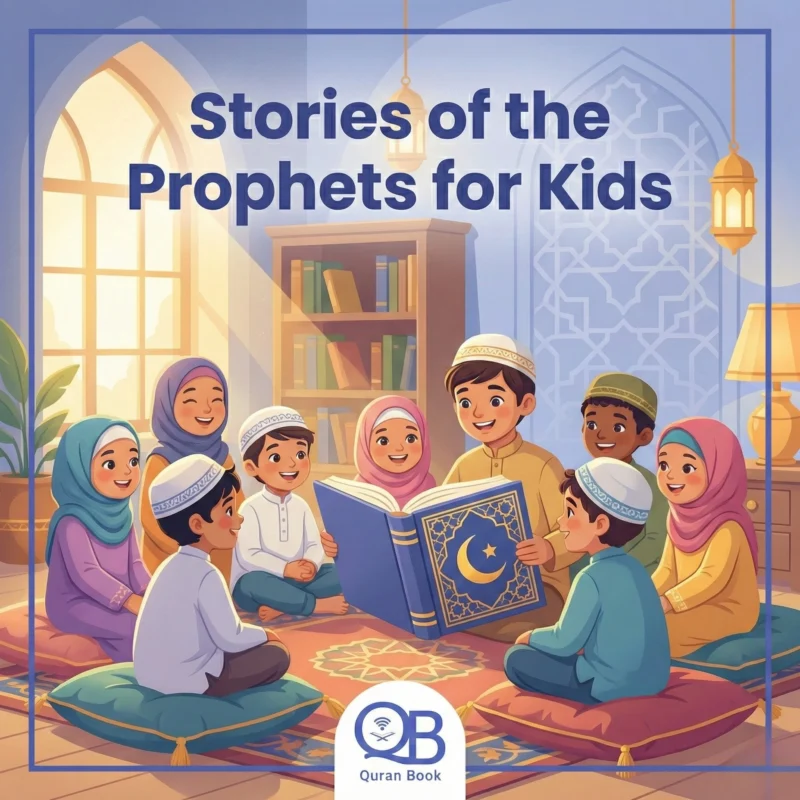
    Stories of the prophets for kids - children reading Islamic stories together
    Muslim children engaged in learning beautiful stories of the prophets

    Introduction

    Stories of the prophets for kids are powerful Islamic narratives that teach children about faith, patience, and good character through the lives of Allah’s chosen messengers. These engaging tales make learning Islam memorable and meaningful for young minds eager to understand their heritage.

    We understand how challenging it can be to teach your child about Islam, especially in non-Arabic speaking environments. Many parents worry whether their children will connect with their faith or find religious lessons boring. At Quran Book Academy, we have helped thousands of families in the USA, Canada, UK, and Australia overcome these exact challenges through interactive and joyful Islamic education.

    This comprehensive guide shares seven essential Islamic prophet stories for kids, explains why they matter for spiritual development, and demonstrates how proven teaching methods make Islamic education enjoyable. Whether you are looking for a short story of Prophet Muhammad for kids or exploring stories of the prophets in Islam for kids, this resource will guide your family’s learning journey.

    Why Are Stories of the Prophets Important for Kids?

    Stories of the prophets in Islam for kids build spiritual foundations by teaching moral lessons through relatable narratives. Children learn empathy, patience, trust in Allah, and resilience—qualities that shape their character and strengthen their Muslim identity from an early age.

    There was certainly in their stories a lesson for those of understanding.

    — Surah Yusuf 12:111

    Four Key Benefits of Prophet Stories for Children:

    • 1. Builds love for Allah and His messengers through personal connection
    • 2. Teaches problem-solving through prophetic examples and wisdom
    • 3. Develops emotional intelligence by exploring complex feelings
    • 4. Creates lasting Islamic memories that anchor faith throughout life

    Who Are the 5 Most Important Prophets in Islam? (Ulul Azm)

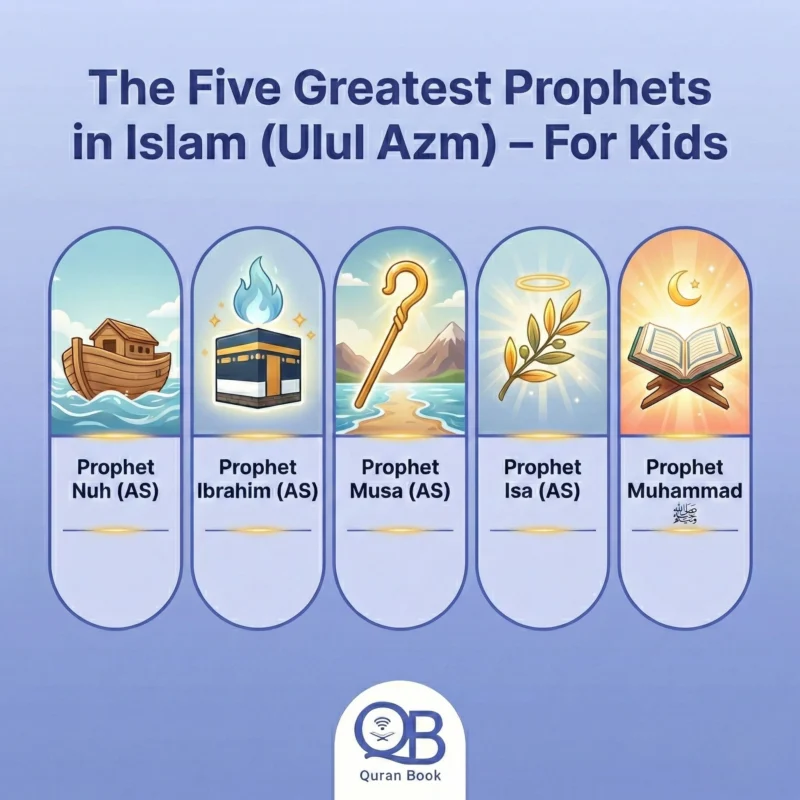
    Prophet stories for children featuring the five greatest messengers
    The five greatest prophets (Ulul Azm) and their timeless lessons for children
    Prophet Title Key Lesson for Kids
    Prophet Nuh (Noah) Father of Mankind Patience & perseverance
    Prophet Ibrahim (Abraham) Friend of Allah Trust in Allah
    Prophet Musa (Moses) Speaker to Allah Courage & leadership
    Prophet Isa (Jesus) Spirit of Allah Kindness & miracles
    Prophet Muhammad ﷺ Seal of Prophets Mercy & perfect character

    The Prophet Muhammad ﷺ said: “The prophets are brothers… their religion is one.”

    Understanding these five messengers provides children with a strong foundation in Islamic prophet stories for kids, helping them recognize the unified message of Islam throughout history. Explore our Islamic Courses for Kids to learn more.

    How to Explain What a Prophet Is to Kids (Simple Guide)

    Explaining prophets to children requires simple, age-appropriate language. Here is a proven four-step approach:

    1

    Use relatable terms:

    “A prophet is a special teacher chosen by Allah to show people how to be good and worship Him correctly.”

    2

    Connect to their world:

    “Just like your teacher helps you learn at school, prophets helped all people learn about Allah.”

    3

    Emphasize the core message:

    “Every prophet taught the same thing: There is only one God, Allah, and we should worship Him alone.”

    4

    Make it visual:

    Use picture books, storytelling, and interactive discussions to bring concepts alive.

    These techniques make prophet stories for children accessible and engaging, transforming abstract concepts into memorable lessons. Our expert teachers specialize in these methods.

    7 Essential Islamic Prophet Stories for Kids

    📖 Prophet Muhammad ﷺ — The Trustworthy

    The story of Prophet Muhammad for kids begins in the city of Makkah, where a young orphan grew up with exceptional character. He never lied and always helped others, earning the title “Al-Amin” (The Trustworthy). This short story of Prophet Muhammad for kids teaches children that honesty and kindness matter most, regardless of circumstances.

    Prophet Yusuf — Patience Through Hardship

    Thrown into a well by his brothers and imprisoned unjustly, he never lost faith in Allah and eventually became a leader in Egypt. His journey shows children that difficult times can lead to beautiful outcomes.

    Prophet Musa — Courage & Leadership

    He stood before the powerful Pharaoh to deliver Allah’s message, teaching children to stand for truth despite opposition.

    Prophet Yunus — Accountability & Repentance

    He learned that running from responsibility solves nothing. His sincere supplication inside the whale’s belly shows kids that Allah always forgives those who turn back to Him with genuine hearts.

    Prophet Ibrahim — Complete Trust (Tawakkul)

    His willingness to sacrifice what he loved most demonstrates complete trust in Allah’s wisdom. His story forms the foundation of Eid al-Adha celebrations worldwide.

    Prophet Nuh — Persistence & Conviction

    He built his ark despite people mocking him for years, teaching children persistence and unwavering conviction in their beliefs.

    Prophet Isa — Allah’s Limitless Power

    His story shows children that Allah’s power has no limits through the miracles he performed by Allah’s permission.

    “We relate to you the best of stories.”

    Each narrative in these stories of the prophets for kids plants seeds of iman that blossom throughout their lives, creating Muslims who understand their heritage and embody prophetic character. Enroll in our Online Quran Classes for Children to begin.

    The Academy Method — How We Teach Prophet Stories Online

    Islamic prophet stories for kids taught through online academy method
    A child enjoying interactive Islamic learning with our online academy

    At Quran Book Academy, we create transformative learning experiences that bring stories of the prophets in Islam for kids to life.

    🖥️ Our Technology Stack:

    • Live Zoom Sessions: Face-to-face interaction with certified teachers
    • Custom LMS: Track your child’s progress with detailed reports
    • Psychological Chunking: Lessons divided into 15-20 minute segments matching children’s attention spans

    📚 Our Teaching Approach:

    • Native Arabic-speaking teachers trained in child psychology
    • Interactive storytelling with questions and hands-on activities
    • Weekly progress reports for parents
    • Flexible scheduling for families across USA, Canada, UK, and Australia

    FAQ — Stories of the Prophets for Kids

    Q1: How do I introduce Prophet Muhammad to kids? +

    Start with simple stories about his kindness—how he played with children, cared for animals, and always spoke the truth. Use picture books and interactive discussions to make learning engaging.

    Q2: What are stories of the prophets called in Islam? +

    They are called “Qasas al-Anbiya” (قصص الأنبياء), meaning “Stories of the Prophets.” These narratives appear throughout the Quran.

    Q3: Which prophet is called Jesus in Islam? +

    Prophet Isa (عيسى) is Jesus. Muslims believe he was a mighty messenger of Allah, born miraculously to Maryam (Mary), and will return before the Day of Judgment.

    Q4: What is the main purpose of prophets in Islam? +

    Prophets guide humanity to worship Allah alone, teach moral conduct, and deliver divine revelation. They serve as role models for righteous living.

    Q5: What are the four roles of a prophet? +

    1) Delivering Allah’s message, 2) Teaching and explaining revelation, 3) Being a moral example, 4) Warning about consequences of disbelief.

    Start Your Child’s Journey with Prophet Stories Today

    Prophet stories for children - start free trial today
    Happy Muslim children ready to begin their Islamic learning journey

    Your child deserves to fall in love with Islam through beautiful, engaging stories that shaped history.

    Free Trial Lesson — Experience the difference Expert teachers specialized in Islamic stories Flexible timing for families worldwide
    Book Your Free Trial Now →

    References & Resources

    📖 Quranic References

    📜 Hadith References

    📖
    Quran Book Academy

    Bringing Beautiful Stories of the Prophets to Children Worldwide

    © 2026 Quran Book Academy. All rights reserved.