7 Powerful Hasanat in Islam: Your Complete Guide to Good Deeds That Multiply Rewards
Have you ever felt like your daily life is so busy that you’re not doing enough good deeds? You’re not alone. Many Muslims in the West — balancing work, school, and family — worry that they’re falling behind spiritually. The beautiful truth about hasanat in Islam is that Allah’s mercy system is designed to be accessible, not overwhelming. Even a smile is a form of sadaqah. Even removing a stone from a path fills your scale with reward.
This guide will walk you through the hasanat meaning, the best good deeds in Islam backed by the Quran and Sunnah, and a simple method to build a consistent hasanat habit — even if you only have 10 minutes a day. Whether you are a new Muslim, a busy parent, or someone reconnecting with their faith, this article is for you.
Learn how Quran recitation multiplies hasanat → Online Quran Reading Course
What Does Hasanat Mean? The True Hasanat Meaning in Islam
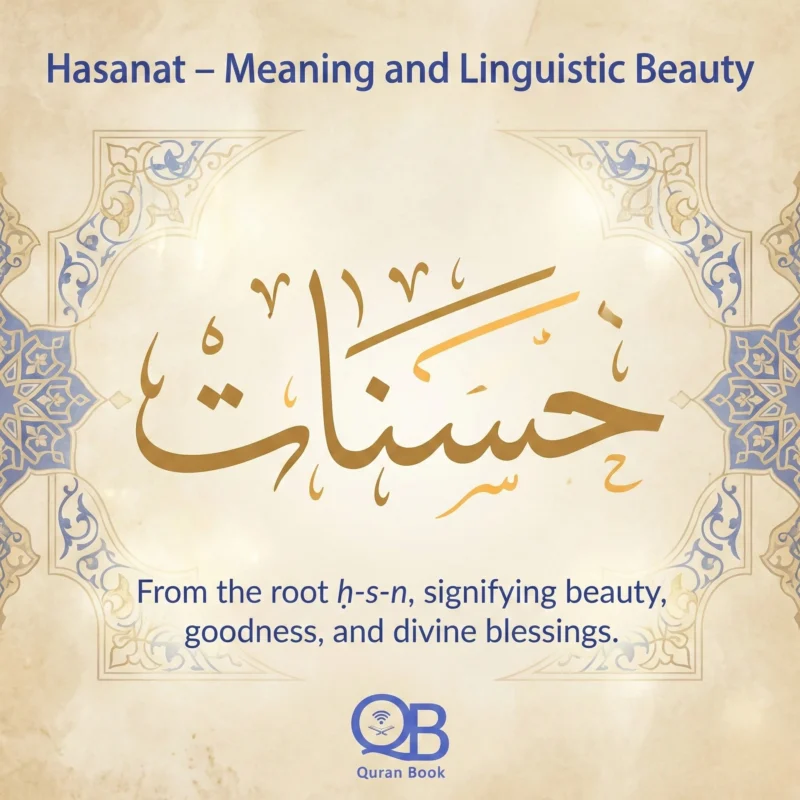
Hasanat (حسنات) is the Arabic plural of hasanah, meaning “good deed” or “reward.” In Islam, hasanat refers to the spiritual rewards recorded by Allah for every righteous act a Muslim performs — from prayer and charity to something as simple as removing harm from a path. Hasanat are the building blocks of a believer’s scale on the Day of Judgment.
Linguistically, the word comes from the Arabic root ح-س-ن, which carries meanings of beauty, goodness, and excellence. A single good deed is a hasanah; multiple good deeds are hasanat. Theologically, hasanat function as units of divine reward, often referred to alongside the terms thawab (reward) and ajr (divine compensation).
For non-Arabic speakers, it is helpful to know that in daily Muslim life, the words “hasanat,” “good deeds,” and “rewards” are often used interchangeably. They all point to the same concept: every action done sincerely for Allah’s sake earns spiritual credit that is weighed on the Day of Judgment.
This single hadith reveals just how generous Allah’s reward system truly is.
New to Arabic? Start with our Noorani Qaida Course →
Hasanat vs. Sayyi’at: Understanding the Islamic Scale of Deeds
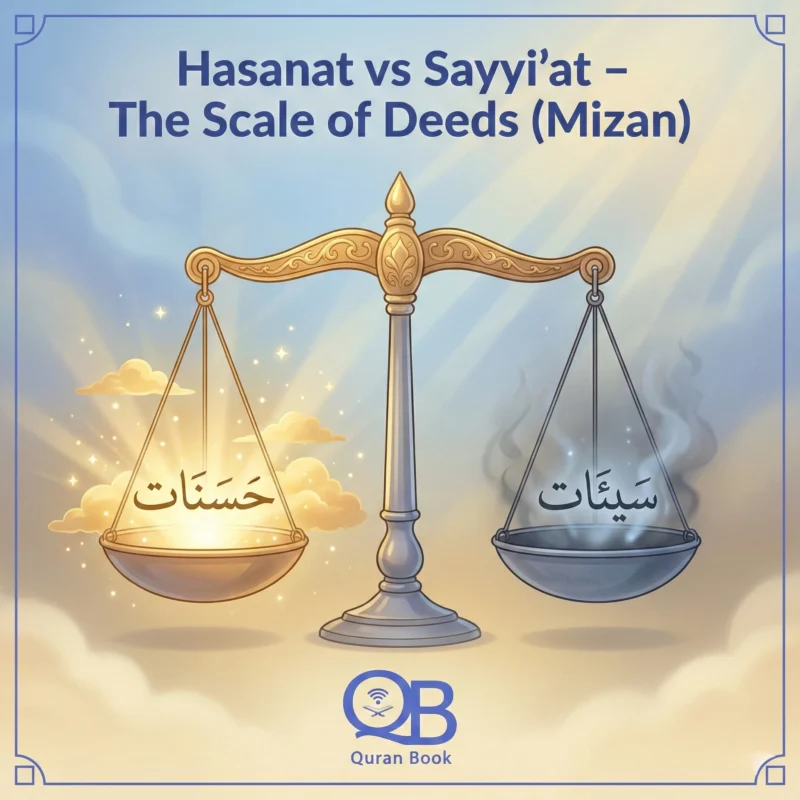
In Islam, every action is weighed on a divine scale. Hasanat (good deeds) are placed on one side, and sayyi’at (bad deeds) on the other. The mercy of Allah ensures that good deeds are multiplied from 10 to 700 times or more, while bad deeds are recorded as only one. This asymmetry is one of the clearest signs of Allah’s boundless compassion.
| Feature | Hasanat (Good Deeds) | Sayyi’at (Bad Deeds) |
|---|---|---|
| Minimum Multiplier | 10× reward | 1× only |
| Maximum Multiplier | 700× or unlimited | 1× only |
| Intention Only (not acted upon) | 1 hasanah recorded | Nothing recorded |
| Bad intention (not acted upon) | — | Not recorded (or 1 hasanah for resisting) |
| Erasing power | Good deeds erase bad deeds | Cannot erase good deeds |
The Prophet ﷺ also said: “Allah has written down the good deeds and the bad deeds…” — Sahih al-Bukhari 6491. This hadith details that even intending a good deed without performing it earns reward, while intending a bad deed and refraining from it is itself recorded as a hasanah. The entire system is tilted in the believer’s favor.
7 Best Good Deeds in Islam That Multiply Your Hasanat
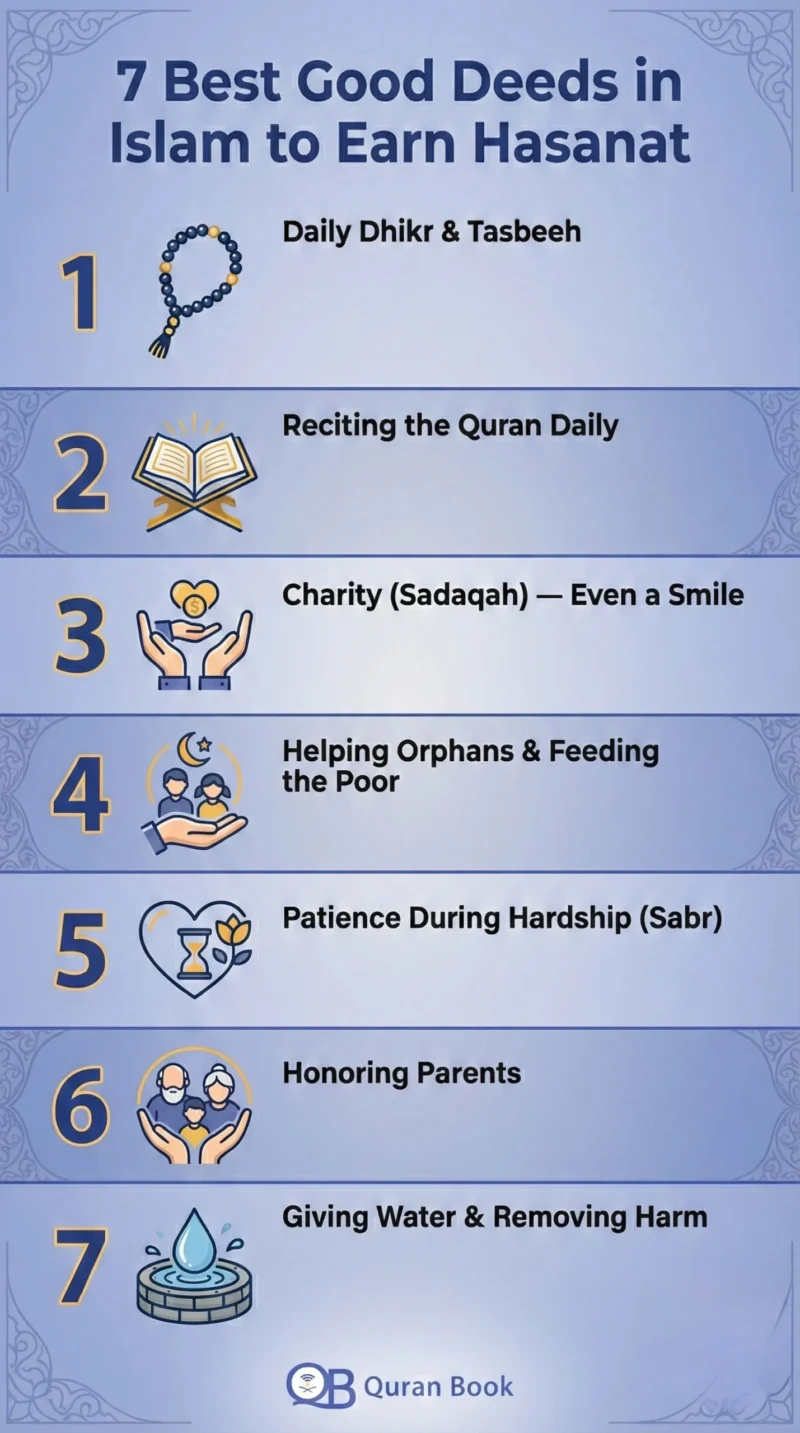
The best good deeds in Islam are those that are consistent, sincere, and aligned with the Quran and Sunnah. From daily dhikr that takes 30 seconds to acts of charity and kindness, here are 7 powerful hasanat-earning deeds backed by authentic sources. Building these into your routine is one of the smartest spiritual investments you can make.
Daily Dhikr and Tasbeeh
Dhikr is one of the easiest and most rewarding deeds. The Prophet ﷺ said that saying “SubhanAllah wa bihamdihi” 100 times causes sins to be forgiven even if they are like the foam of the sea (Sahih al-Bukhari 6405). He also taught that saying “La ilaha ill-Allah wahdahu la sharika lah…” 100 times earns 100 hasanat and erases 100 sayyi’at (Sahih al-Bukhari 3293). These phrases take mere minutes but carry immense weight on the scale.
Reciting the Quran Daily
Every single letter of the Quran earns a minimum of 10 hasanat (Tirmidhi 2910). Even those who struggle with recitation receive double the reward — one for the effort and one for the recitation itself (Sahih al-Bukhari 4937). This means beginners are not at a disadvantage; they are actually earning more per verse than fluent readers.
Charity (Sadaqah) — Even a Smile
The reward for charity in Islam is extraordinary. The Prophet ﷺ said: “Every act of kindness is sadaqah.” — Sahih al-Bukhari 6021. This includes financial charity, but also a warm smile, a helpful word, and guiding someone who is lost. In Ramadan, the reward for charity is multiplied even further. No amount is too small in the eyes of Allah.
Helping Orphans and Feeding the Poor
The reward for helping orphans in Islam is Paradise itself. The Prophet ﷺ said: “I and the one who sponsors an orphan will be like this in Paradise” — and he held his index and middle fingers together (Sahih al-Bukhari 5304). Similarly, the reward for feeding the poor in Islam is mentioned repeatedly in the Quran as a defining trait of the righteous.
Patience During Hardship
The reward for patience in Islam is unlimited. Allah says: “Indeed, the patient will be given their reward without account.” — Quran 39:10. Unlike other deeds that are multiplied up to 700 times, patience has no cap on its reward. Every difficulty endured with faith and steadfastness fills the believer’s record with uncounted hasanat.
Honoring and Caring for Parents
Allah directly links the worship of Him to the treatment of parents: “And your Lord has decreed that you not worship except Him, and to parents, good treatment.” — Quran 17:23. Caring for aging parents, speaking kindly to them, and serving them are among the most beloved deeds to Allah and among the highest rewards in Islam.
Giving Water and Removing Harm
The Prophet ﷺ told the story of a man who was forgiven all his sins because he gave water to a thirsty dog (Sahih al-Bukhari 2363). The reward for giving water in Islam is immense. Similarly, removing an obstacle from a road is recorded as a hasanah. These small, everyday acts show that hasanat in Islam are woven into the fabric of daily life.
Teach your children these deeds → Islamic Courses for Kids
Quran Verses About Good Deeds Every Muslim Should Know
The Quran repeatedly emphasizes that good deeds in Islam, paired with sincere faith, are the path to Allah’s pleasure and Paradise. Here are key Quran verses about good deeds that serve as daily reminders for every Muslim striving to increase their hasanat.
This verse presents the parable of charity: the likeness of those who spend in Allah’s way is like a grain that grows into seven ears, each bearing one hundred grains. Allah multiplies reward for whomever He wills. This is the foundation of the concept that hasanat can be multiplied up to 700 times or more.
Allah promises that whoever does righteousness, whether male or female, while being a believer, will be granted a good and fulfilling life. This verse connects good deeds not only to the Hereafter but also to well-being in this world.
Allah assures believers that He will never allow the reward of anyone who does good to be lost. This is a powerful motivator: no hasanah, no matter how small, is ever wasted.
This verse teaches that good deeds erase bad deeds. It is a direct reminder that consistent hasanat have a cleansing effect on one’s record.
Allah created life and death to test which of us is best in deed. This verse frames our entire existence as a test of the quality and sincerity of our actions, not merely the quantity.
Understand these verses deeply → Online Quran Tafseer Course
How Quran Recitation Earns You Unlimited Hasanat
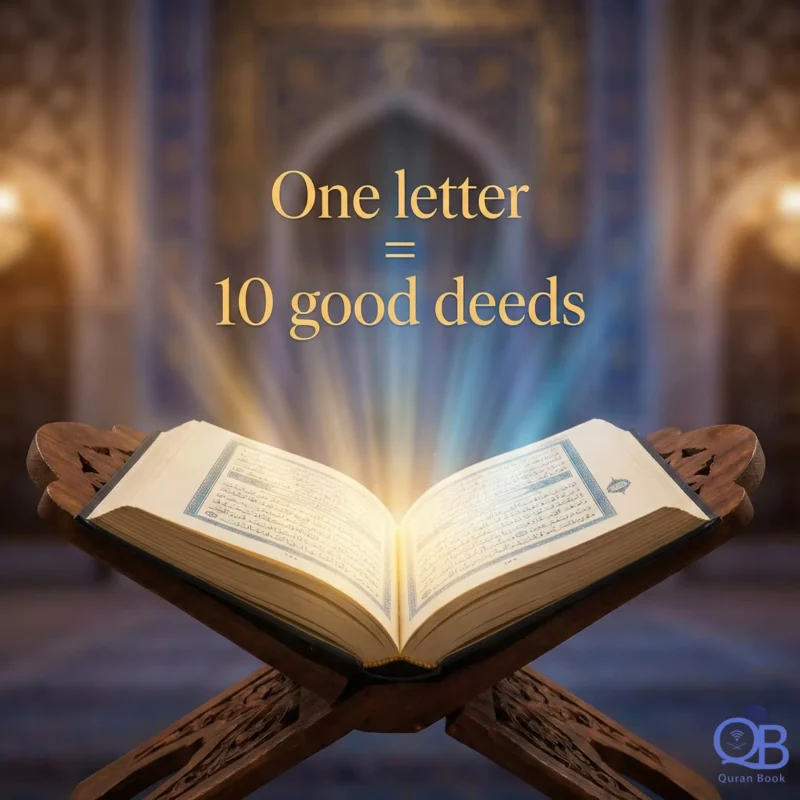
Reading the Quran is one of the highest-reward hasanat in Islam. The Prophet ﷺ told us that each letter earns a minimum of 10 hasanat — and for those who struggle with recitation, the reward is doubled. This is why learning to read the Quran correctly is one of the greatest investments a Muslim can make in this life and the next.
The reward system of Quran recitation is breathtakingly generous. According to the hadith in Sunan al-Tirmidhi 2910, every single letter — not word, but letter — of the Quran earns at least 10 hasanat. The Prophet ﷺ clarified this by saying that “Alif-Lam-Meem” is not one letter but three, meaning even the shortest verse carries dozens of rewards. For those who find recitation difficult due to unfamiliarity with Arabic, the reward is doubled: one reward for the recitation and another for the effort and struggle (Sahih al-Bukhari 4937). This means that beginners and non-Arabic speakers are in a uniquely blessed position.
Furthermore, the Prophet ﷺ taught that the most beloved deeds to Allah are the most consistent ones, even if they are small (Sahih al-Bukhari 6464). A Muslim who recites just half a page daily with proper Tajweed is building a powerful, compounding hasanat habit. Learning Tajweed does not just improve pronunciation — it deepens spiritual connection, increases khushoo (focus), and ensures that each letter is articulated in the way that maximizes reward. Today, modern online learning through platforms like Zoom-based live classes has made this accessible to Muslims worldwide, especially non-Arabic speakers in the West who previously had no access to qualified teachers.
Practice Quran Reading with Tajweed → Quran Book Academy Telegram Channel · Start from scratch → Noorani Qaida Course
The Academy Method — How Quran Book Academy Builds Your Hasanat Habit

At Quran Book Academy, we believe that earning hasanat through Quran learning shouldn’t feel overwhelming. Our teaching method is built on educational psychology — breaking Islamic education into small, manageable “chunks” that fit into your real life, whether you’re a busy parent, a working professional, or a curious beginner just starting their journey.
Our Tech Stack for Seamless Learning
We use Zoom Live Sessions for one-on-one and group classes with certified teachers who adapt to your pace and level. Our Custom LMS (Learning Management System) lets you track your progress lesson by lesson — from Tajweed milestones and memorization goals to reading accuracy scores. Parents of young learners receive regular Gmail Progress Reports so they always know exactly where their child stands.
Psychological “Chunking” — Learn Without Burnout
Based on cognitive load theory, we break Quran learning into digestible daily portions of 15 to 30 minutes. This approach is ideal for non-Arabic speakers who fear being overwhelmed by a new script and language. The result is a hasanat habit loop: small daily recitation leads to tangible progress, which leads to spiritual reward, which fuels motivation to continue. Each day, you are not just learning — you are earning.
Islamic Courses for Kids and Adults
Our kids’ courses include Noorani Qaida, Quran Reading with Tajweed, and Quran Memorization (Hifz). For adults, we offer Tajweed, Tafseer, and Arabic Grammar courses. All courses follow the same chunk-based methodology designed to make good deeds in Islam a daily, joyful habit rather than a burden.
Explore all courses → Islamic Courses for Kids · Adult learning paths → Islamic Courses for Adults
FAQ — Common Questions About Hasanat and Good Deeds in Islam
Q1: Is hasanat a good deed?
Yes. Hasanat is the Arabic plural of hasanah, which means “good deed” or “reward.” In Islam, every righteous act — from prayer and fasting to smiling at someone — counts as a hasanah that is recorded by Allah. The more sincere the intention, the greater the reward.
Q2: What’s the word for good deed in Islam?
The most common Arabic word for good deed in Islam is “hasanah” (singular) or “hasanat” (plural). Other related terms include “thawab” (reward), “ajr” (divine compensation), and “‘amal salih” (righteous deed). All of these terms appear frequently in the Quran and Hadith.
Q3: What counts as a good deed in Islam?
Anything done with sincere intention for Allah’s sake that aligns with Islamic teachings counts as a good deed. This includes the five daily prayers, charity, Quran recitation, kindness to parents, helping the needy, and even removing an obstacle from a road. The scope of hasanat in Islam is remarkably wide.
Q4: How to get dua 100% accepted?
While only Allah decides acceptance, scholars recommend making dua during the last third of the night, after obligatory prayers, while fasting, in sujood (prostration), and on the Day of Arafah. Sincerity, repentance, and praising Allah before the dua all increase its likelihood of acceptance.
Q5: Which dhikr 1,000 times?
Many scholars recommend “SubhanAllah” or “Astaghfirullah” repeated in large quantities. However, the Sunnah emphasizes quality and consistency over a specific count. The Prophet ﷺ specifically praised “SubhanAllah wa bihamdihi, SubhanAllah al-Azeem” as particularly beloved to Allah (Sahih al-Bukhari 6406).
Q6: What is the opposite of hasanat in Islam?
The opposite of hasanat in Islam is “sayyi’at” (سيئات), meaning bad deeds or sins. While hasanat are multiplied 10 to 700 times, sayyi’at are only recorded as one. This imbalance is a reflection of Allah’s immense mercy toward His servants.
Q7: What is the highest reward in Islam?
The highest reward in Islam is seeing the Face of Allah in Paradise (Al-Jannah), granted to those of the highest rank. In terms of deeds, scholars cite the five daily prayers, Hajj Mabrur, and consistent Quran recitation as carrying the greatest rewards.

Start Your Hasanat Journey Today
Every letter of the Quran you learn is a hasanah. Every hasanah is multiplied ten times. And the journey begins with one step.
At Quran Book Academy, we’ve helped thousands of non-Arabic speaking Muslims in the USA, Canada, UK, and Australia learn to read the Quran beautifully — from zero to confident recitation. Our live Zoom classes, expert certified teachers, and progress-tracking LMS make it simple, structured, and spiritually rewarding. You don’t need to be a scholar. You just need to start.
Book Your Free Trial Lesson NowReferences
| Type | Source | Link |
|---|---|---|
| Hadith | Sahih al-Bukhari 6405 | sunnah.com |
| Hadith | Sahih al-Bukhari 3293 | sunnah.com |
| Hadith | Sunan al-Tirmidhi 2910 | sunnah.com |
| Hadith | Sahih al-Bukhari 4937 | sunnah.com |
| Hadith | Sahih al-Bukhari 6021 | sunnah.com |
| Hadith | Sahih al-Bukhari 5304 | sunnah.com |
| Hadith | Sahih al-Bukhari 2363 | sunnah.com |
| Hadith | Sahih al-Bukhari 6464 | sunnah.com |
| Hadith | Sahih al-Bukhari 6491 | sunnah.com |
| Quran | Surah Al-An’am 6:160 | quran.com |
| Quran | Surah Az-Zumar 39:10 | quran.com |
| Quran | Surah Al-Isra 17:23 | quran.com |
| Quran | Surah Al-Baqarah 2:261 | quran.com |
| Quran | Surah An-Nahl 16:97 | quran.com |
| Quran | Surah Al-Kahf 18:30 | quran.com |
| Quran | Surah Hud 11:114 | quran.com |
| Quran | Surah Al-Mulk 67:2 | quran.com |

Leave a Reply