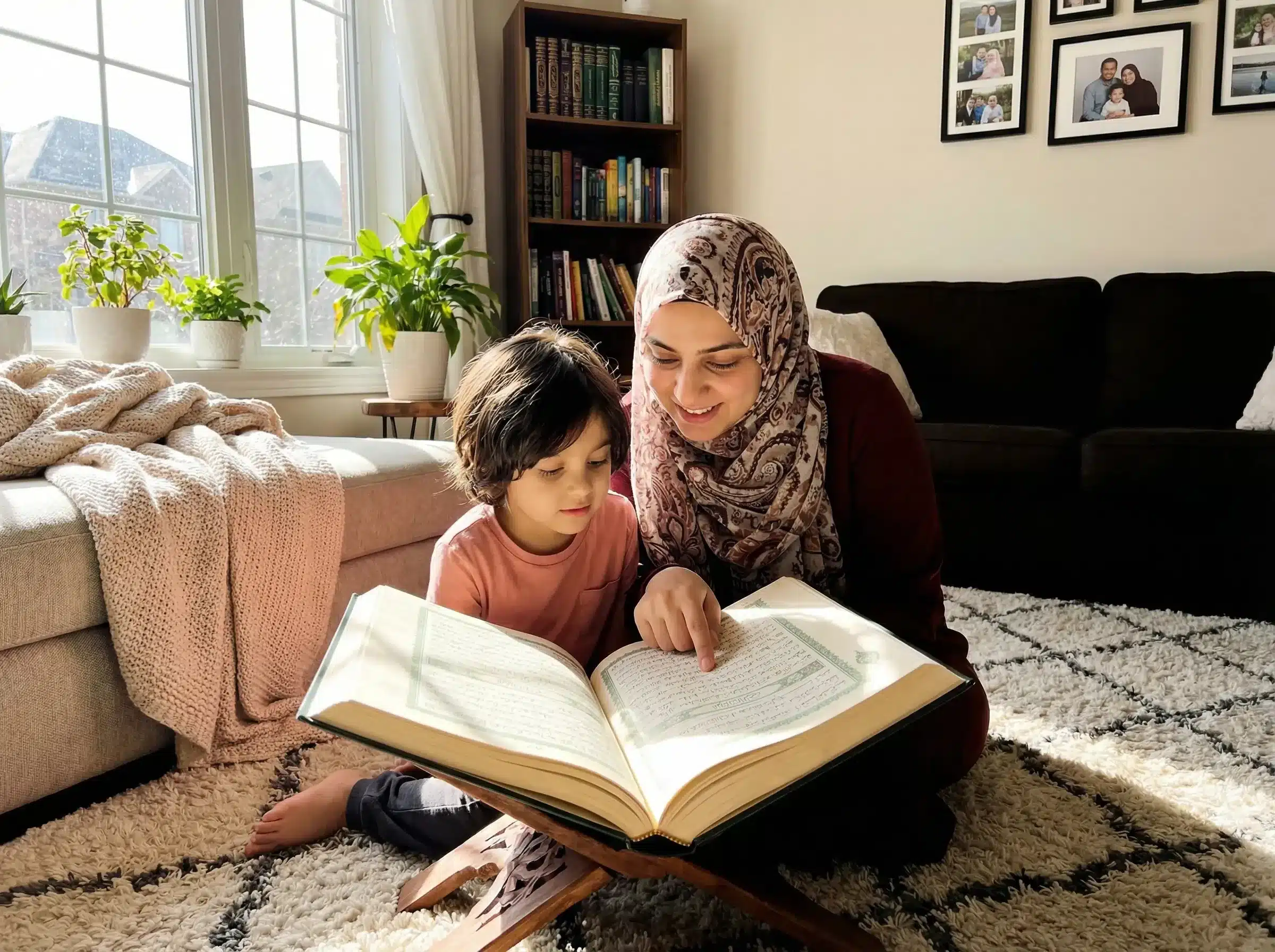
Every Muslim parent dreams of hearing their child recite the Quran beautifully. But here’s what most don’t realize: tajweed for kids isn’t just about rules and repetition—it’s about tapping into how young minds actually learn.
If you’re looking to help your child learn Quran online, understanding the science behind effective tajweed instruction is the first step.
What Is Tajweed, and Why Start Young?
Tajweed is the art of pronouncing each Quranic letter correctly, giving every sound its rightful place. When we talk about tajweed for kids, we’re discussing something far deeper than pronunciation drills. For a complete overview, see our Quran recitation rules guide.
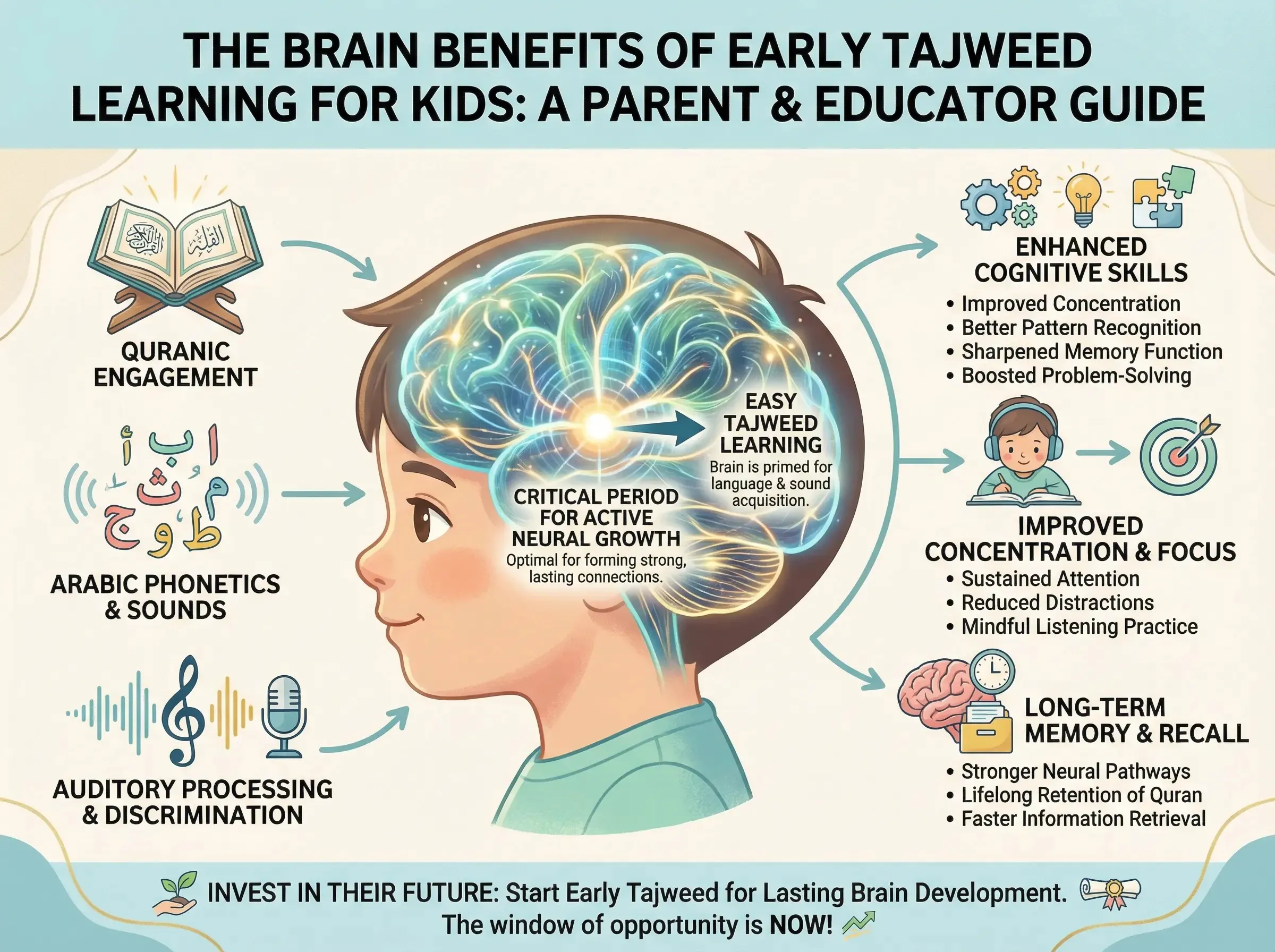
🧒 Children’s brains are uniquely wired for language acquisition. Between ages 4-10, they’re in what neuroscientists call the “critical period”—a golden window where mimicking sounds comes naturally.
This is why tajweed beginners who start young often develop near-perfect pronunciation. Their neural pathways are still forming, making it easier to internalize the subtle sounds of Arabic.
Starting early also builds a lifelong spiritual connection with the Quran. When children learn to recite beautifully, they feel proud, confident, and emotionally bonded to their faith.
Why Tajweed for Kids Is Essential (Not Optional)
Many parents ask: is tajweed obligatory? The answer carries both spiritual and practical weight.
🕌 The Religious Significance
Scholars agree that learning enough tajweed to avoid distorting the Quran’s meaning is obligatory (fard). Mispronouncing certain letters can actually change the meaning of sacred words.
However, mastering every advanced rule falls under recommended (mustahabb) for most Muslims. For children, the goal is building a strong foundation—not perfection overnight.
🧠 The Linguistic Benefits
Beyond spiritual rewards, tajweed for kids offers remarkable cognitive advantages. Many families combine tajweed with Quran memorization for kids to maximize these benefits:
Enhanced Phonetic Awareness
Helps with learning other languages
Improved Memory
Through repetitive, melodic practice
Better Listening Skills
Training the ear to distinguish subtle sounds
Increased Confidence
In public recitation and prayer
Think of tajweed as exercise for the brain. Every lesson strengthens neural connections that serve children throughout their lives.
How to Learn Tajweed Easily: The Psychological Secret
Here’s the truth most traditional classes miss: how to learn tajweed easily depends entirely on how it’s taught.
Children don’t learn like adults. Their brains respond to experience, emotion, and engagement—not lectures and memorization.
The Multisensory Approach
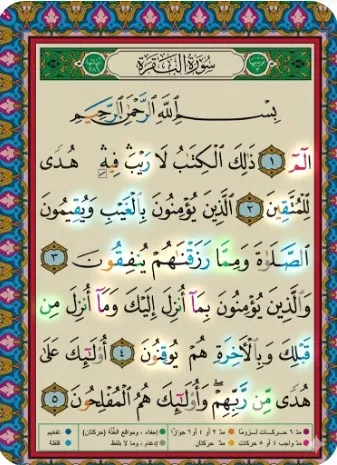
The most effective tajweed course for kids uses what psychologists call multisensory learning. This means engaging multiple senses simultaneously:
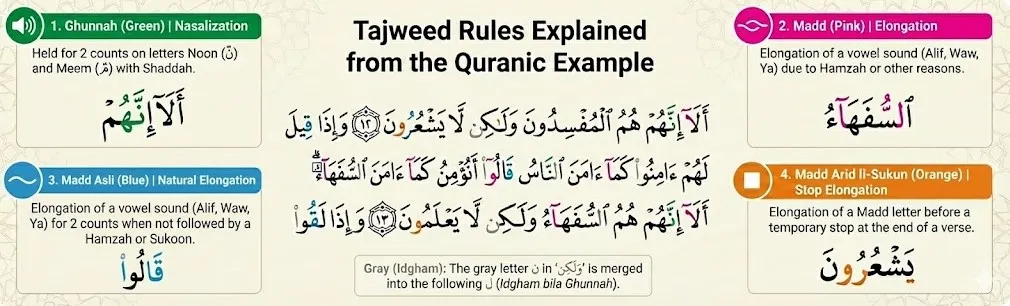
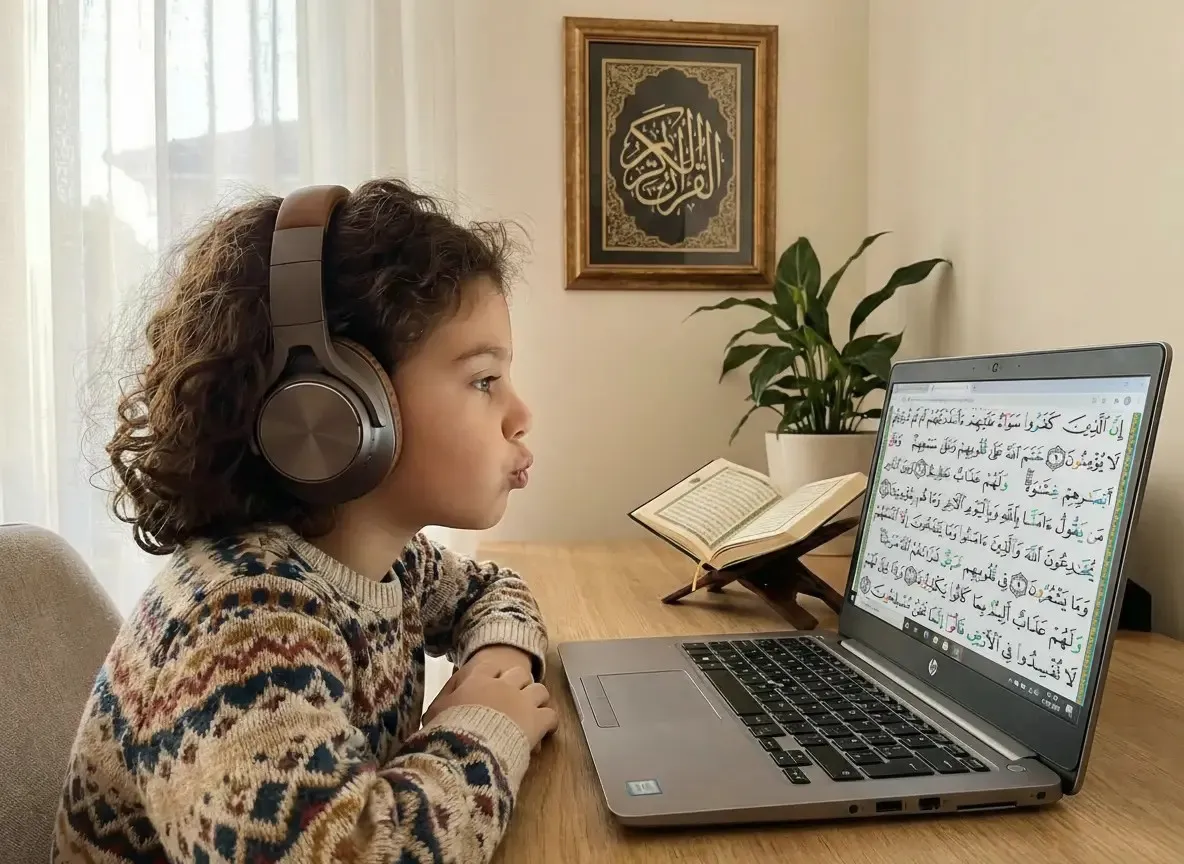
Positive Reinforcement and Chunking
Two more psychological principles make tajweed for kids dramatically more effective:
✨ Positive Reinforcement
Celebrate every small win. When a child correctly pronounces a difficult letter, acknowledge it immediately. This builds confidence and creates positive associations with learning.
🧩 Chunking
Break rules into tiny, digestible pieces. Instead of overwhelming children with 15 rules at once, introduce one rule per week. Master it. Then move on.
This approach answers the question of how to learn tajweed easily—by respecting how young minds actually absorb information.
Basic Tajweed Rules for Kids Made Simple
Let’s explore some basic tajweed rules explained in language children can actually understand.
Noon Sakinah and Tanween
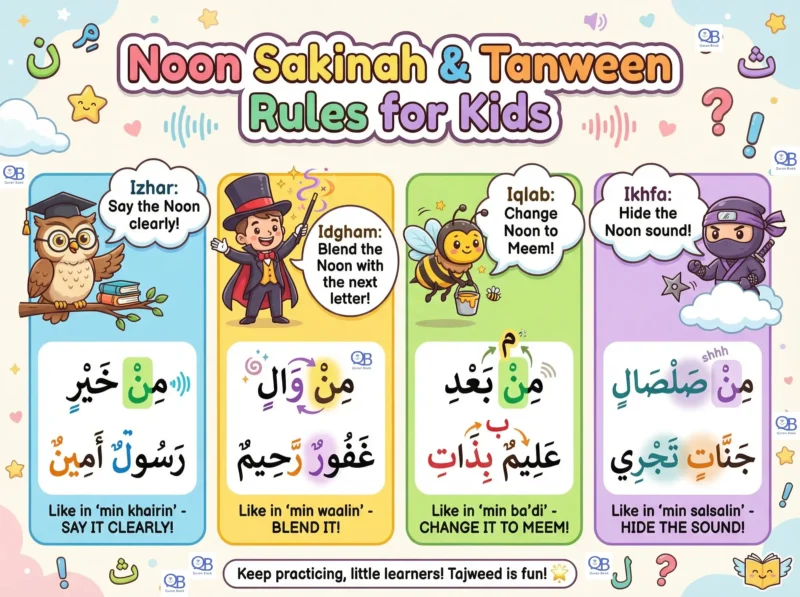
When the letter “noon” is quiet (has no vowel), it behaves differently depending on what comes next.
👶 Child-friendly explanation:
“Think of noon as a shy letter. Sometimes it hides (Ikhfa), sometimes it changes its clothes to match its friend (Idgham), and sometimes it speaks clearly and proudly (Izhar)!”
Madd (Stretching Letters)

Some letters need to be stretched longer—like holding a musical note.
👶 Child-friendly explanation:
“Imagine you’re a singer holding a beautiful note. When you see these special letters (Alif, Waw, Ya), stretch your voice like you’re singing!”
The stretch can be 2 beats, 4 beats, or even 6 beats depending on what follows.
Qalqalah (The Bouncing Sound)
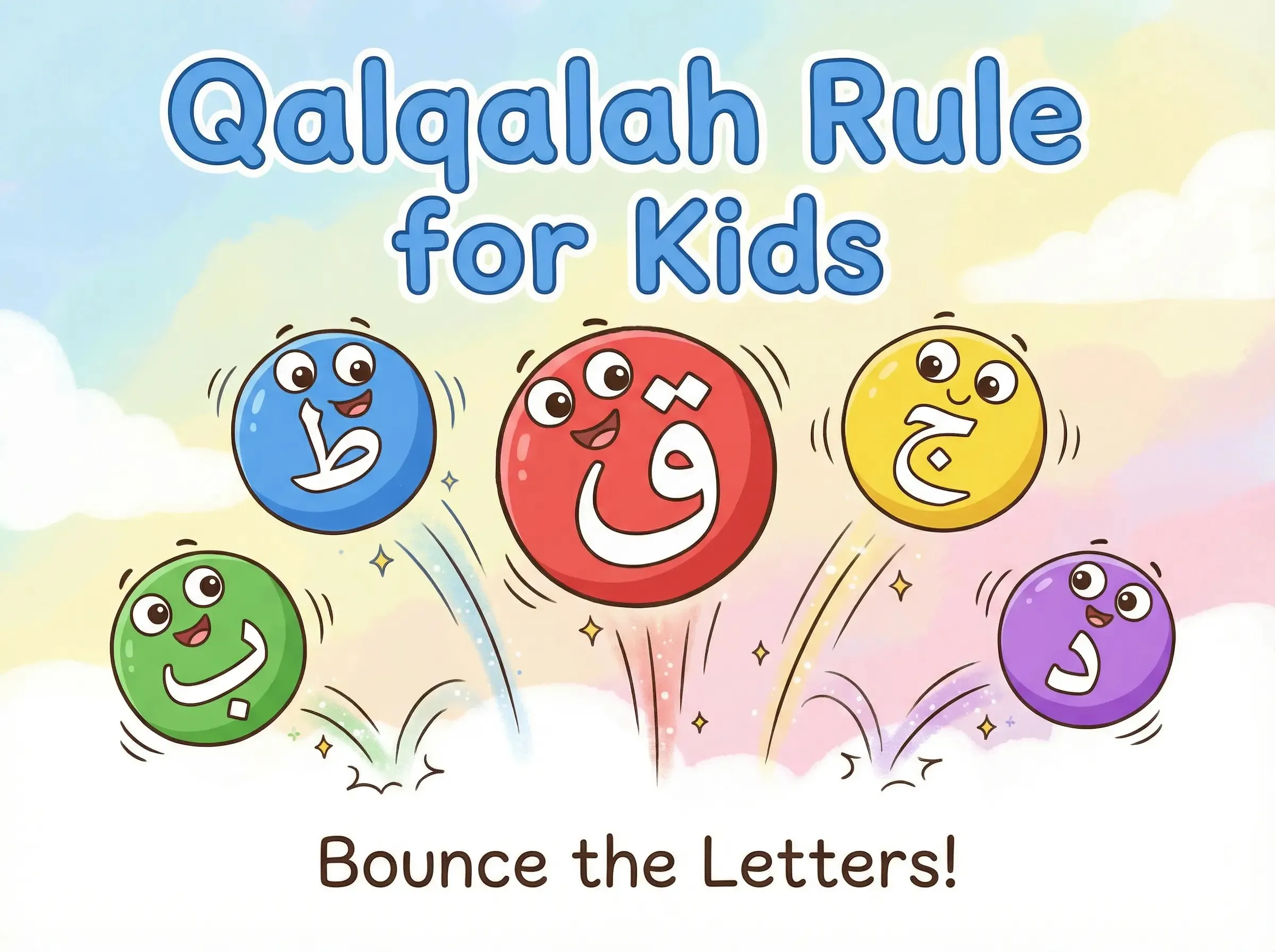
Five letters (ق ط ب ج د) make a bouncing sound when they’re quiet.
👶 Child-friendly explanation:
“These five letters are like bouncy balls! When they stop at the end, they bounce a little. Can you feel the bounce in your throat?”
These tajweed rules for kids in English become memorable when explained through imagery and sensation rather than technical definitions.
Why Join an Online Tajweed Course for Kids?
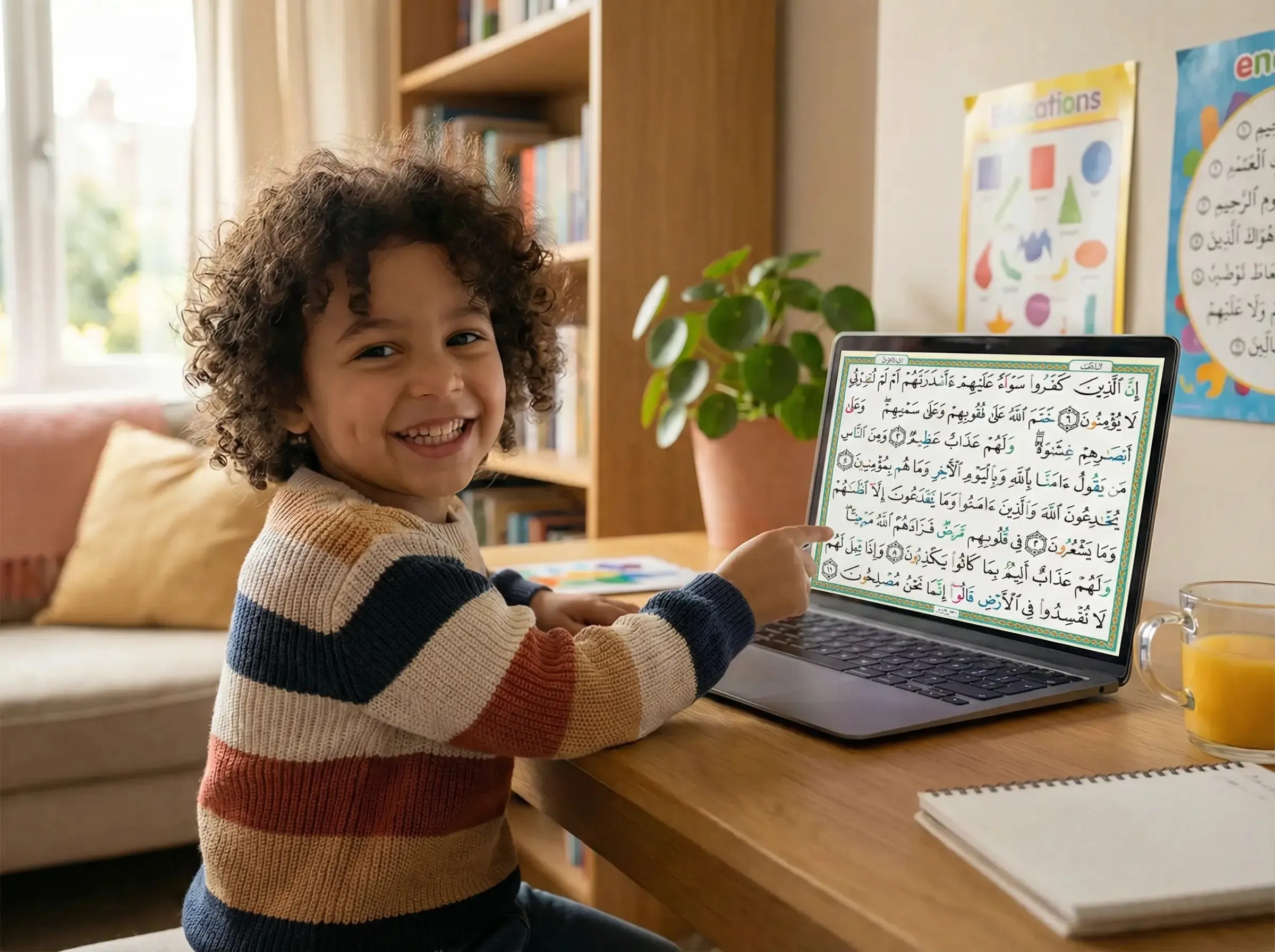
Learning tajweed at home is possible—but most parents find themselves asking: Am I teaching this correctly?
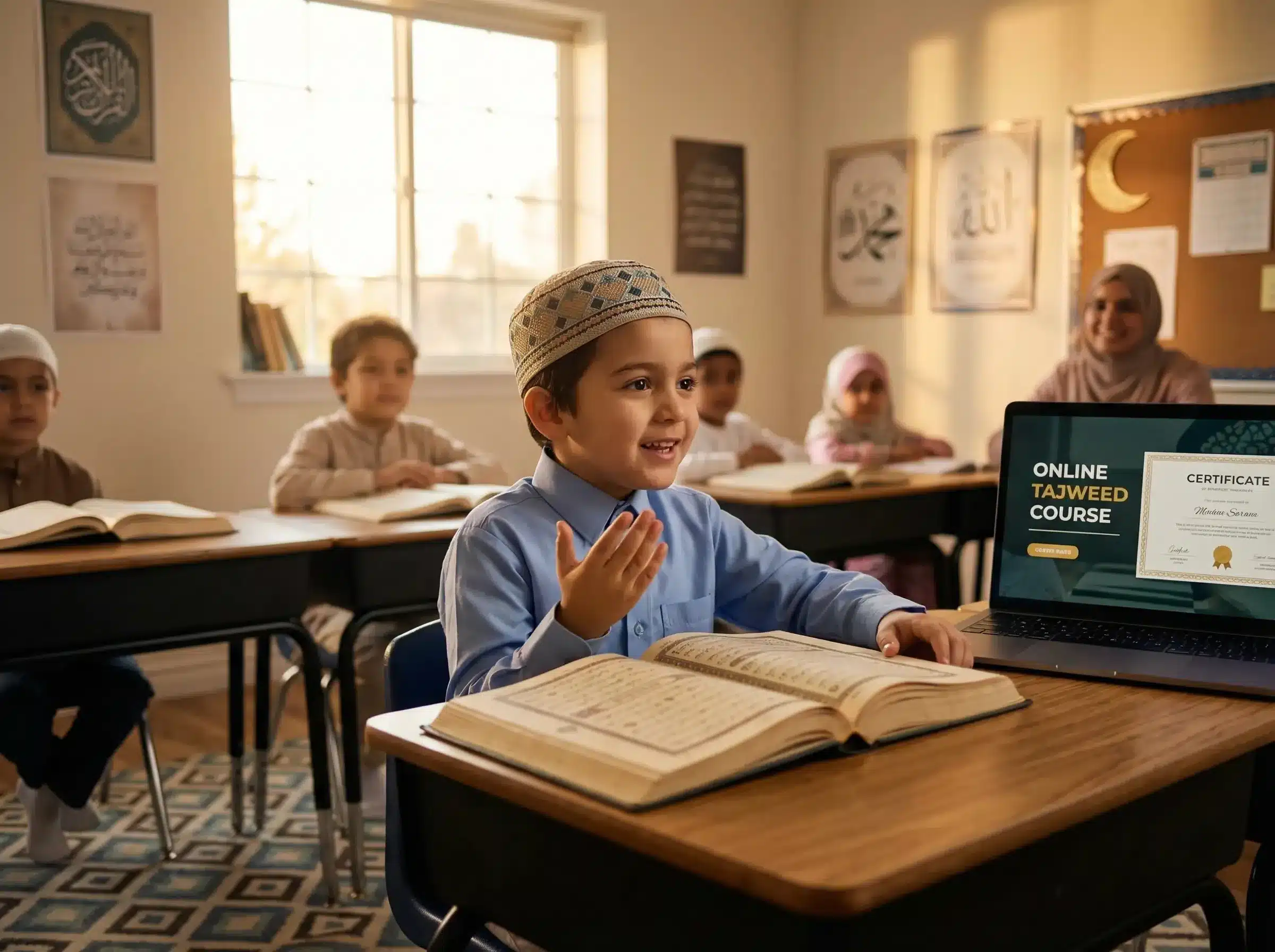
This is where a structured online tajweed course for kids makes all the difference.
Benefits of Professional Online Instruction
1. Expert Teachers Who Specialize in Children
At Quran Book Online, our qualified Quran teachers understand child psychology. They know when to push, when to pause, and how to keep young learners engaged.
2. One-on-One Attention
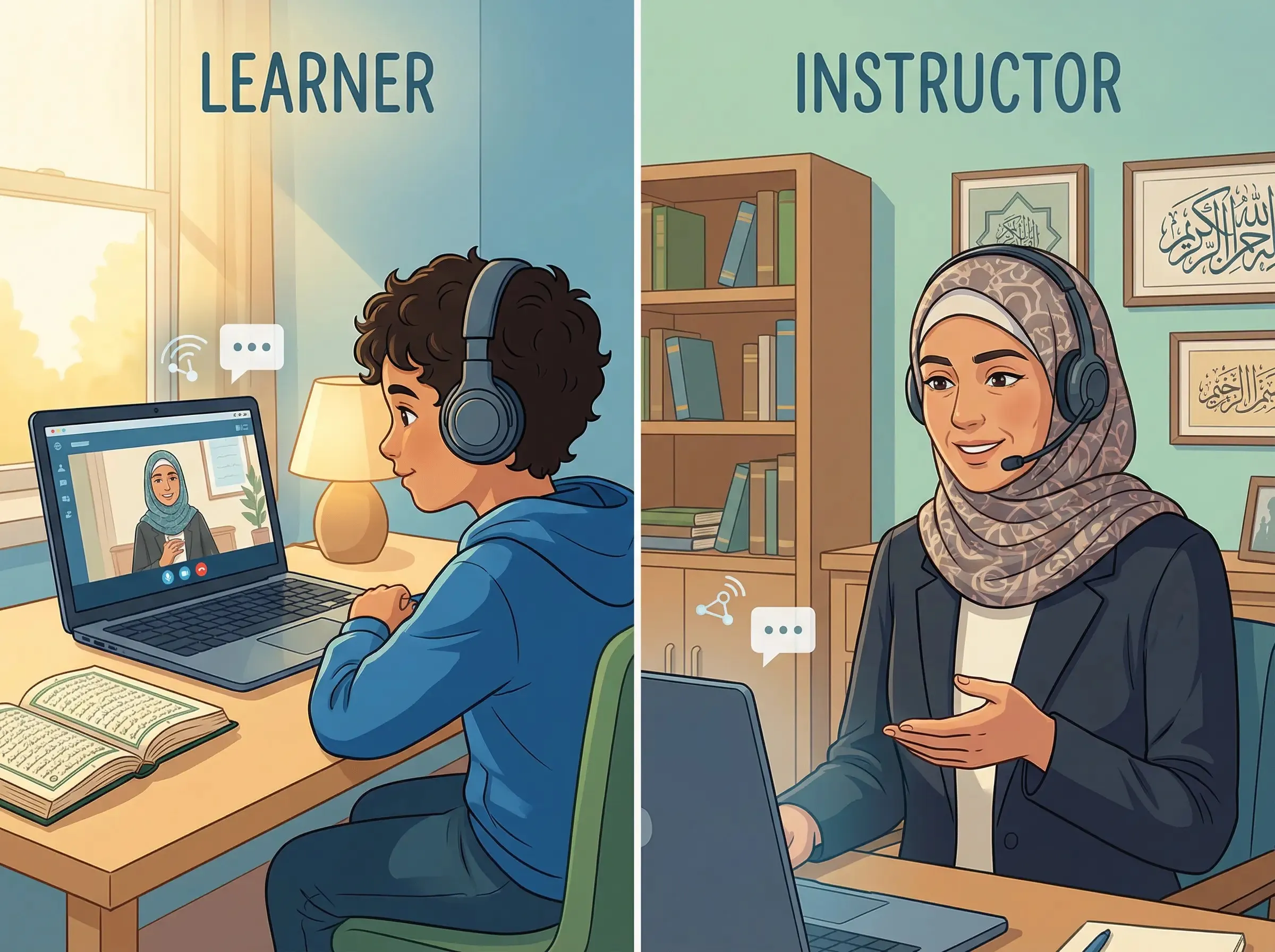
Unlike crowded classes, one-on-one Quran classes allow teachers to:
- Identify each child’s specific struggles
- Customize the pace of learning
- Provide immediate, personalized feedback
- Build a genuine relationship with the student
3. Flexible Scheduling
Busy families need flexibility. Our family Quran programs offer online sessions that mean:
- No commute time
- Learning from the comfort of home
- Scheduling around school and activities
- Consistent progress despite busy lives
4. Interactive, Engaging Curriculum
The best tajweed course for kids uses:
- Digital whiteboards with color-coded rules
- Screen-sharing for real-time correction
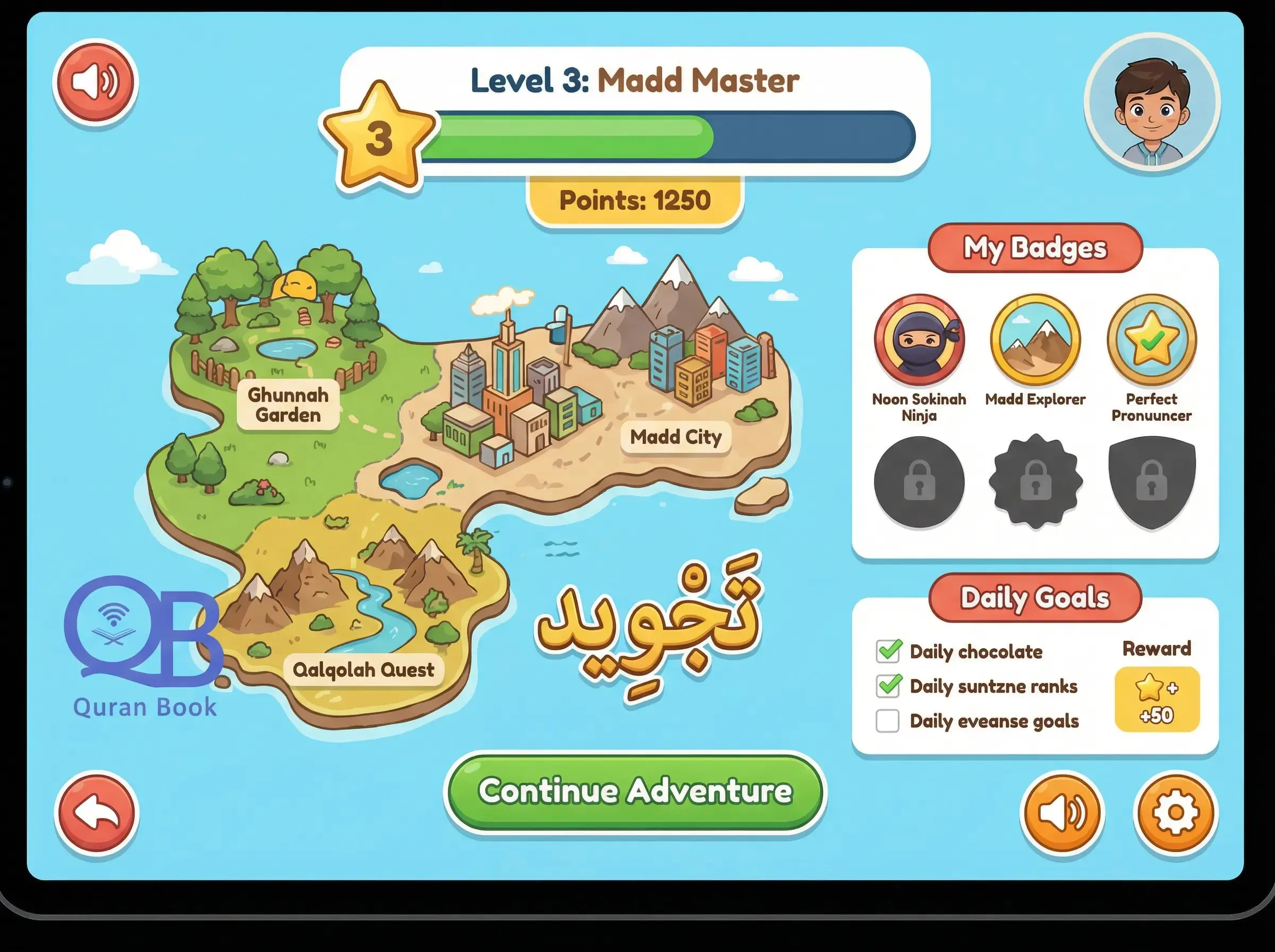
- Gamified progress tracking
- Recorded lessons for review
5. Safe, Comfortable Environment
Children learn best when they feel safe. Learning at home, with a trusted teacher, removes anxiety and encourages participation.
Why Quran Book Online?
Our program is built specifically for tajweed beginners and young learners. We combine:
- ✅ Certified teachers with expertise in child education
- ✅ Psychology-based methods proven to accelerate learning
- ✅ Flexible packages for every family’s budget
- ✅ Free trial lessons so you can experience the difference
Tajweed Questions for Kids: FAQ
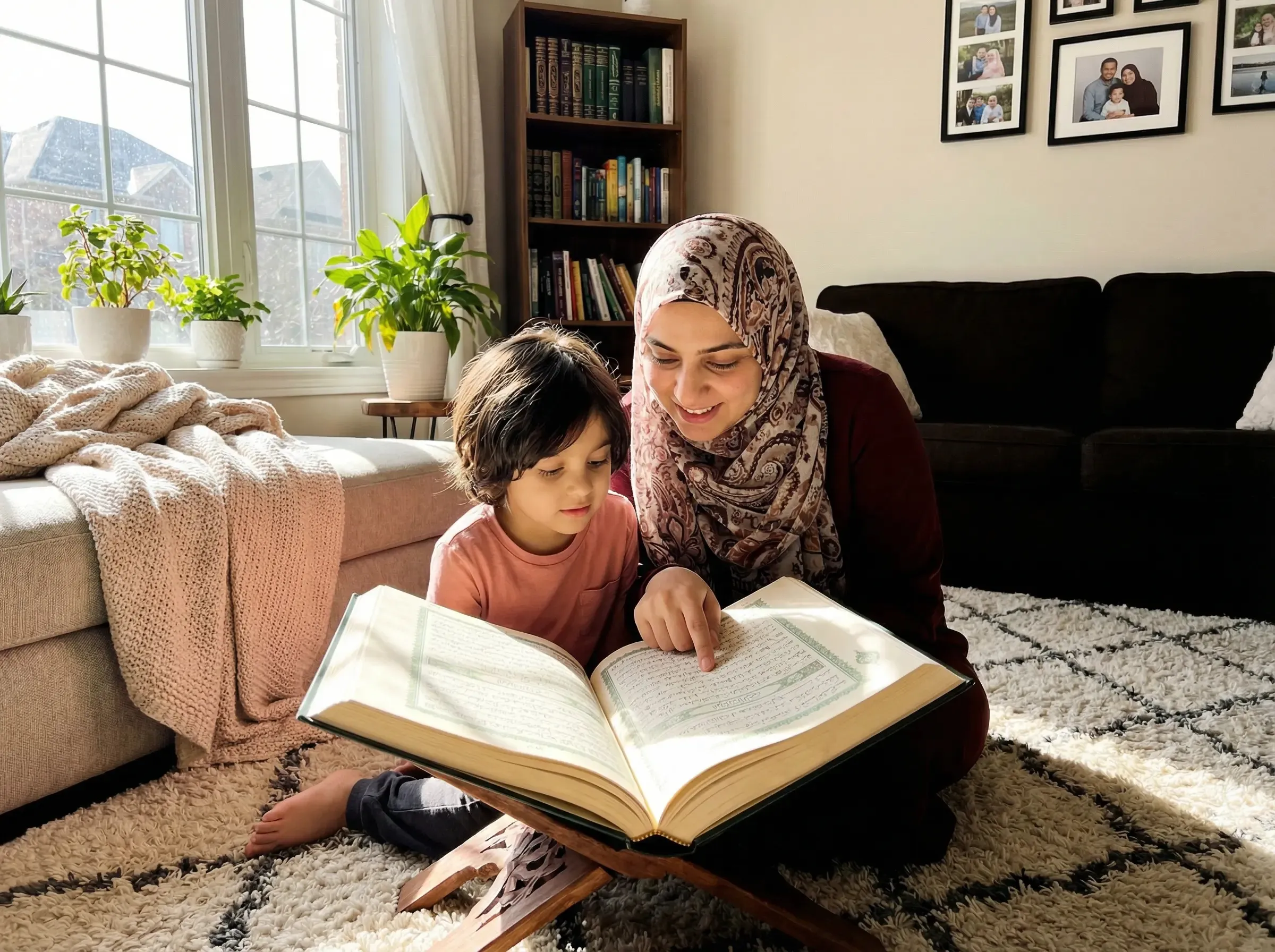
❓ How Can I Teach My Child Tajweed at Home?
Start with the basics:
- Listen together to beautiful Quran recitations daily
- Use color-coded Tajweed Qurans (available online and in print)
- Break learning into small chunks—one rule at a time
- Celebrate progress with genuine praise and small rewards
- Be consistent—short daily sessions beat long weekly ones
However, for proper pronunciation, pairing home practice with professional instruction ensures your child develops correct habits from the start.
❓ What Is the Best Age to Start a Tajweed Course for Kids?
The ideal window is between ages 5-10.
At this age, children:
- Have developed enough focus for structured learning
- Are still in their language acquisition “critical period”
- Can mimic sounds with remarkable accuracy
- Haven’t yet developed the self-consciousness that older children feel
That said, it’s never too late. Children of any age benefit from proper tajweed instruction. Many families start with our Noorani Qaida course to build foundational skills.
❓ Is There a Tajweed Easy Way for Non-Arabic Speakers?
Absolutely. In fact, tajweed for kids whose native language isn’t Arabic follows a well-established path:
- Start with Arabic letters for beginners—focus on sounds, not rules
- Use transliteration initially to bridge understanding
- Focus on listening more than reading at first
- Practice daily, even if just for 10-15 minutes
- Work with a teacher who understands non-Arabic speakers’ challenges
The tajweed rules for kids in English explanations we use at Quran Book Online are specifically designed for families who don’t speak Arabic at home.
Start Your Child’s Tajweed Journey Today
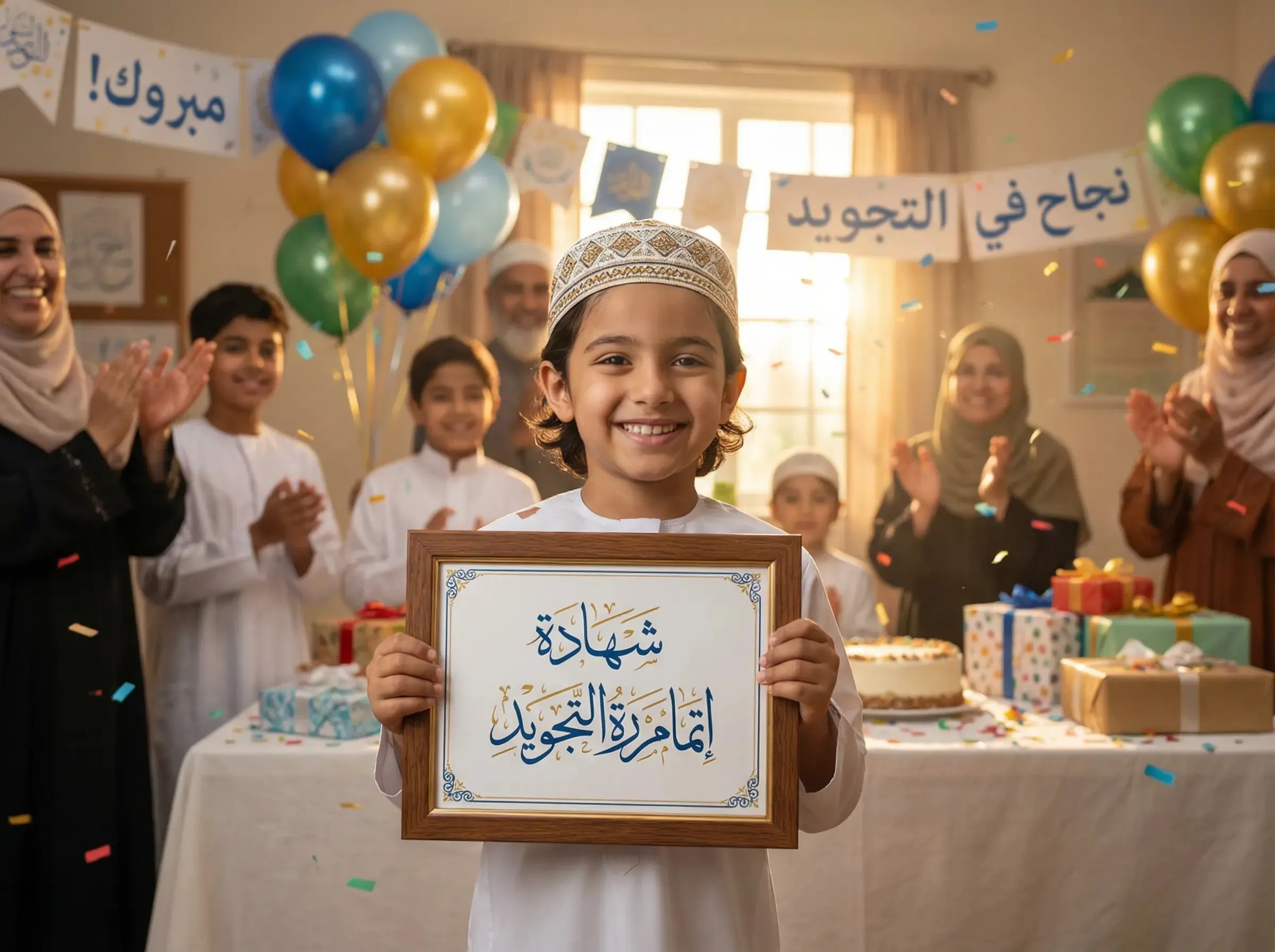
Teaching tajweed for kids isn’t about forcing memorization. It’s about creating joyful experiences that make beautiful recitation feel natural.
When you combine:
…you unlock your child’s natural potential to recite the Quran beautifully.
This is exactly what we do at Quran Book Online.
Our online tajweed course for kids uses proven psychological methods, delivered by caring teachers who specialize in young learners.
Questions? Contact our team anytime.
We’re here to help your family connect with the Quran—one beautiful sound at a time.