Why Islamic Studies is Crucial for Kids
In an era where Muslim families in the USA, UK, Canada, and across Europe navigate the delicate balance between preserving faith and embracing modern life, grounding children in Islamic knowledge has never been more essential. The early years of a child’s life represent a golden window for instilling core values, spiritual awareness, and a strong connection to their religious identity.
Yet many parents find themselves facing a significant challenge: how to provide quality Islamic education when local options are limited, schedules are demanding, and traditional madrasah timings conflict with school and extracurricular activities.
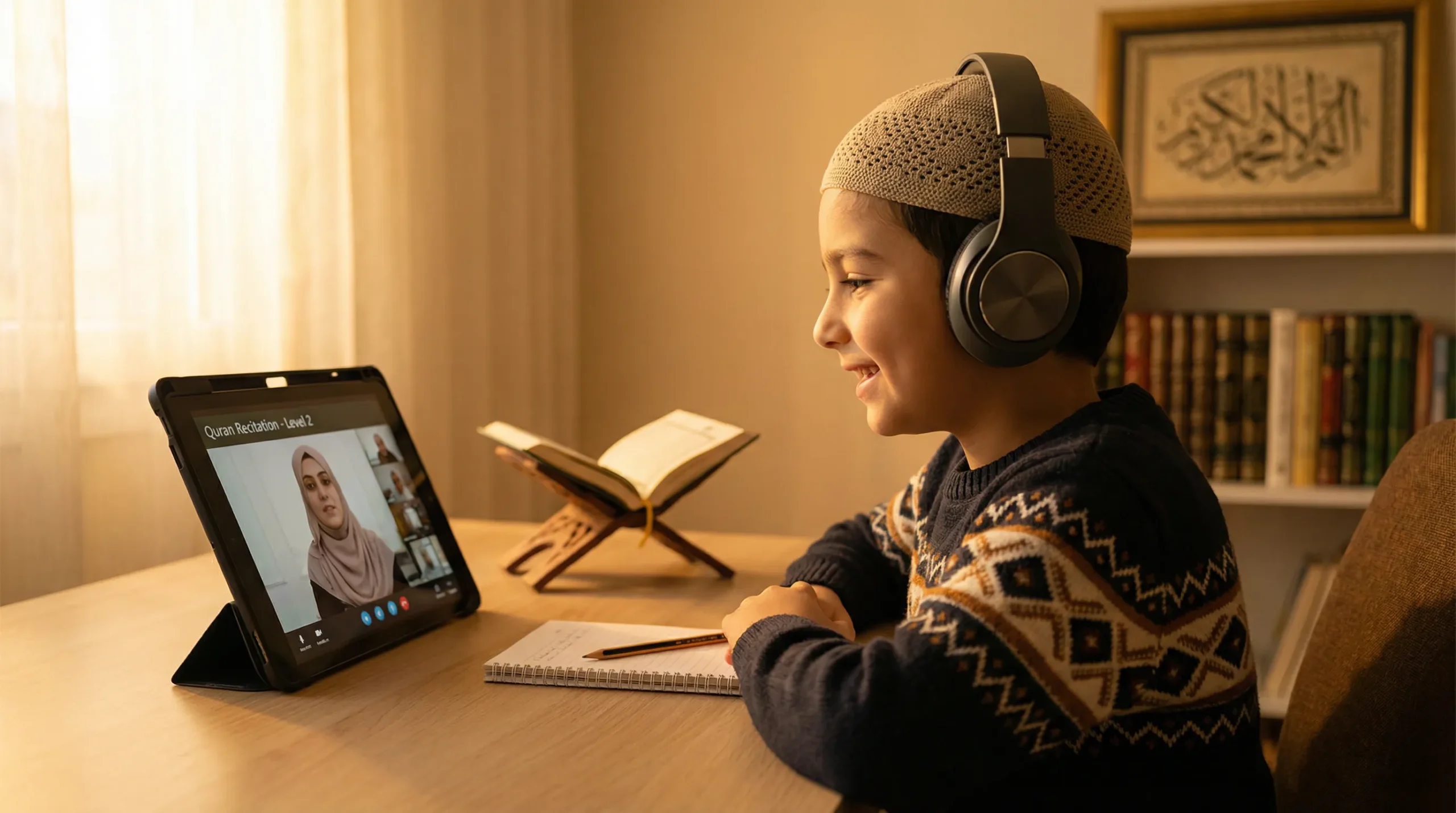
This is precisely where an online Islamic school for kids transforms the landscape of religious education. By bringing qualified teachers directly into your home through digital platforms, online learning eliminates geographical barriers while maintaining the educational excellence that every Muslim child deserves.
Whether you live in a bustling metropolitan city with multiple mosques or a rural area with few Muslim families, your children can now access comprehensive Islamic instruction tailored to their age and learning pace.
At Quranbookonline.com, we go beyond traditional teaching methods by integrating psychological principles into our Islamic curriculum. This unique approach ensures that children not only memorize and recite but truly understand, internalize, and emotionally connect with their faith. In this comprehensive guide, you will discover exactly what Islamic studies encompasses, why formal religious education matters, how online learning works, and what to look for when choosing the best program for your family.
What Islamic Studies Covers: Building Strong Foundations
Core Components of an Islamic Studies Course
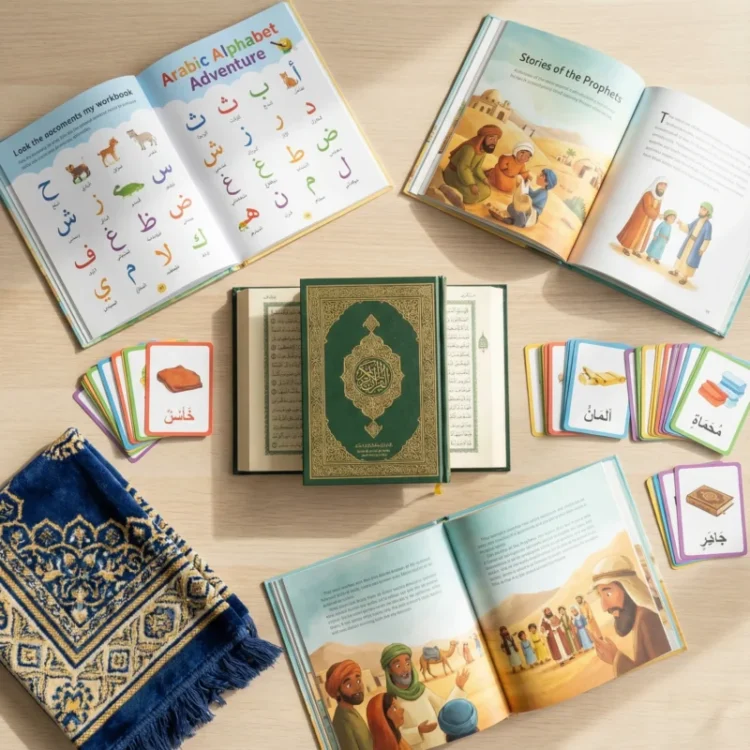
Understanding what is Islamic studies course helps parents appreciate the depth and breadth of religious education their children will receive. At its core, Islamic studies encompasses several interconnected disciplines that together form a comprehensive understanding of the faith.
Quran recitation forms the foundation, teaching children to read the Arabic script and pronounce the sacred words correctly. Tajweed, the science of proper Quranic pronunciation, ensures that every letter receives its rightful articulation, preserving the beauty and accuracy of divine revelation.
Beyond the Quran, Islamic history introduces children to the inspiring stories of prophets, companions, and scholars who shaped our tradition. Akhlaq, or Islamic character education, cultivates virtues such as honesty, kindness, patience, and gratitude.
Hadith studies bring the teachings and example of Prophet Muhammad (peace be upon him) to life, providing practical guidance for daily living. When delivered through Islamic classes online, these traditional subjects are adapted with engaging multimedia content, interactive exercises, and age-appropriate explanations that resonate with young learners growing up in the digital age.
The progression of learning follows a carefully designed pathway. Young children begin with basic concepts—learning short surahs, understanding the five pillars, and recognizing Allah’s names. As they mature, the curriculum deepens to include more complex theological concepts, detailed fiqh rulings, and nuanced discussions of Islamic ethics that prepare them for the questions and challenges they will encounter as Muslim adults in Western societies.
What Do Islamic Schools Teach Beyond the Basics?

When parents ask what do Islamic schools teach, they often discover a curriculum far richer than simple Quran memorization. Practical worship instruction forms a crucial component, with children learning the physical movements and spiritual meanings of Salah, the proper method of performing Wudu, and the beautiful duas for various occasions throughout the day.
These lessons transform abstract religious obligations into embodied practices that children can perform with confidence and understanding.
Arabic language fundamentals provide children with the keys to unlock the Quran’s meaning directly, rather than relying solely on translations. Even basic vocabulary and grammar knowledge dramatically enhances a child’s connection to the sacred text and their ability to participate in prayers and religious gatherings. This linguistic foundation also opens doors to classical Islamic scholarship as they grow older.
What sets exceptional programs apart is the integration of Islamic psychology principles into the curriculum. Children learn emotional intelligence through the lens of Islamic teachings—understanding how to manage anger as the Prophet taught, developing resilience through trust in Allah’s plan, and building moral reasoning grounded in divine guidance.
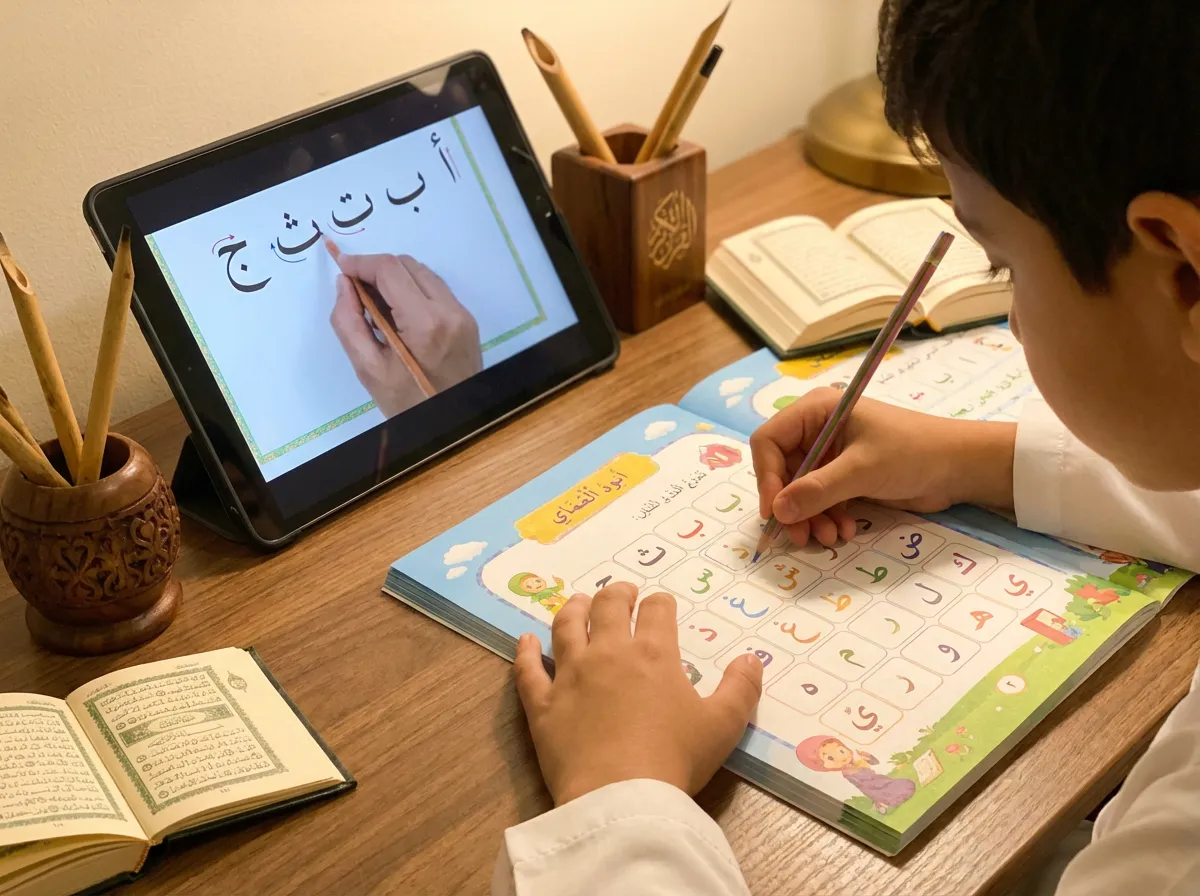
Online Islamic lessons for kids incorporate interactive multimedia elements such as animated stories, educational games, quizzes, and virtual field trips to historical Islamic sites, making learning both effective and enjoyable.
Comprehensive Curriculum Benefits
A well-structured Islamic studies curriculum delivers benefits that extend far beyond religious knowledge. Character building occurs naturally as children internalize the ethical teachings of Islam, developing into honest, compassionate, and responsible individuals.
Cultural identity strengthens as children learn about their rich heritage, connecting them to a global community of believers spanning centuries and continents. Spiritual connection deepens through consistent engagement with Quranic teachings and regular practice of worship.
Structured learning prevents the knowledge gaps that often occur with informal or sporadic religious instruction. Children progress systematically through age-appropriate content, building upon previous lessons and developing increasingly sophisticated understanding.
Quality programs offer progression tracking that allows parents to monitor their child’s advancement and celebrate milestones. Personalized learning paths accommodate different starting points, learning speeds, and individual strengths, ensuring that every child receives instruction suited to their unique needs.
Why Islamic School: The Unique Value Proposition
The Importance of Formal Islamic Education
Parents often wonder why Islamic school matters when they can teach religion at home. While parental instruction remains invaluable, formal Islamic education offers distinct advantages that complement home-based learning.
Systematic curriculum design ensures comprehensive coverage of essential topics in a logical sequence, preventing the gaps and inconsistencies that can occur with informal approaches. Qualified instructors bring specialized knowledge, proper certifications such as Ijazah for Quran teaching, and pedagogical training that enables them to explain complex concepts in accessible ways.
Perhaps most importantly, even virtual Islamic school environments create a community of peers who share the same faith journey. Children see that they are not alone in their religious practice; they belong to a community of young Muslims who pray, fast, and study the Quran just like them. This normalization of religious practice provides powerful social reinforcement that strengthens children’s commitment to their faith identity.
Why Islamic Studies in Western Contexts
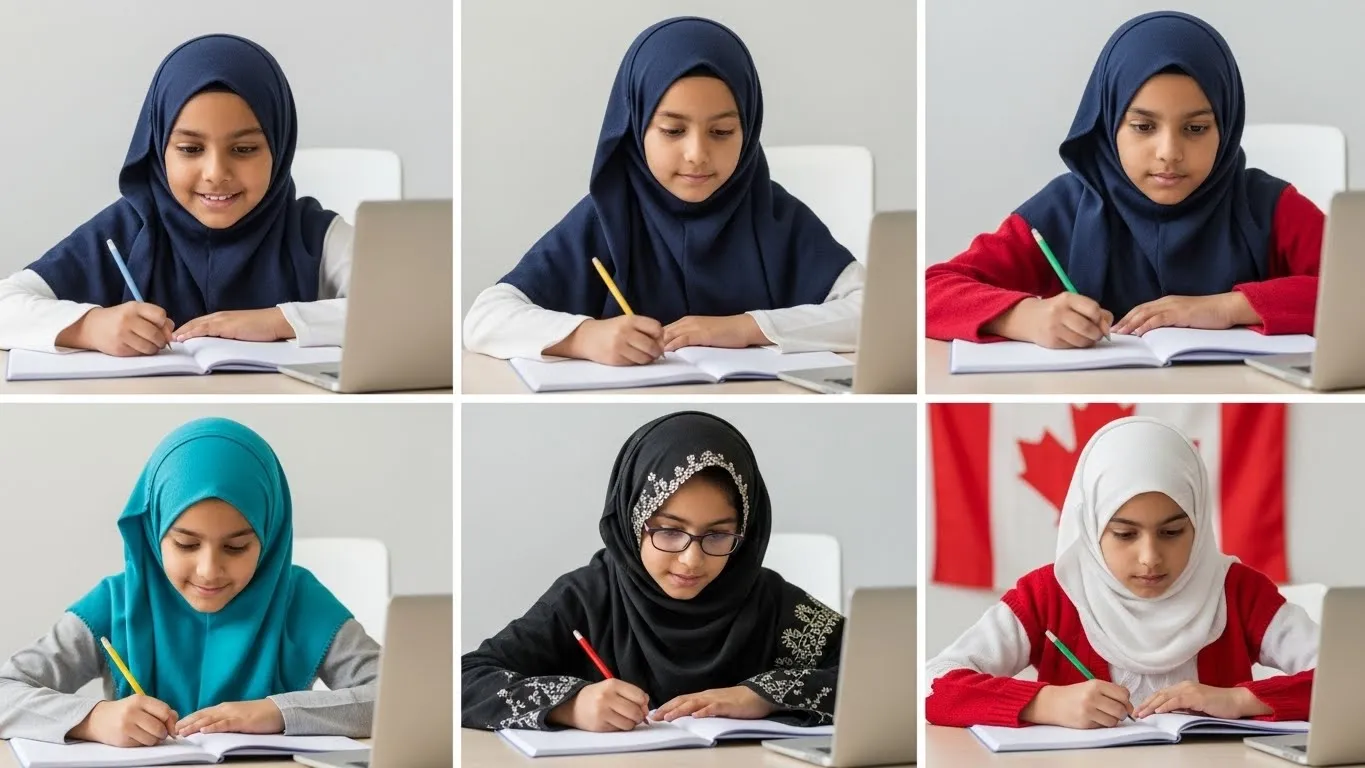
Muslim families in the USA, UK, Canada, and Europe face unique challenges that make Islamic studies particularly vital. Children grow up surrounded by cultural messages and peer influences that may conflict with Islamic values.
Without solid religious education, they may struggle to reconcile their Muslim identity with their Western environment, leading to confusion, identity crises, or gradual distancing from the faith.
Islamic studies provides children with the knowledge and confidence to navigate this complexity successfully. They learn to articulate what they believe and why, enabling them to answer questions from curious classmates and resist peer pressure with graceful conviction.
Proper Islamic education also prevents misinformation—in an age where children can easily encounter distorted or extremist interpretations online, qualified teachers guide students toward balanced, authentic understanding rooted in mainstream Islamic scholarship.
The goal is not isolation from Western society but confident engagement with it. Children who understand their faith deeply can participate fully in their communities while maintaining their religious principles. They become ambassadors of Islam, demonstrating through their character and conduct the beauty of the teachings they have learned.
The Psychology-Integrated Approach
Quranbookonline.com distinguishes itself through a unique methodology that combines traditional Islamic teachings with insights from developmental psychology. This psychology-integrated approach recognizes that effective religious education must address the whole child—intellectual, emotional, and spiritual dimensions together.
Online Islamic psychology courses embedded within the curriculum help children develop emotional regulation skills, healthy self-esteem, and resilient mindsets, all grounded in Islamic principles. Teachers trained in child psychology understand how to present religious concepts in developmentally appropriate ways, how to motivate young learners, and how to address the emotional and social challenges children face. This holistic approach ensures that children don’t just learn about Islam—they develop a living, breathing relationship with their faith that supports their overall wellbeing and flourishing.
Online Islamic Class for Kids: Flexibility Meets Excellence
Can I Study Islam Online? Understanding Digital Learning
Many parents wonder can I study Islam online effectively, particularly for something as sacred and personal as religious education. The evidence strongly supports virtual learning as a powerful medium for Islamic instruction.
Research in educational psychology demonstrates that one-on-one attention, which online platforms often provide, significantly enhances learning outcomes compared to crowded classroom settings. Students receive personalized feedback, can ask questions without embarrassment, and progress at their optimal pace.
Technology offers unique advantages for Islamic education specifically. Recorded lessons allow children to review difficult concepts multiple times until mastery is achieved. Flexible scheduling accommodates busy family calendars, eliminating the stress of rushing to evening classes after a full school day. Screen-sharing enables teachers to display Quranic text, highlight specific letters for Tajweed practice, and use visual aids that enhance comprehension.
Parents understandably express concerns about screen time and engagement. Quality programs address these concerns through interactive teaching methods that maintain children’s attention, session lengths calibrated to age-appropriate attention spans, and activities that involve physical movement and hands-on elements. The key lies in choosing programs designed specifically for children, not adapted adult courses, with teachers trained in online pedagogy for young learners.
What is Islamic Class in an Online Format?
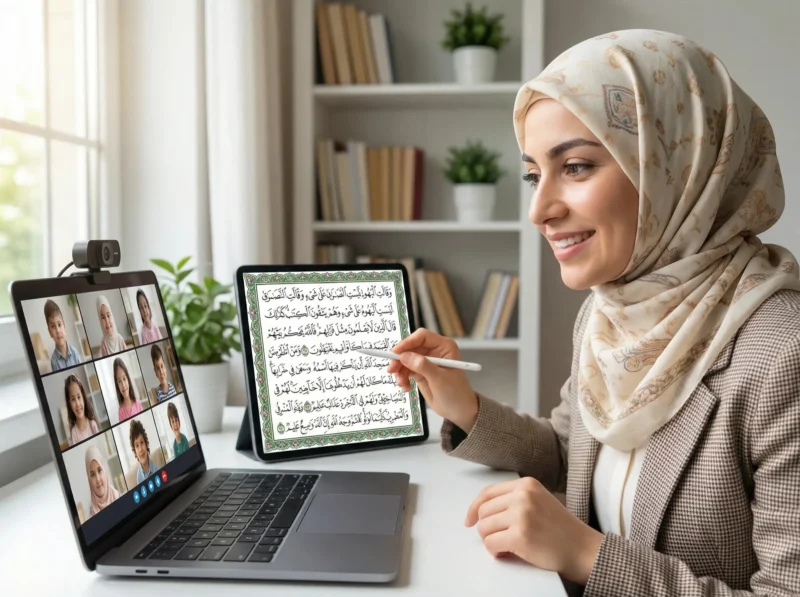
Understanding what is Islamic class structure in an online format helps parents know what to expect. Typically, online Islamic classes combine live sessions with a qualified teacher, homework assignments for practice and reinforcement, periodic assessments to track progress, and certificates upon completion of course milestones.
Live sessions use video conferencing platforms where students and teachers interact in real-time, creating a personal connection despite physical distance.
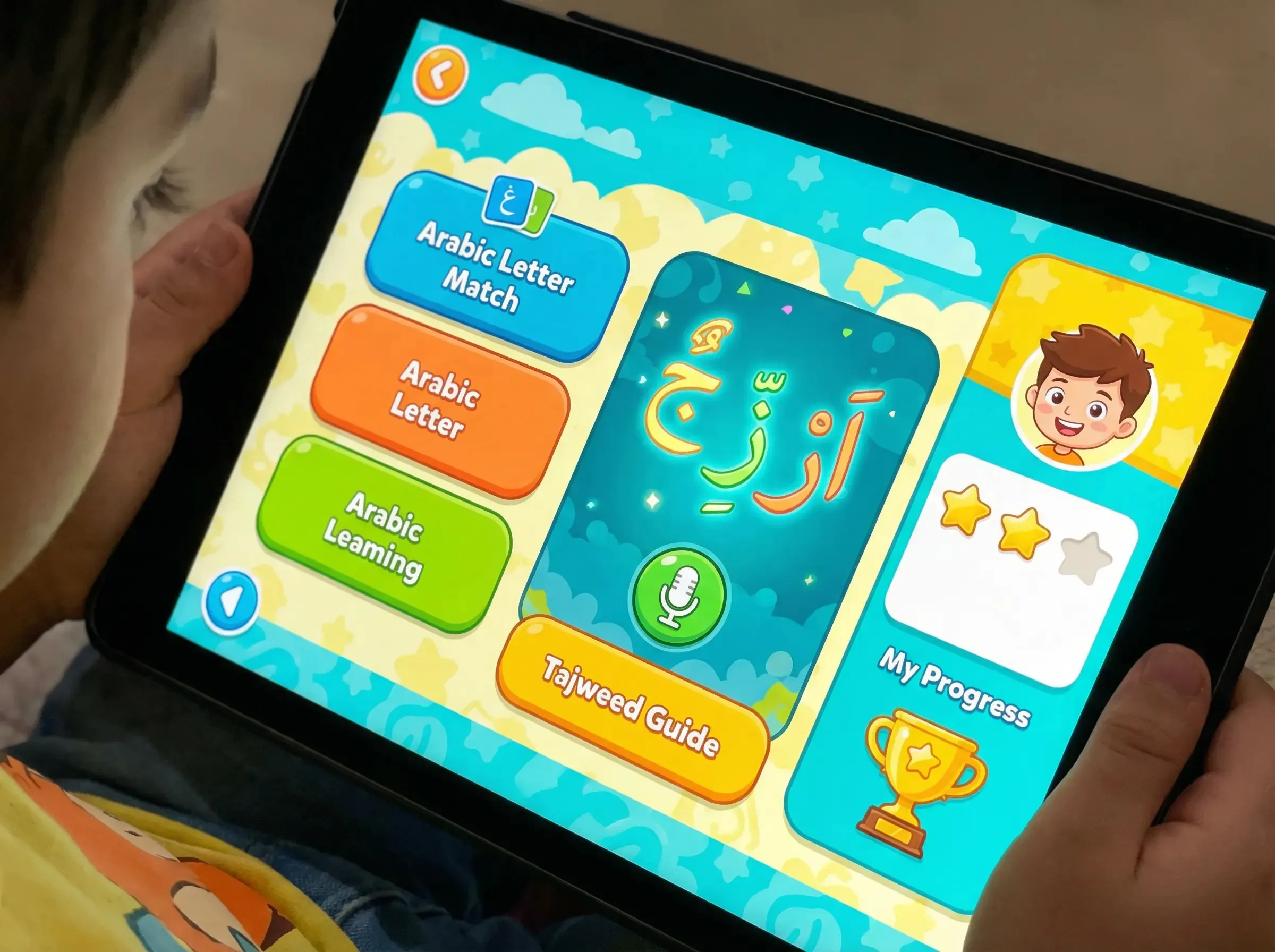
Interactive tools enhance engagement significantly. Virtual whiteboards allow teachers to write Arabic letters while students watch and practice. Screen annotation features enable marking up Quranic text to highlight Tajweed rules. Gamification elements—points, badges, and rewards—motivate children to complete assignments and attend classes consistently. Some platforms incorporate educational games that make memorization and review enjoyable rather than tedious.
Class duration and frequency vary by age group. Young children aged 5-7 typically benefit from shorter sessions of 20-30 minutes, while older students can engage productively for 45-60 minutes. Most programs recommend at least three sessions per week to maintain momentum and ensure consistent progress, though daily classes accelerate learning significantly for motivated students.
Types of Online Islamic Courses Available
The range of online Islamic courses available today allows families to choose programs aligned with their specific goals. Quran memorization programs guide students through systematic Hifz with proper repetition schedules and regular revision.
Tajweed courses focus intensively on pronunciation rules, often using color-coded Qurans and detailed articulation practice. Arabic language programs teach reading, vocabulary, and grammar to enhance Quranic comprehension. Fiqh courses introduce children to Islamic jurisprudence in age-appropriate ways, covering prayer, fasting, purity, and other essential rulings. Islamic history courses bring the Seerah and stories of the prophets to life through engaging narratives.
Many programs offer online Islamic courses with certificates, providing formal recognition of achievement that motivates students and documents their educational progress. Specialized offerings such as Quran online Islamic school programs combine multiple subjects into comprehensive curricula that provide well-rounded Islamic education. These programs often follow academic year structures with clear progression from beginner to advanced levels, making them suitable for families seeking a complete religious education solution.
Which is the Best Online Islamic School? Evaluation Criteria
Key Factors in Choosing Quality Programs
When parents ask which is the best online Islamic school, the answer depends on evaluating several critical factors. Teacher qualifications stand paramount—instructors should hold Ijazah certifications for Quran teaching, demonstrating that they learned from qualified teachers in an unbroken chain back to the Prophet (peace be upon him).
Teaching experience, particularly with children, ensures they can translate their knowledge into effective instruction. Background checks and safeguarding policies protect your children during online interactions.
Curriculum comprehensiveness determines whether your child receives complete Islamic education or fragmented knowledge. Look for programs that cover all essential subjects—Quran, Tajweed, Arabic, Islamic studies, and character development—in an integrated fashion. Alignment with mainstream Islamic scholarly consensus ensures your child learns authentic, balanced understanding rather than extreme or deviant interpretations.
Technology platform reliability affects the learning experience significantly. Stable video connections, user-friendly interfaces, and technical support availability all contribute to smooth, frustration-free classes. Parent portals that allow you to monitor progress, communicate with teachers, and access resources add considerable value.
Which Online School is Best for Your Family?
Determining which online school is best requires considering your specific family circumstances. Your child’s age affects which programs are appropriate—some specialize in young children while others cater to teenagers. Learning style matters too: some children thrive in group settings with peer interaction, while others learn better in private one-on-one sessions where they receive undivided teacher attention.
Your goals shape the ideal program choice. If Quran memorization is the priority, seek programs with proven Hifz track records and experienced memorization teachers. If comprehensive Islamic knowledge matters most, look for broad curricula covering multiple subjects. If your child struggles with Arabic reading, programs emphasizing foundational literacy should take precedence.
Free trial sessions offer invaluable opportunities to assess fit before committing. Observe how the teacher interacts with your child, whether the technology works smoothly, and how your child responds to the experience. Most reputable programs offer free trial sessions precisely because they want families to find the right match.
Red Flags to Avoid
⚠️ Warning Signs to Watch For
Protecting your child requires awareness of warning signs indicating substandard programs. Unqualified instructors who lack proper certifications or teaching credentials should raise immediate concerns. Unclear curriculum that seems improvised or inconsistent suggests lack of professional program development.
Lack of transparency about teaching methods, teacher qualifications, or program policies often indicates problems beneath the surface.
Improper Islamic methodology—extreme positions, sectarian bias, or teachings that conflict with mainstream scholarship—can cause significant harm to your child’s understanding. Verify that the program follows balanced, traditional Islamic education principles. Authentic sources from the Quran, Hadith, and classical scholars should form the curriculum foundation.
Pricing transparency matters for practical reasons. Hidden fees, unclear refund policies, or pressure tactics during enrollment suggest unprofessional operations. Reputable programs provide clear pricing information upfront and allow families to make informed decisions without manipulation.
Why Expert Teachers Make All the Difference
Qualifications That Matter
The quality of your child’s Islamic education depends directly on teacher expertise. For Islamic classes online, essential credentials begin with Ijazah certification for Quran instruction. This traditional system of authorization ensures that the teacher learned from qualified masters and can transmit the Quran with proper pronunciation and understanding. Multiple Ijazat in different recitation styles (Qira’at) indicate advanced expertise.
Beyond religious credentials, pedagogical training matters enormously when teaching children. Understanding child development stages, learning psychology, and age-appropriate teaching methods transforms knowledgeable scholars into effective educators. Teachers should know how to break complex concepts into digestible pieces, maintain engagement, handle behavioral challenges, and adapt their approach to individual student needs.
Experience specifically with online teaching adds another crucial layer. Virtual instruction requires different skills than in-person classes—managing technology, maintaining engagement through a screen, using digital tools effectively, and creating connection despite physical distance. Teachers new to online platforms often struggle initially, regardless of their subject matter expertise.
The Psychology-Trained Educator Advantage
Psychology training elevates Islamic education from information transfer to transformational learning. Teachers who understand trauma-informed approaches can support children who may be struggling with difficult life circumstances without retraumatizing them through insensitive handling. Positive reinforcement techniques, grounded in both Islamic encouragement and behavioral psychology, motivate children more effectively than fear-based approaches.
Understanding motivation helps teachers inspire genuine love for learning rather than mere compliance. They recognize when a child needs encouragement versus challenge, when frustration signals the need for a different approach, and how to build intrinsic motivation that sustains learning long-term. These psychological insights make the difference between children who dread their Islamic classes and those who eagerly anticipate them. Quranbookonline.com’s teacher selection process prioritizes this combination of Islamic scholarship and psychological training. Our educators understand not just what to teach but how children learn best, enabling them to nurture both knowledge and love for the faith.
Building Student-Teacher Relationships Online
Effective online teaching depends on creating genuine connection despite screens and distance. Qualified teachers invest time in building rapport with each student—learning their interests, understanding their challenges, and celebrating their achievements. This personal relationship transforms the learning experience from transactional instruction to meaningful mentorship.
The teacher’s role extends beyond academics to spiritual guidance and emotional support. Children may share concerns about peer pressure, questions about practicing Islam at school, or struggles they face as Muslims in Western contexts. A trusted teacher provides guidance rooted in Islamic wisdom and genuine care for the child’s wellbeing.
Regular communication with parents completes the support system. Teachers who provide detailed progress updates, share observations about the child’s learning, and collaborate with parents on addressing challenges create a unified approach to the child’s Islamic development. This partnership between home and school maximizes educational outcomes.
What Your Child Will Gain From Islamic Studies
Spiritual and Religious Benefits
The primary purpose of Islamic education is nurturing your child’s relationship with Allah. Through consistent Quranic engagement, prayer instruction, and teaching about Allah’s names and attributes, children develop genuine spiritual connection rather than mere ritualistic compliance. They learn to find comfort in dua, peace in Salah, and guidance in the Quran—resources that will support them throughout life’s challenges.
Understanding Islamic identity gives children confidence in who they are as Muslims. They can answer questions about their faith articulately, explain their practices to curious friends, and feel proud of their religious heritage. This strong identity foundation protects against the confusion and insecurity that can arise when Muslim children feel caught between cultures.
The education also builds foundation for lifelong learning. Children who learn to love the Quran, who find Islamic studies engaging rather than burdensome, will continue seeking knowledge throughout their lives. They become adults who read, reflect, and grow in their faith independently.
Character and Psychological Development

Islamic studies shapes character profoundly through systematic ethics education. Children learn not just rules but principles—understanding why honesty matters, how kindness reflects divine mercy, and why patience brings reward. These internalized values guide behavior from within rather than through external enforcement.
Faith-based emotional regulation skills provide children with powerful tools for managing life’s difficulties. Learning to say “Inna lillahi wa inna ilayhi raji’un” during loss, to trust in Allah’s wisdom when disappointed, and to seek refuge from anxiety through dhikr gives children coping mechanisms grounded in eternal truth. This emotional resilience serves them throughout life.
Cultural pride and belonging enhance self-esteem significantly. Children who know their heritage—the Golden Age of Islamic civilization, the contributions of Muslim scholars, the beauty of Islamic art and architecture—feel proud rather than ashamed of their background. This healthy self-concept protects against the inferiority complexes that can develop when minority children absorb negative stereotypes.
Academic and Social Skills
Arabic language acquisition delivers cognitive benefits beyond religious purposes. Learning a new script and language structure enhances brain development, improves memory, and builds learning-to-learn skills that transfer to other academic subjects. Many parents notice their children’s overall academic performance improving after beginning Arabic and Quran studies.
Critical thinking develops through Islamic history and jurisprudence study. Children learn to evaluate evidence, understand different scholarly opinions, and reason through complex questions. These intellectual skills serve them in secular education and professional life while also enabling sophisticated engagement with their faith.
Connection to the global Muslim Ummah expands children’s social world. Through online classes, they may meet peers from different countries and backgrounds, broadening their cultural awareness while reinforcing shared faith identity. This global perspective prepares them for an interconnected world while grounding them in their religious community.
Our Teaching Approach: Psychology Meets Islamic Pedagogy
Child-Centered Learning Philosophy
Effective Islamic education meets children where they are developmentally. Our online Islamic lessons for kids employ developmentally appropriate instruction that recognizes the cognitive, emotional, and social capabilities of different age groups. Young children learn through stories, songs, and hands-on activities, while older students engage with more abstract concepts and textual analysis.
Differentiated instruction acknowledges that every child learns differently. Visual learners benefit from colorful diagrams and videos; auditory learners from recitation and discussion; kinesthetic learners from physical activities and interactive exercises. Our teachers identify each student’s learning style and adapt their approach accordingly, ensuring that every child can access the material effectively.
Positive psychology principles permeate our Islamic education context. We focus on building strengths rather than merely correcting weaknesses, celebrating progress rather than criticizing shortcomings, and nurturing intrinsic motivation rather than relying on punishment and reward. This approach creates positive associations with Islamic learning that last a lifetime.
Interactive and Engaging Methods
Modern technology enables engagement strategies impossible in traditional settings. Multimedia tools bring lessons to life through animated stories of the prophets, virtual tours of Makkah and Madinah, and interactive diagrams explaining prayer positions or ablution steps. Visual aids make abstract concepts concrete and memorable.
Gamification elements maintain engagement without trivializing sacred content. Points for completing assignments, badges for mastering surahs, and progress tracking visible to students motivate consistent effort. Friendly competitions and challenges add excitement while educational games make review sessions enjoyable rather than tedious.
Project-based learning opportunities allow children to apply their knowledge creatively. Students might create presentations about a prophet’s life, design posters illustrating Islamic values, or prepare short talks to share with family. These projects deepen understanding while building communication and creativity skills.
Progress Monitoring and Parental Involvement
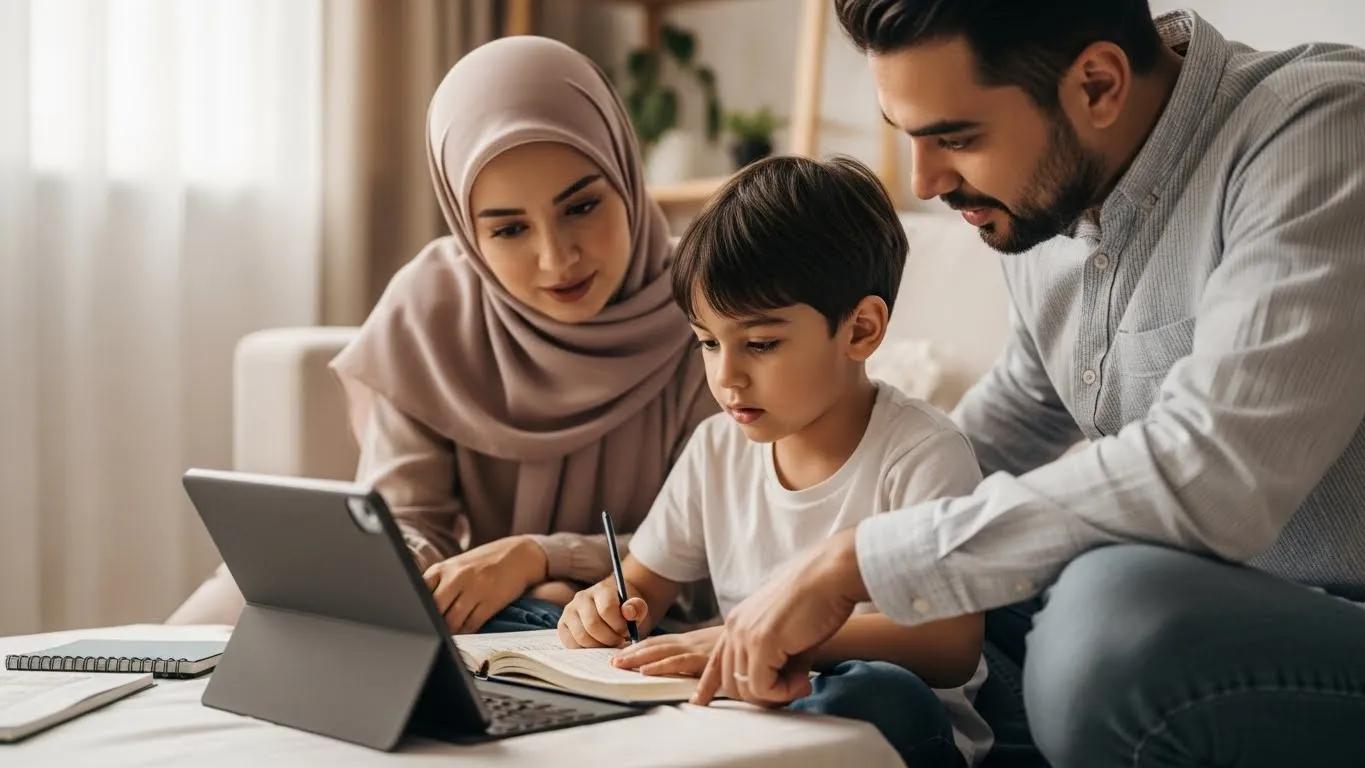
Robust assessment methods track student advancement accurately. Regular evaluations ensure children genuinely understand rather than merely memorize temporarily. Detailed progress reports show parents exactly where their child excels and where additional support might help. This data-driven approach enables targeted intervention when needed.
Parent-teacher communication channels keep families informed and involved. Regular updates, scheduled conferences, and responsive messaging ensure parents know how their child is progressing. Teachers share not just grades but observations about engagement, behavior, and growth, painting a complete picture of the child’s development.
Home support guidance helps families reinforce learning between classes. Teachers provide suggestions for practice activities, recommend resources for additional learning, and advise parents on creating supportive home environments. This partnership between school and home maximizes educational outcomes.
Getting Started: Choosing the Right Online Islamic School for Kids
Step-by-Step Enrollment Process
Finding the best online Islamic classes for kids begins with research. Review program websites, read testimonials, and compare curriculum offerings. Look for programs that align with your educational goals, your child’s needs, and your family’s schedule and budget.
Trial class procedures allow you to experience the program before committing. Schedule sessions with programs you’re considering, observing how teachers interact with your child and how the technology functions. Prepare your child for trial classes by explaining what to expect, ensuring they’re ready to participate and give genuine feedback afterward.
Placement assessments determine your child’s starting point. Programs assess current Quran reading level, Arabic knowledge, and Islamic studies background to place children in appropriate classes. Honest assessment ensures your child is neither bored by material too easy nor overwhelmed by content too advanced.
What to Expect in the First Few Weeks
Adjustment periods are normal and expected. Children may feel shy initially with new teachers, unsure about online learning format, or simply adjusting to new routines. Allow several weeks before evaluating whether a program is working—first impressions don’t always reflect eventual experience.
Building rapport takes time but matters enormously. Teachers work to learn your child’s personality, interests, and learning needs. As trust develops, children become more engaged, more willing to try difficult tasks, and more comfortable asking questions. Patience during this relationship-building phase pays dividends.
Common early challenges have proven solutions. Technology problems often resolve with better equipment, stronger internet, or technical support guidance. Engagement difficulties may indicate need for shorter sessions, different scheduling, or teaching approach adjustments. Communication with teachers helps identify and address issues promptly.
Investment in Your Child’s Future
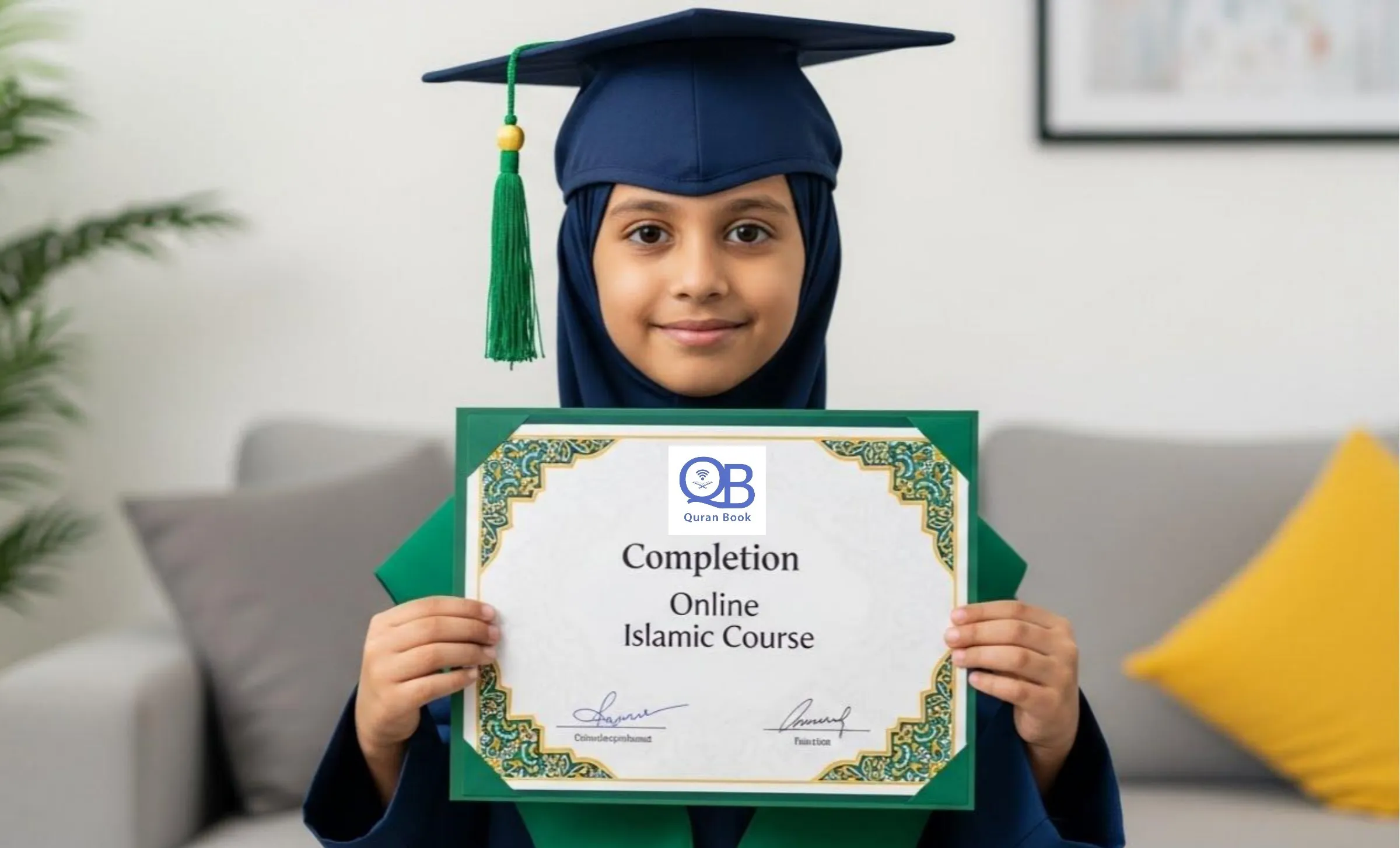
Pricing models for online Islamic class for kids programs vary considerably. Some charge per session, others offer monthly packages, and comprehensive programs may use semester or annual pricing. Compare total costs rather than just per-session rates, considering how many sessions your child needs to reach their goals.
The value of online Islamic courses with certificates extends beyond the document itself. Certificates mark achievement milestones that motivate continued effort, provide documentation for future educational opportunities, and represent concrete accomplishment your child can celebrate.
Frame Islamic education as long-term investment rather than short-term expense. The knowledge, character, and spiritual foundation your child gains will benefit them throughout their entire life. Confident Muslim identity, strong moral compass, and deep faith connection—these outcomes are priceless, making quality Islamic education one of the most valuable investments a parent can make.
Empowering the Next Generation
Raising confident, knowledgeable Muslim children in Western contexts requires intentional effort and quality resources. Islamic studies provides the foundation your children need to navigate a complex world while maintaining strong faith identity. From Quranic knowledge to character development, from Arabic literacy to emotional resilience, comprehensive Islamic education equips young Muslims with tools for success in both worlds.
Quality online Islamic school for kids programs bring this education directly to your home with unprecedented flexibility and accessibility. No matter where you live, what schedule challenges you face, or what your child’s specific needs may be, effective Islamic instruction is now within reach. The question is not whether online Islamic education works—the evidence clearly demonstrates its effectiveness—but which program best serves your family’s needs.
Quranbookonline.com’s psychology-integrated approach offers a distinctive advantage in this landscape. By combining authentic Islamic scholarship with insights from developmental psychology, we nurture the whole child: mind, heart, and soul together. Our qualified teachers, comprehensive curriculum, and engaging methods create learning experiences that children enjoy and that produce lasting results.
Your child’s Islamic education journey begins with a single step. We invite you to book a trial class or consultation to experience our approach firsthand. Discover how we can partner with you in raising the next generation of confident, knowledgeable, faithful Muslims prepared to thrive wherever their path leads.