99 Names of Allah for Kids: Fun Ways & Beautiful Guide for Young Muslims
By Quran Book Academy | Islamic Education for Children
Introduction
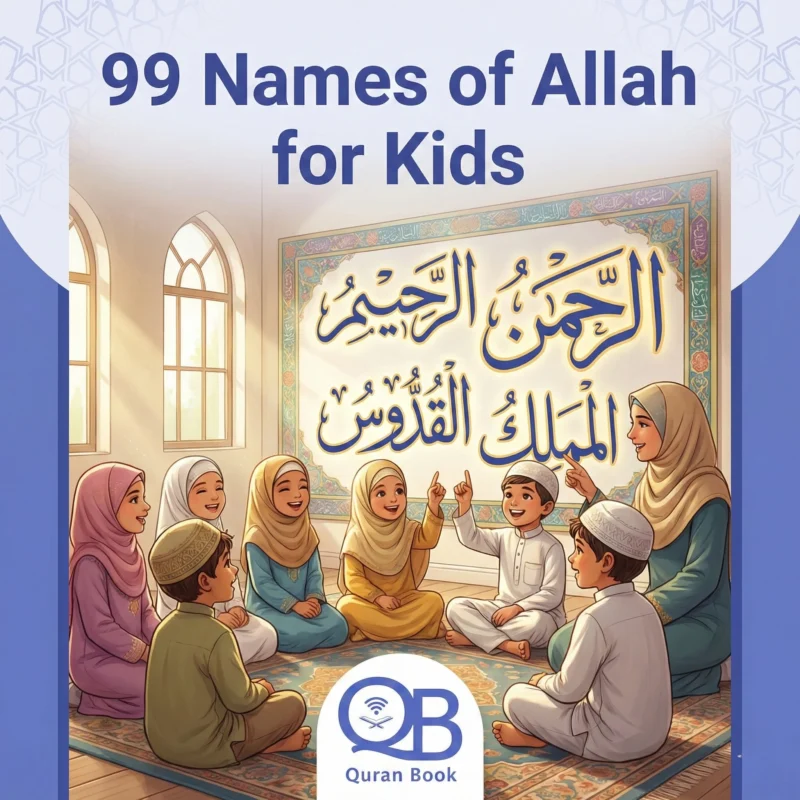
The 99 names of Allah for kids, known as Asma ul Husna, are beautiful attributes that help children understand who Allah is. Teaching these names builds love, trust, and connection with the Creator from an early age.
You want your child to love Allah, but where do you start? Many parents feel overwhelmed by the complexity of Islamic teachings, language barriers, and limited time. The good news is that introducing the names of Allah for kids doesn’t have to be complicated or intimidating.
With simple, engaging, and proven methods, you can make learning joyful and meaningful for your little ones. The Prophet Muhammad (peace be upon him) said:
“Allah has ninety-nine names, and whoever preserves them will enter Paradise.”
— Sahih al-Bukhari 2736
This guide will walk you through everything you need to know about teaching Asma ul Husna for kids in a way that sparks curiosity and nurtures faith. Explore our Islamic Studies for Kids program for comprehensive learning.
Who is Allah? Explaining Allah for Grade 1 Students
Allah is the Arabic name for God—the One who created everything: the sun, moon, stars, animals, and you! For grade 1 students, Allah is like a loving, caring, and powerful friend who always watches over us and answers our prayers.
When explaining Allah to young children aged 5-7 years, use relatable analogies they can understand. Think of how much your mommy and daddy love you—then multiply that by infinity! That’s how much Allah loves you.
The Quran beautifully summarizes this concept:
“He is Allah, the One.”
— Surah Al-Ikhlas 112:1
This simple verse teaches children that Allah is unique, incomparable, and the only Creator worthy of worship. For beginners, check out our Quran for Beginners Course.
What Are the 99 Names of Allah for Kids? (Asma ul Husna)
The 99 names of Allah for kids are special names that describe Allah’s qualities—like Ar-Rahman (The Most Merciful), Al-Khaliq (The Creator), and Al-Wadud (The Most Loving). Each name teaches children something beautiful about Allah.
“Asma ul Husna” means “The Most Beautiful Names” in Arabic. These names help us understand Allah’s attributes and how He interacts with His creation. Why 99 names? Because Allah is so magnificent that no single name can fully describe Him!
✨ 10 Easy Names to Start With
| # | Arabic Name | English Meaning | Kid-Friendly Explanation |
|---|---|---|---|
| 1 | Ar-Rahman | The Most Merciful | Allah loves you more than mommy & daddy combined |
| 2 | Al-Khaliq | The Creator | Allah made everything—even dinosaurs! |
| 3 | As-Sami | The All-Hearing | Allah hears every dua, even whispers |
| 4 | Al-Basir | The All-Seeing | Allah sees you being kind, even when no one else does |
| 5 | Al-Wadud | The Most Loving | Allah’s love never runs out |
What Does Al Quddus Mean for Kids?
Al Quddus means “The Most Holy” or “The Pure One.” For kids, this means Allah is perfect—He has no mistakes, no flaws, and is completely good and pure.
Help your child understand this concept through simple activities. Discuss things that are “pure” in everyday life: clean water, a clear blue sky, or fresh fallen snow. Then explain that Allah is even more pure and perfect than anything we can imagine!
Connect it to daily practice: “When we say Subhan Allah, we’re saying Allah is perfect!” This phrase becomes more meaningful when children understand the beautiful name Al Quddus behind it.
What Does Al Wakeel Mean for Kids?
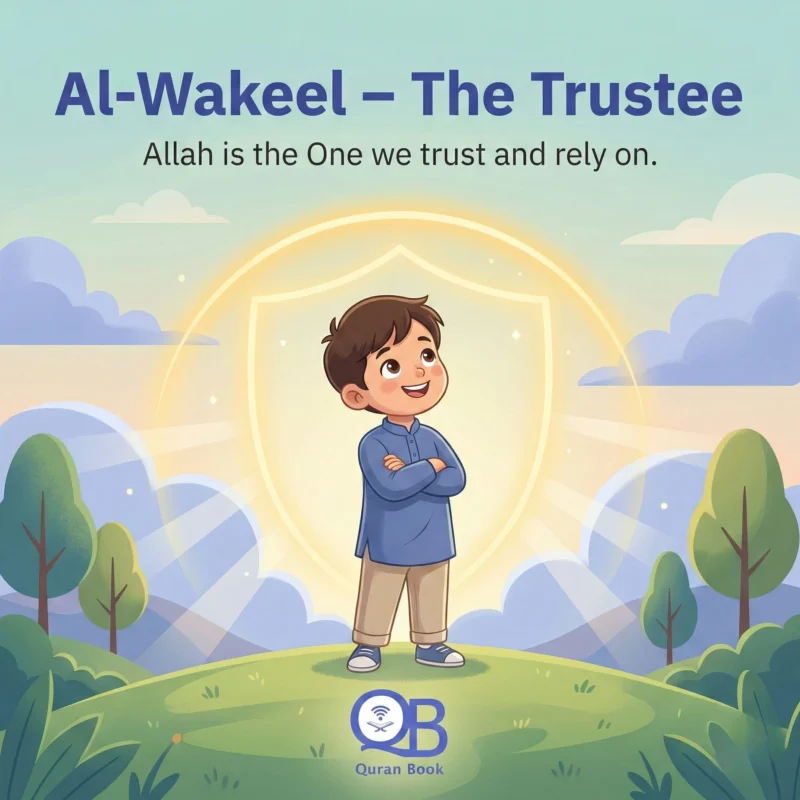
Al Wakeel means “The Trustee” or “The One You Can Rely On.” For kids, it means Allah is the best helper—you can trust Him with anything, like a superhero who never lets you down.
Teach this name through storytelling. Share how Prophet Ibrahim (peace be upon him) completely trusted Allah when facing difficult times. Even when things seemed impossible, he said: “Hasbunallahu wa ni’mal wakeel” (Allah is sufficient for us, and He is the best Disposer of affairs).
Encourage children to say this dua when they feel scared, worried, or unsure. Knowing the Al Wakeel meaning helps them develop unshakeable trust in Allah from a young age. Learn more with our Arabic for Kids Program.
What Does Al Qahhar Mean for Kids?
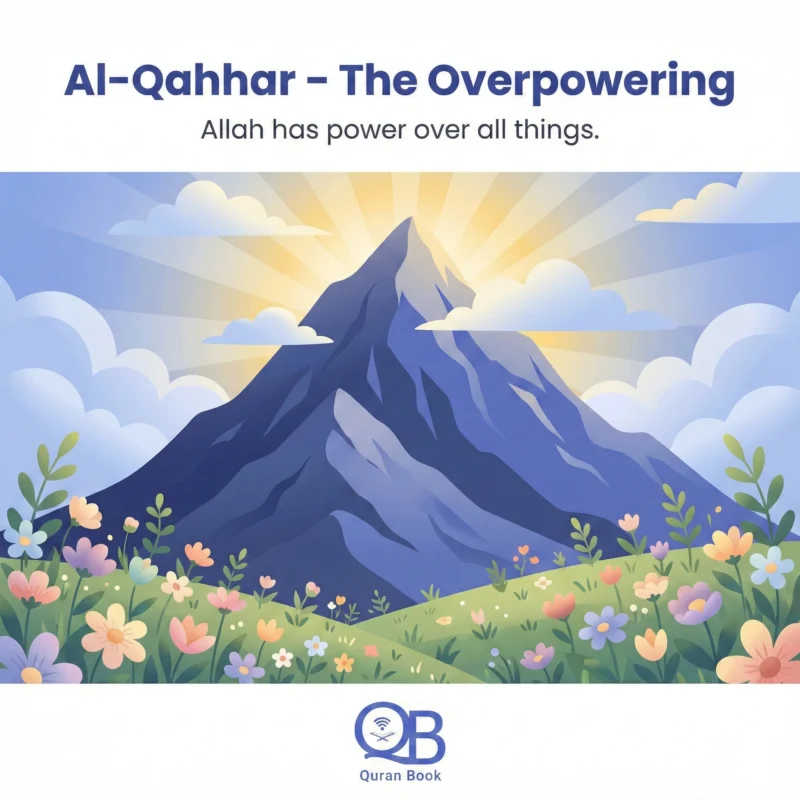
Al Qahhar means “The Subduer” or “The Overpowering.” For kids, it means Allah is stronger than anything—no problem is too big for Him to handle.
When teaching this name, balance it with Allah’s mercy. Explain that Allah is incredibly strong, but He uses His power to protect those who love Him and to ensure justice. He is strong AND kind.
“He is the One, the Overpowering.”
— Surah Ar-Ra’d 13:16
This teaches children that while challenges may seem overwhelming, Allah’s power surpasses everything. Consider enrolling in our Learn Quran with Tajweed course for proper pronunciation.
5 Fun Ways to Teach the 99 Names of Allah to Kids
1 Sing Nasheeds Together
Music and melody make memorization effortless and enjoyable for young minds.
2 Create a Name-of-the-Week Calendar
Focus on one name weekly, exploring its meaning through discussions and activities.
3 Arts & Crafts Projects
Use coloring pages, posters, and flashcards to make learning visual and hands-on.
4 Storytelling with Prophets
Connect names to Quranic stories that illustrate Allah’s attributes in action.
5 Daily Dua Practice
Incorporate names into morning and evening adhkar, making them part of daily routine.
The Academy Method: How Quran Book Academy Teaches Kids

At Quran Book Academy, we understand that learning the 99 names of Allah for kids requires more than memorization—it demands connection. Our certified teachers use a psychology-backed “chunking” method, breaking complex concepts into bite-sized, manageable lessons that match a child’s attention span and cognitive development.
Each live session on Zoom is interactive, engaging, and tailored to the student’s pace. Our custom Learning Management System tracks every milestone, from the first name learned to full memorization, and parents receive detailed progress reports weekly.
Whether your child is 5 or 15, our Islamic courses for kids make learning Asma ul Husna a joyful, transformative experience. We also offer Islamic courses for adults who want to learn alongside their children. Our approach combines traditional Islamic pedagogy with modern educational psychology—ensuring your child doesn’t just memorize, but truly understands and loves the beautiful names of Allah.
What Does “الحمدلله سبحان الله الله أكبر” Mean?
These are three powerful phrases:
Alhamdulillah
All praise is for Allah
Subhan Allah
Glory be to Allah
Allahu Akbar
Allah is the Greatest
Together, they help kids remember Allah’s blessings, perfection, and greatness. Practice these daily—after salah or before bed. The Tasbih of Fatimah (RA), taught by the Prophet Muhammad (peace be upon him), incorporates these beautiful phrases and connects children to the 99 names of Allah they’re learning. (Sahih al-Bukhari 6318)
Frequently Asked Questions
Q1: What are the 99 names of Allah for kids? +
The 99 names of Allah, called Asma ul Husna, are beautiful attributes describing Allah—such as Ar-Rahman (The Merciful) and Al-Khaliq (The Creator). They help kids understand and love Allah.
Q2: What does Al Qahhar mean for kids? +
Al Qahhar means “The Overpowering.” It teaches kids that Allah is stronger than any problem or fear.
Q3: Who is Allah for grade 1? +
Allah is the One God who created everything. For young children, He is a loving, caring Creator who always listens.
Q4: What does Al Wakeel mean? +
Al Wakeel means “The Trustee.” It teaches kids they can always rely on Allah.
Q5: What does Al Quddus mean for kids? +
Al Quddus means “The Most Holy” or “The Pure.” It means Allah is perfect and has no flaws.
Start Your Child’s Journey Today — Free Trial Lesson

Ready to help your child fall in love with the 99 names of Allah? Book a FREE Trial Lesson at Quran Book Academy today. Our expert teachers will guide your child step-by-step through the beautiful Asma ul Husna—making learning fun, easy, and meaningful.
Claim Your Free Trial NowReferences
Hadith on 99 Names of Allah
Sahih al-Bukhari 2736 — sunnah.com/bukhari:2736Hadith on Tasbih of Fatimah
Sahih al-Bukhari 6318 — sunnah.com/bukhari:6318Surah Al-Ikhlas (112:1)
quran.com/112:1Surah Ar-Ra’d (13:16)
quran.com/13:16
Leave a Reply